
9mm vs 18mm vs 25mm Utility Blade Engineering Stress and Cutting Control
2026-07-16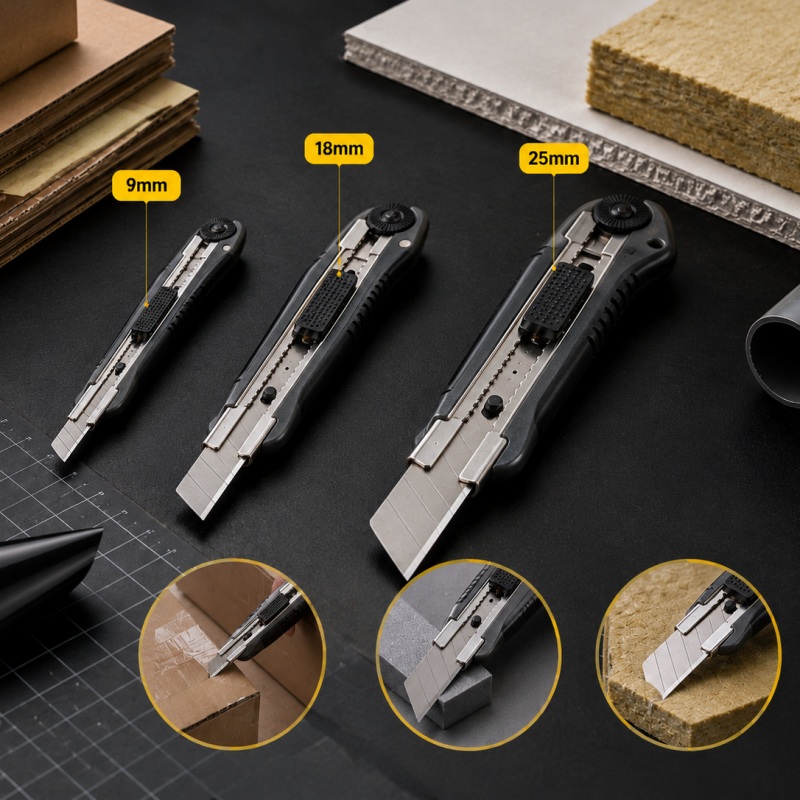
Industrial cutting performance is rarely defined by sharpness alone. In B2B environments such as packaging, construction, automotive film installation, and manufacturing lines, blade size directly affects safety, stability, cutting depth control, and tool lifespan. The difference between a 9mm utility knife and a 25mm utility knife is therefore not a simple dimensional change, but a structured engineering decision shaped by stress behavior and application risk.
As a professional cutter blade manufacturer, Sinseung designs utility blade systems based on load conditions, material resistance, and operator safety requirements across global industrial markets.
Engineering Logic Behind Utility Blade Sizes and Stress Distribution
Blade width determines how cutting force is distributed across the steel body. This is the core engineering factor behind all utility blade sizes.
A narrower blade concentrates force into a smaller structural area. This improves precision but increases susceptibility to lateral bending. A wider blade distributes stress more evenly, improving stability under heavy resistance but reducing micro-level control.
Key mechanical principles include:
- Stress concentration at the cutting edge
- Bending moment resistance under lateral force
- Fatigue cycles during repetitive industrial cutting
- Penetration depth stability under load pressure
|
Blade Type |
Stress Distribution |
Cutting Depth |
Stability |
Industrial Risk Level |
|
9mm utility knife |
High concentration |
Low |
Medium precision stability |
Low–Medium |
|
18mm utility knife |
Balanced |
Medium |
Balanced |
Medium |
|
25mm utility knife |
Wide distribution |
High |
High structural stability |
Medium–High |
These principles explain why cutter blade size selection must match application environments rather than operator preference.
9mm Utility Knife for Precision-Controlled Cutting Environments
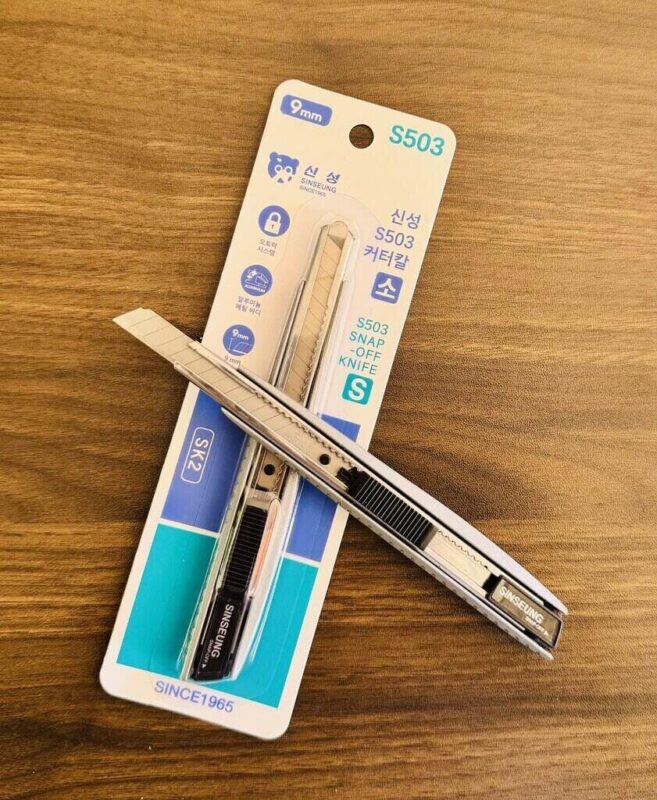
The 9mm utility knife is designed for precision-driven applications where accuracy and surface protection are more important than cutting force.
In industrial operations such as packaging, labeling, automotive film trimming, and light material processing, narrow blade geometry provides controlled penetration depth and reduced material damage risk.
Key engineering advantages:
- Reduced cutting resistance for thin materials
- Higher control in fine-detail operations
- Lower risk of over-penetration damage
- Improved operator accuracy in repetitive tasks
However, structural limitations appear under high lateral stress or dense materials. This is why 9mm systems are not suitable for construction-grade cutting tasks.
18mm Utility Knife as a Balanced Industrial Standard
The 18mm utility knife is widely used as a cross-industry standard because it balances cutting strength and operational stability.
It performs well in environments where material density varies, such as warehouse packaging, general maintenance, and construction finishing work.
Key structural benefits:
- Improved blade rigidity compared with 9mm systems
- Moderate force absorption capability
- Stable cutting path under mixed-material conditions
- Reduced breakage risk during continuous use
This blade size is often selected in procurement strategies where one tool must serve multiple operational environments.
25mm Utility Knife for Heavy-Duty Industrial Cutting Loads
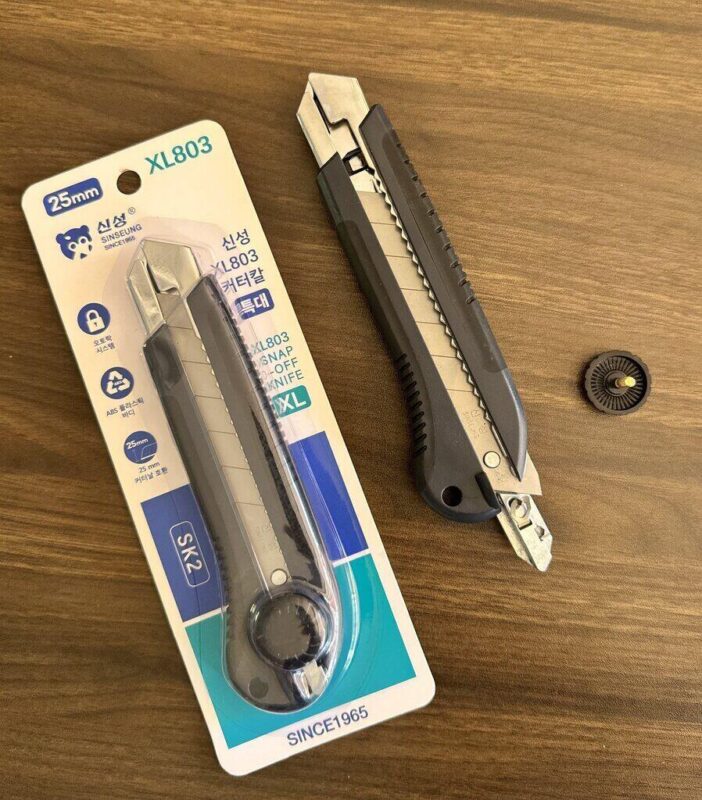
The 25mm utility knife is engineered for high-resistance cutting environments where deep penetration and structural stability are required.
It is commonly used in construction, insulation cutting, industrial flooring, and thick composite material processing.
Engineering characteristics:
- High load-bearing blade structure
- Enhanced resistance to bending deformation
- Stable performance under repeated high-force cutting
- Suitable for dense and layered materials
The wider blade geometry improves stress distribution, making it safer for high-pressure cutting cycles, but it requires controlled handling due to increased cutting depth potential.
Cutting Depth, Force Control, and Industrial Risk Management
Cutting depth is directly influenced by blade width and user-applied force. This relationship is critical in B2B safety planning.
Narrow blades naturally limit penetration depth, which reduces accidental damage in sensitive materials. Wider blades allow deeper cutting but require stricter operational control systems.
Operational safety logic:
- Narrow blades reduce penetration risk but increase flex sensitivity
- Wide blades improve force stability but require controlled handling training
- Medium blades provide operational flexibility across multiple scenarios
We design blade systems with these safety parameters in mind to support industrial risk reduction strategies across global clients.
Industrial Application Mapping: Packaging vs Construction Logic
Different industries require different cutter blade size logic due to material structure and operational environment.
In packaging and logistics environments, cutting tasks are repetitive and require precision without damaging contents. A 9mm utility knife is often sufficient.
In construction environments, materials such as insulation boards, rubber layers, and composite sheets require higher force penetration, making a 25mm utility knife more suitable.
Application mapping:
- Packaging industry: precision cutting, low material risk, high repetition
- Construction industry: deep cutting, high resistance materials, structural stability priority
- Mixed operations: balanced use of 18mm utility knife systems
This classification reduces operational inefficiency and improves tool lifecycle management.
B2B Procurement Considerations for Utility Blade Selection
For industrial buyers, cutter blade size selection is part of operational cost control and safety planning.
Key procurement factors include:
- Material thickness and cutting resistance
- Operator safety requirements and training level
- Blade replacement frequency and lifecycle cost
- Production environment variability
Selecting the correct blade size reduces downtime, minimizes workplace incidents, and improves long-term operational efficiency across production lines.
Sinseung Manufacturing Engineering and Quality Control System
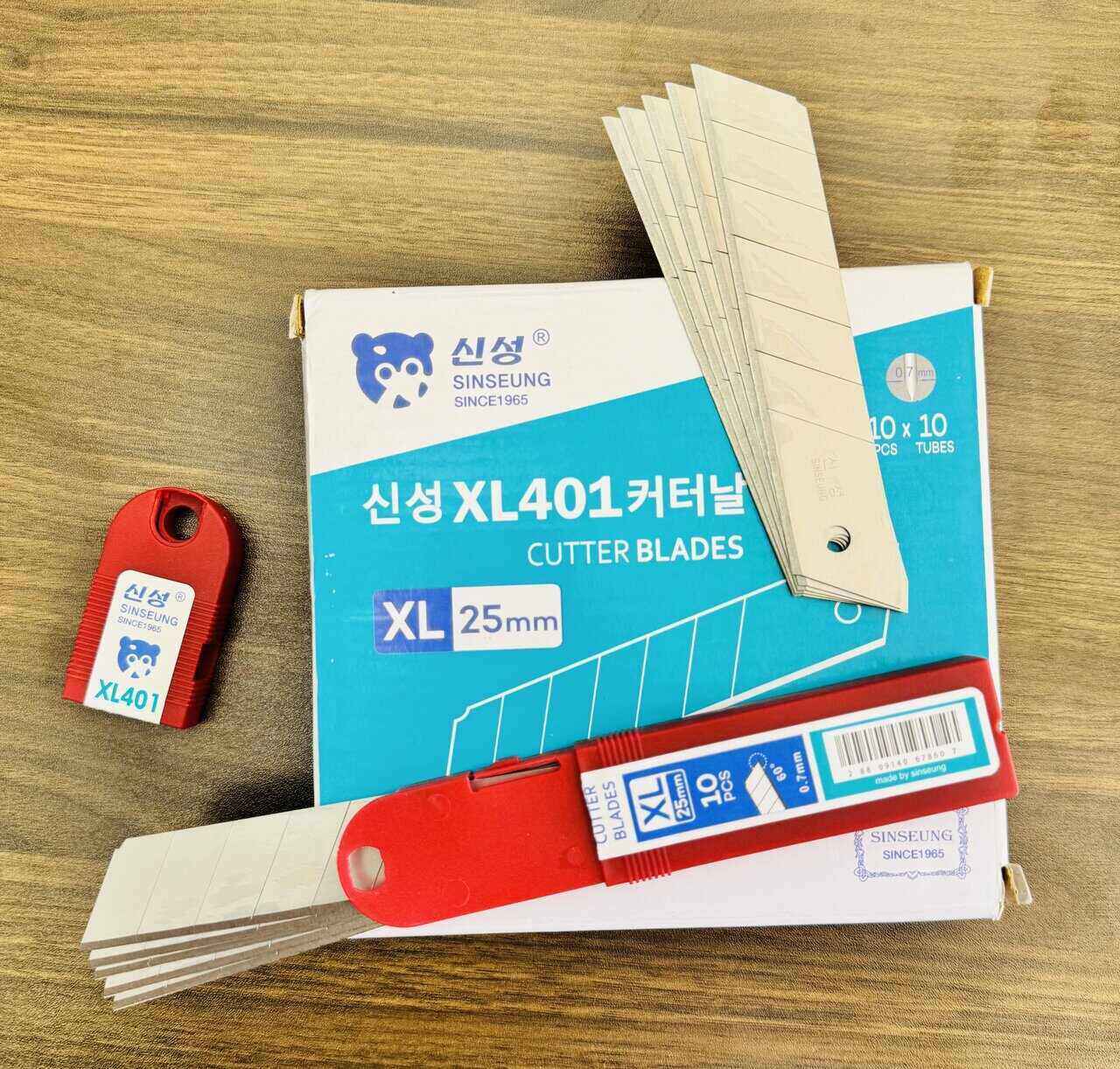
Sinseung operates as a professional cutter blade manufacturer with over 60 years of industrial production experience, supplying global markets including Europe, Japan, Russia, and Southeast Asia .
Our production system integrates:
- German-engineered production equipment with customized upgrades
- Hybrid automated and manual manufacturing processes
- Strict steel material selection for structural consistency
- Multi-stage inspection for every production batch
Each blade undergoes controlled testing to ensure cutting efficiency, durability, and performance consistency across different utility blade sizes.
This quality system ensures that 9mm, 18mm, and 25mm utility knives maintain predictable mechanical behavior under industrial conditions.
Conclusion: Blade Size as a Functional Engineering System
The selection of 9mm, 18mm, and 25mm utility knives should not be treated as a simple size preference. It is a structured engineering decision based on stress distribution, cutting depth requirements, and industrial risk profiles.
Understanding utility blade sizes allows B2B users to optimize operational safety, improve cutting efficiency, and reduce long-term procurement costs. Sinseung continues to support global industries with engineered blade systems designed for real-world industrial performance rather than theoretical specifications.
For technical consultation, product specification and quotation, requests can be submitted directly here.
FAQ
What is the main difference between 9mm and 25mm utility knives in industrial use?
The difference lies in stress distribution and cutting depth control. 9mm systems focus on precision, while 25mm systems prioritize structural stability and heavy-duty cutting capacity.
Which cutter blade size is most suitable for mixed industrial applications?
The 18mm utility knife is typically used for mixed environments because it balances rigidity and flexibility across different material types.
How does blade size affect workplace safety?
Smaller blades reduce penetration risk, while larger blades require stricter handling control due to deeper cutting capability and higher force resistance.
How do we ensure consistent blade quality in bulk orders?
Each production batch is tested under strict quality control systems, including material inspection, hardness validation, and cutting performance evaluation before shipment.
-
 Are Box Cutter Blades Universal?Explain box cutter blade compatibility by width, holder channel, lock design, refill format, and model matching for trade buyers.2026/10/01
 -
How to Safely Snap Off a Utility Knife BladeLearn how to snap off a box cutter blade with controlled extension, safe break direction, secure containment, and practical S103 workstation checks.2026/09/24
-
30 vs 45 Degree Cutter Blades for PrecisionLearn how 30 and 45 degree cutter blade tips affect precision, durability, PPF trimming, and wholesale blade selection.2026/09/24