
Why Are Dull Blades More Dangerous Than Sharp Ones?
2026-07-09
Introduction
In industrial cutting operations, blade condition directly affects operator safety, cutting accuracy, and workflow stability. Sharp blades are often treated as the primary safety concern, yet field application across packaging, construction, and material processing shows a different risk pattern. Dull blades require higher force, reduce control, and significantly increase accidental injury probability during daily operations.
Why Dull Blades Increase Operational Risk in Industrial Cutting Tasks
Worn blades create more cutting friction. This forces workers to push harder with less steady pressure. This change in physical force is the main reason workplace injuries happen. As friction grows, hand placement gets sloppy. The cutting path then becomes much harder to guide.
Some places have very fast-paced workflows, like busy packaging lines or active building sites. Here, this shaky cutting causes workers to make tiny, constant adjustments. Every small correction adds more time where the blade touches the material. This extra time boosts the danger of a sudden slip.
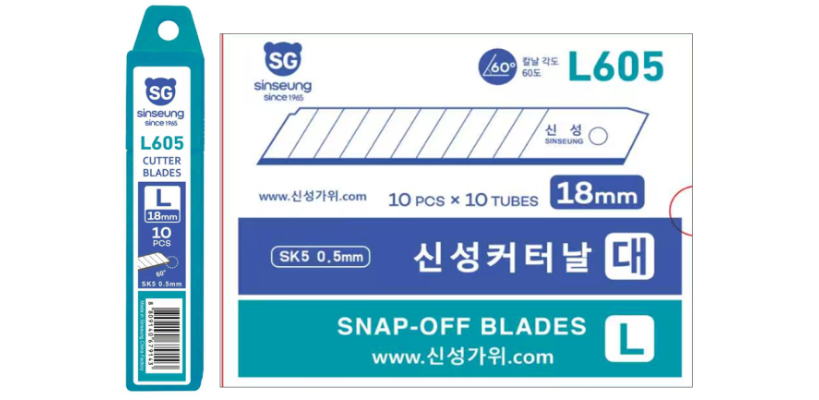
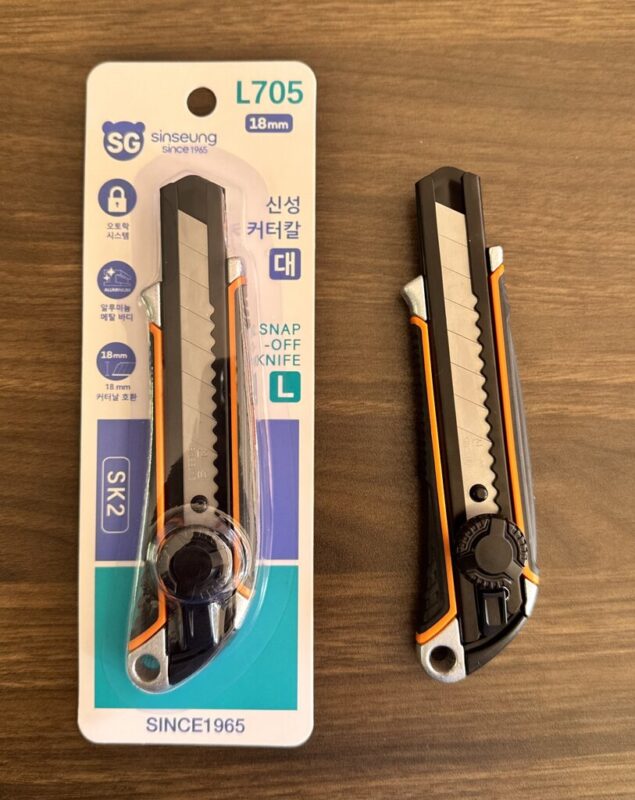
In actual daily tasks, tools like snap-off utility knife blade systems help keep a fresh edge. But sometimes, users forget to change the segments quickly enough. The cutting edge then loses its smooth shape. This creates bumpy, uneven drag while cutting.
How Force Instability From Dull Blades Leads to Micro-Slip Injuries
Micro-slip events occur when a blade suddenly releases stored pressure after failing to cut smoothly through material. This is common when operators use dull blades on dense cardboard, plastic film, or layered industrial packaging.
The issue is not a sudden break but a gradual buildup of force followed by uncontrolled release. This creates a brief but critical loss of control over the tool. In repetitive tasks, even small slips can accumulate into serious safety incidents.
When Should Blade Replacement Be Scheduled in B2B Operations
Blade replacement timing is a controlled safety parameter, not a personal preference. In structured industrial workflows, replacement frequency is determined by cutting load, material type, and daily usage volume.
For example, packaging operations involving continuous cardboard cutting require more frequent blade changes than light material trimming. When blades are used beyond their effective cutting lifecycle, performance degradation becomes a safety risk factor.
|
Usage Environment |
Material Type |
Recommended Replacement Cycle |
Risk Level if Delayed |
|
Packaging Line |
Corrugated cardboard |
Every 2–4 hours of continuous use |
High (slip risk increases rapidly) |
|
Construction Site |
Drywall / insulation |
Daily or per shift |
Medium–High |
|
Automotive Film Work |
Vinyl / adhesive film |
1–2 days depending on volume |
Medium |
|
Light Maintenance |
Paper / thin plastic |
Weekly |
Low–Medium |
This structured approach aligns blade condition with operational safety rather than reactive replacement.
Why Sharpening Utility Knife Blades Is Not Suitable for Industrial Control
Sharpening methods introduce inconsistency in blade geometry, which directly affects cutting stability. Unlike fixed industrial tools, snap-off blade systems rely on standardized segments to maintain uniform cutting performance.
Attempts to restore edge sharpness through sharpening methods often result in uneven edge angles. This reduces predictability in cutting resistance and increases deviation during use.
In B2B environments, consistency is more important than edge restoration. A predictable blade failure point is safer than an irregularly sharpened edge.
What Happens When Snap-Off Blade Systems Are Used Incorrectly
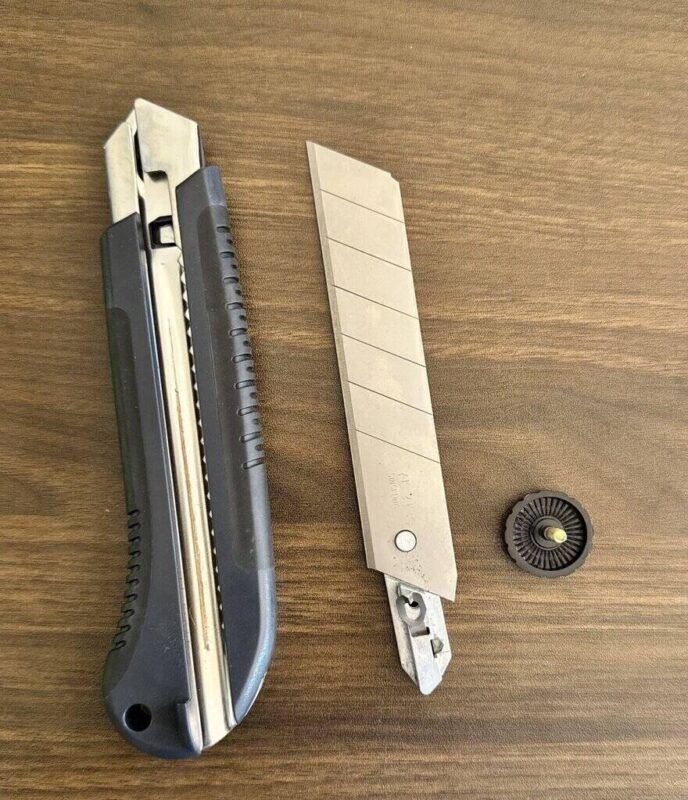
Snap-off blade systems are designed to maintain precision through controlled segment removal. However, incorrect snapping techniques or excessive force during segment removal can create uneven fracture lines.
This leads to unstable cutting edges that may increase resistance rather than reduce it. Improper handling also increases the risk of blade fragment exposure during operation.
Safe operation depends on controlled snapping points and consistent disposal procedures, ensuring that each new segment performs within expected cutting parameters.
Industrial Blade Quality and Safety Standards in Professional Use
Blade safety is closely linked to manufacturing consistency, material quality, and heat treatment control. Sinseung, a professional cutter blade manufacturer since 1965 in South Korea, applies strict production systems including automated machining and quality inspection for each batch of blades.
Our products are widely used across stationery, construction, automotive detailing, and industrial material processing industries. Export markets include Europe, Russia, and Southeast Asia, where safety compliance and durability standards are critical.
Quality control processes include:
- Raw material selection using stable steel grades
- Heat treatment control for edge stability
- Batch-level inspection to ensure uniform cutting performance
- CE and MSDS compliance for industrial distribution standards
This consistency ensures that blade performance remains stable throughout its lifecycle, reducing risks caused by unpredictable wear.
Operational Safety Framework for Reducing Blade-Related Injuries
A structured safety framework reduces blade-related risks more effectively than individual training alone. Industrial safety depends on system design, not user adaptation.
Key operational controls include:
- Scheduled blade replacement instead of reactive replacement
- Standardized use of snap-off blade systems across teams
- Restricting the use of worn blades in high-pressure cutting tasks
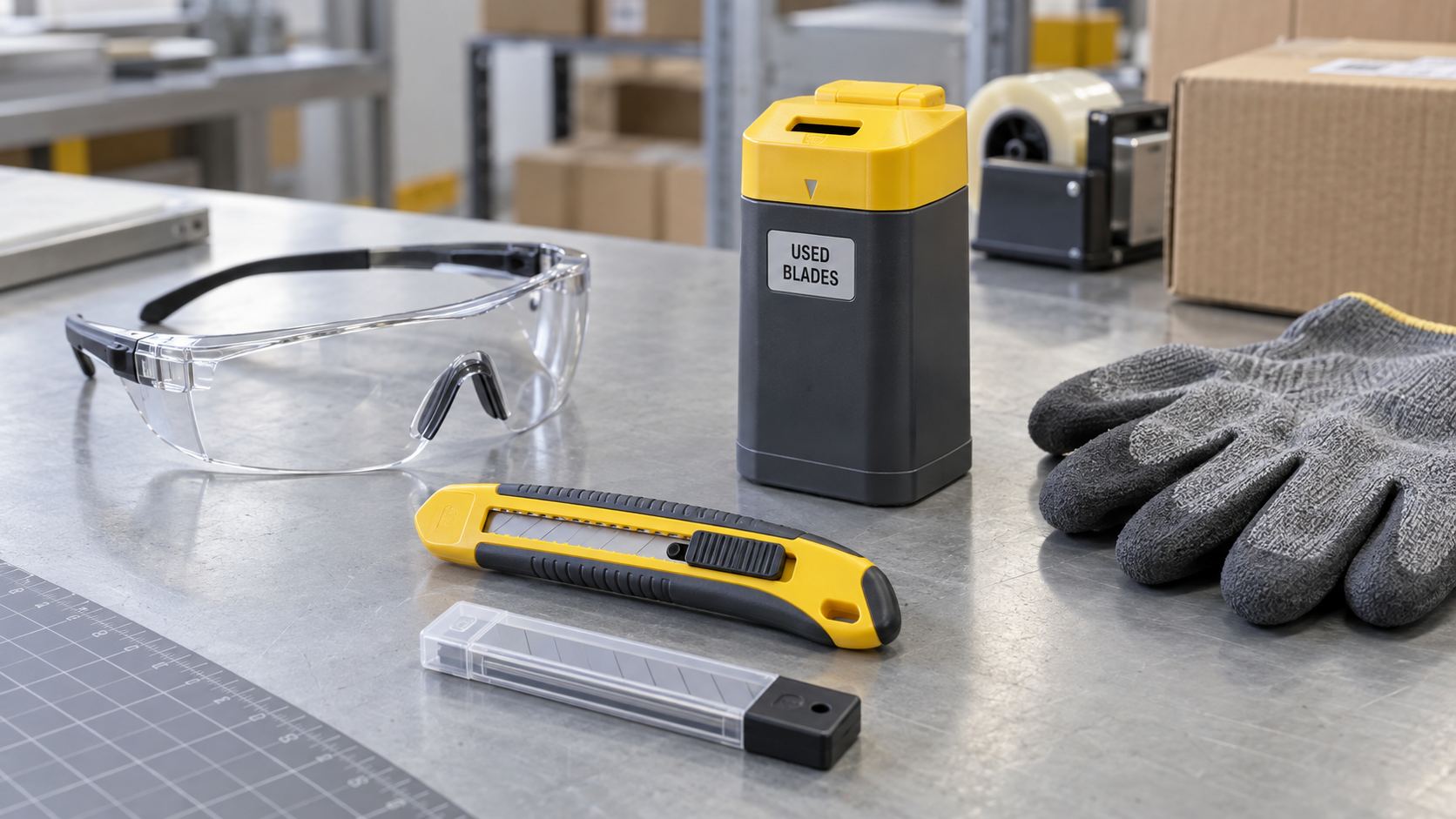
- Ensuring proper disposal of used blade segments
These measures directly reduce the frequency of uncontrolled cutting force scenarios, which are the primary cause of dull blade injuries.
For procurement and safety teams seeking to improve operational reliability, structured blade supply and replacement planning is a key risk control measure.
For technical consultation or procurement support, detailed product information and inquiry submission are available.
FAQ: Industrial Blade Safety and Maintenance
How often should blades be replaced in industrial use?
Replacement frequency depends on material density and cutting volume. In continuous packaging operations, blades are typically replaced within the same shift to maintain stable cutting performance and reduce slip risk.
Can dull box cutter blades be sharpened for reuse?
Sharpening is not recommended in industrial snap-off blade systems. It creates uneven edge geometry and reduces cutting consistency, increasing operational risk in repetitive tasks.
How can cutting injuries be reduced in daily operations?
Key safety measures include maintaining sharp blades, using controlled cutting angles, applying stable hand positioning, and replacing blades before visible performance decline occurs.
What is the correct way to break snap-off blades?
Blade segments should be snapped using designated breaking points with controlled force. Improper snapping may create uneven edges or expose sharp fragments, increasing handling risk.
Why do cutting injuries happen even with safety training?
Most incidents are linked to dull blade usage, excessive cutting force, and unstable tool control rather than a lack of training. System-level blade replacement control is more effective than behavior correction alone.
Conclusion
Dull blade usage is a structural risk factor in industrial cutting operations. It increases force demand, reduces cutting stability, and leads to micro-slip incidents that are difficult to control during repetitive tasks. A systematic approach to blade replacement, combined with consistent manufacturing quality, is essential for maintaining operational safety.
As a long-established manufacturer of precision cutting systems, we continue to support global industrial users with stable blade solutions designed for controlled performance and reduced operational risk.
-
 SK2 vs SK5 Utility Blades for Different JobsCompare SK2 and SK5 utility blade grades by sharpness, toughness, edge life, and job fit for wholesale blade selection.2026/10/07
 -
Are Box Cutter Blades Universal?Explain box cutter blade compatibility by width, holder channel, lock design, refill format, and model matching for trade buyers.2026/10/01
-
How to Safely Snap Off a Utility Knife BladeLearn how to snap off a box cutter blade with controlled extension, safe break direction, secure containment, and practical S103 workstation checks.2026/09/24