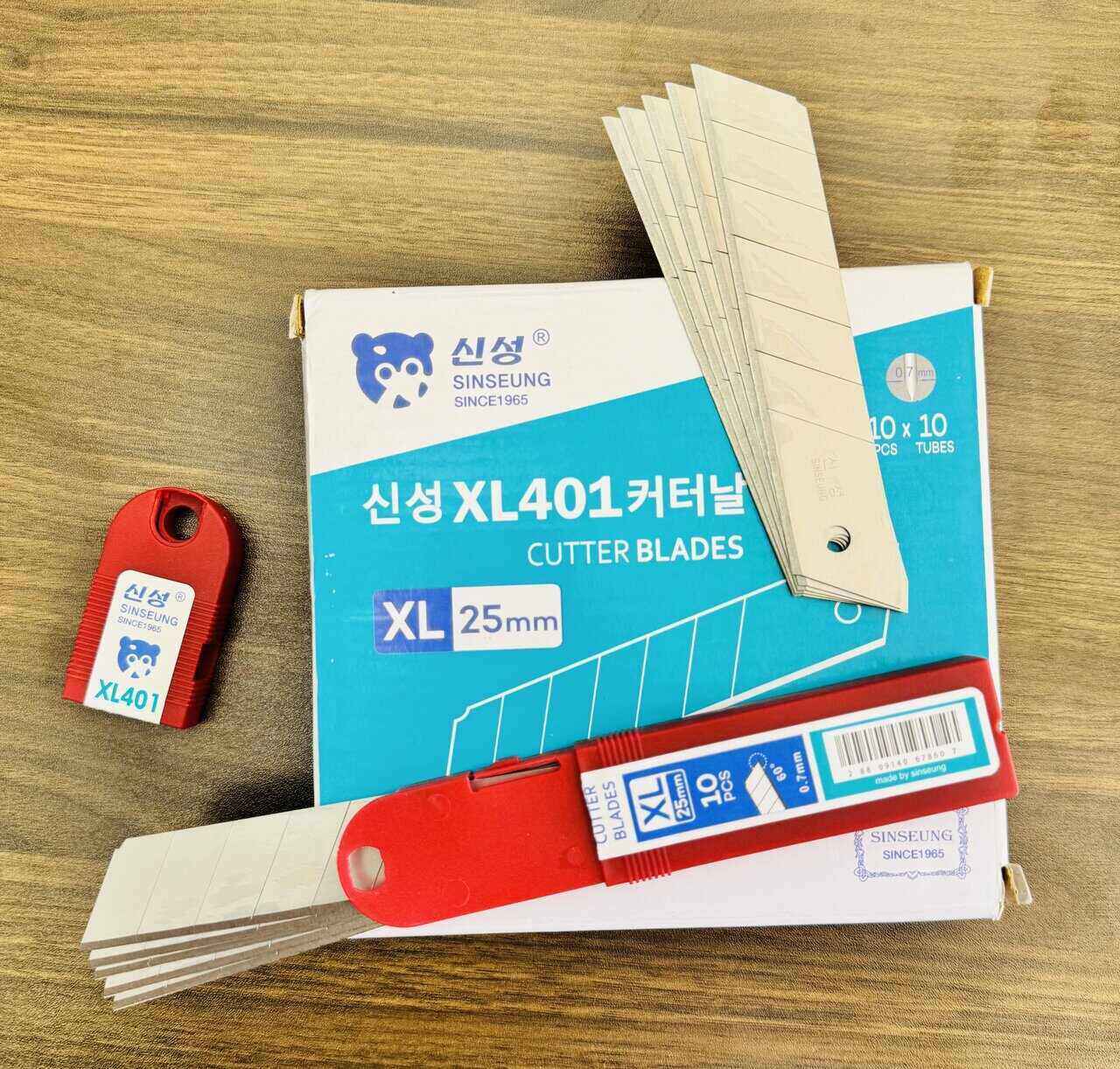

How to Safely Snap Off a Utility Knife Blade
2026-09-24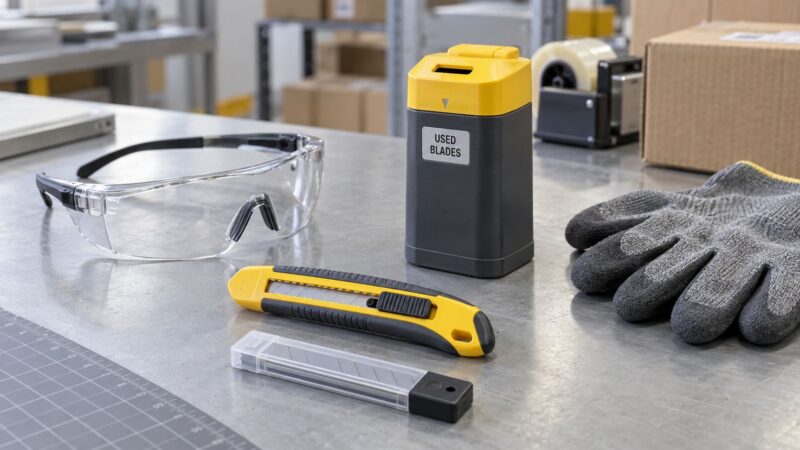
Teams asking how to snap off box cutter blade sections safely need a controlled process: stop work, retract to one segment, secure the knife, break away from people inside a closed breaker, and contain the fragment immediately. The objective is not speed. It is predictable separation without an exposed loose edge or a fragment crossing the workstation.
Decide Whether a Segment Should Be Removed
Remove a segment only when the exposed edge is dull or locally damaged and the remaining strip still advances and locks correctly. A bent strip, cracked carrier, loose slider, or blade that retracts under light pressure is a tool defect, not a routine snapping task. Good cutter blade safety begins by taking that knife out of service instead of trying to recover it at the cutting bench.
Inspect the Knife Before Handling the Edge
Clear the bench, wear the protective equipment required by the site assessment, and keep other people outside the break direction. Confirm that only one scored section will project from the nose. If more than one section is exposed, the unsupported length can flex unpredictably. The same inspection should confirm that a blade disposal container is closed, stable, and within reach before any segment is separated.
- Stop cutting and place the workpiece aside before touching the blade.
- Use the knife maker’s designed end-cap breaker or an approved enclosed breaker.
- Keep the scored line close to the breaker edge and point the segment away from every person.
- Never use bare fingers, an open bench edge, or an improvised impact to force separation.
- Move a damaged knife to a marked quarantine area for inspection or replacement.
Use a Controlled Five-Step Snapping Method
Before you snap off utility knife blade sections, read the holder instructions because end-cap and breaker designs differ. The general sequence below applies only when the holder is designed for segmented blades and its designated breaker is undamaged. If the manufacturer requires a separate tool, follow that requirement. No operator should hold the free segment directly, even when a scored line appears easy to break.
Control Extension, Direction, and Containment
|
Step |
Operator action |
Control objective |
|
1. Prepare |
Clear the bench and position the waste container |
No obstruction or delayed disposal |
|
2. Extend |
Expose exactly one segment and lock the slider |
Minimum unsupported blade |
|
3. Enclose |
Seat the segment fully in the approved breaker |
Fragment remains captured |
|
4. Separate |
Bend at the score line, away from people |
Predictable break direction |
|
5. Verify |
Retract, inspect, and deposit the fragment |
Safe tool and controlled waste |
The break should occur at the first score line outside the holder. Apply steady pressure rather than twisting repeatedly. After separation, do not reach into the breaker. Tip the captured piece directly into the blade disposal container, then close it. This is the practical core of how to snap off box cutter blade sections without creating a second handling hazard.
Verify the New Edge Before Returning to Work
Retract the blade fully and inspect the holder nose, slider, and exposed strip. Advance the new section only as far as the task requires, confirm the lock holds, and make a low-force trial cut on representative scrap. If the strip wobbles, binds, or will not retract smoothly, stop. Cutter blade safety requires the mechanism to pass inspection before the knife returns to production.
Match the Refill to the Holder
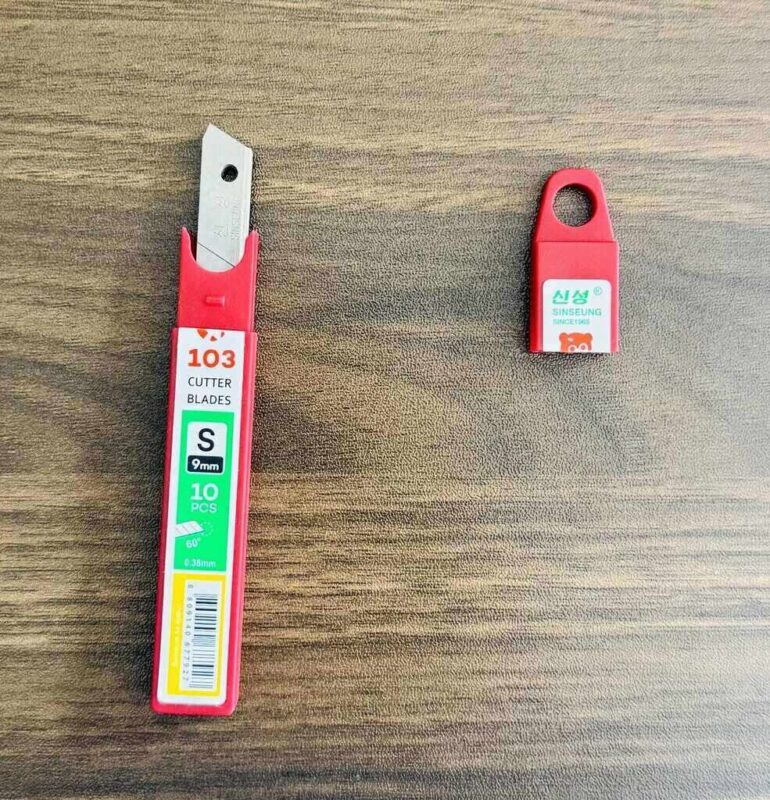
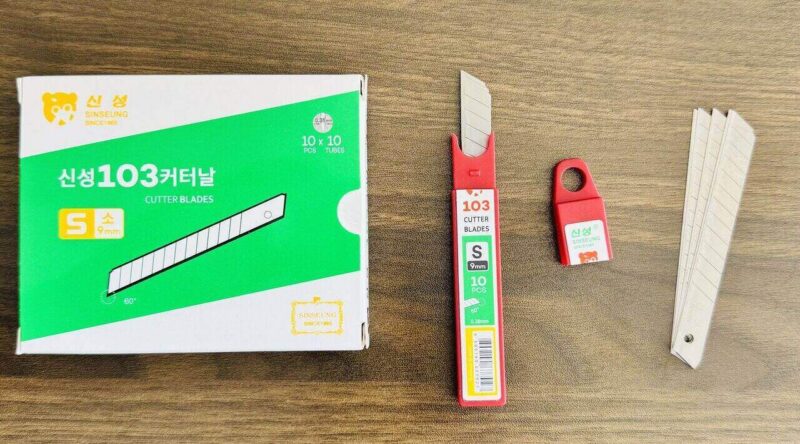
A replacement blade should match the holder’s requirements for width, thickness, tip angle, score pattern, and carrier engagement. If you are considering our Sinseung S103 9mm snap-off blades, confirm these details against your knife manufacturer’s specifications before use. Blade width alone does not establish compatibility. For workplace supplies, retain an approved sample and specification record so staff can identify the correct refill when replenishing stock.
Build Segment Disposal Into the Workstation
A used segment remains sharp and should never enter an open bin, pocket, drawer, or mixed recycling. The blade disposal container should resist puncture, accept pieces without hand contact, remain upright, and close for internal handling. Label it for sharp metal waste and manage its final disposal under local workplace and waste rules. Do not overfill it or transfer loose pieces between containers.
Supervisors can reinforce cutter blade safety by auditing three visible conditions: approved breaker available, blade disposal container below its fill line, and spare refills stored in closed cases. Record unusual breakage, chipped segments, or mechanism problems by knife model and task. Repeated difficulty may indicate a damaged holder, a mismatched 9mm snap off blade, excessive extension, or unsuitable cutting technique.
Keep Blade Snapping Consistent Across the Team
A breaker and disposal container give operators the right equipment, but clear instruction makes that equipment useful. Before a new employee handles a segmented knife, demonstrate the procedure for the specific holder and breaker provided. Explain when a segment needs removal, how to recognize a damaged knife, and where the separated piece belongs. Keep the manufacturer’s instructions accessible, particularly where several knife models are used.
At shared workstations, assign responsibility for keeping the process ready. Operators should know where approved refills are stored, who replaces a full blade disposal container, and how to report a missing breaker or defective holder. Resolve missing equipment before attempting to remove a segment. These arrangements help prevent rushed decisions during a busy shift.
Ask operators about problems they encounter during normal cutting. Repeated edge damage, difficult separation, or sticking sliders should prompt a review of the equipment and task. Record the knife model, refill used, and circumstances so supervisors can investigate the cause. When a holder or refill specification changes, review the instructions and update the workstation guidance before the new combination enters regular use.
FAQ
What should I check before choosing Sinseung S103 blades?
Confirm that the S103 specifications match your holder’s required blade dimensions, score pattern, and mounting arrangement. Follow the holder manufacturer’s instructions for installation and snapping. If you need clarification on our blade specifications, contact Sinseung with the holder model and the details you need to confirm.
How do you safely snap off a utility knife blade?
Stop work, expose one segment, lock the blade, seat it in the designed enclosed breaker, point it away from people, separate it at the score line, and deposit the captured piece without hand contact.
Can pliers be used to snap off utility knife blade sections?
Use the holder maker’s designated breaker or approved tool. Pliers can leave the fragment exposed and may twist the strip, so they should not replace a specified enclosed method.
Where should a snapped segment be discarded?
Place it directly in a labeled, puncture-resistant, closable sharps container used under the site’s local waste procedure. Never place loose segments in general waste or recycling.
When should the complete 9mm snap off blade be replaced?
Replace the strip when usable segments are exhausted, several sections are damaged, corrosion is present, or too little blade remains for secure carrier engagement. Remove a defective holder from service.
-
 Are Box Cutter Blades Universal?Explain box cutter blade compatibility by width, holder channel, lock design, refill format, and model matching for trade buyers.2026/10/01
 -
30 vs 45 Degree Cutter Blades for PrecisionLearn how 30 and 45 degree cutter blade tips affect precision, durability, PPF trimming, and wholesale blade selection.2026/09/24
-
Inside a Utility Knife: Carriers, Locks, ReassemblyLearn how carriers, locks, housings, and blade channels affect safe utility knife reassembly and daily cutter control.2026/09/17