
How Hardware Scissors Support Wiring and Shop Work
2026-09-10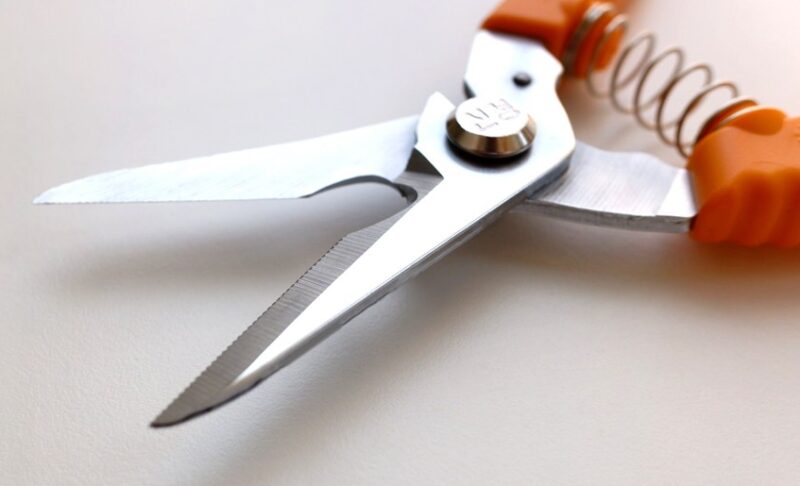
Wiring benches, maintenance carts, and shop repair stations often need one cutting tool that can move between cable jackets, light plastics, packaging ties, and flexible sheet materials without slowing the job. Hardware scissors answer that need when their blade steel, hand control, and task range match the materials being handled. For trade buyers, the practical question is not whether the tool looks stronger than office scissors. It is whether the tool gives technicians cleaner cuts, steadier grip, and fewer tool changes during repeated work.
The tool category sits between scissors and cutters
Hardware scissors are built for harder, more varied shop materials than stationery scissors, but they still use a scissor-style closing action rather than a knife-style exposed edge. That difference matters in wiring, maintenance, and light industrial work because the user can grip the material and control the cut path with both handles. It also makes the tool easier to stage at shared benches where workers may switch between trimming, stripping, opening, and finishing tasks.
Professional readers usually want function first. They ask what the tool cuts, how it differs from regular scissors, whether SK5 steel matters, and how to use it safely on mixed materials.
Material strength determines repeat-use reliability
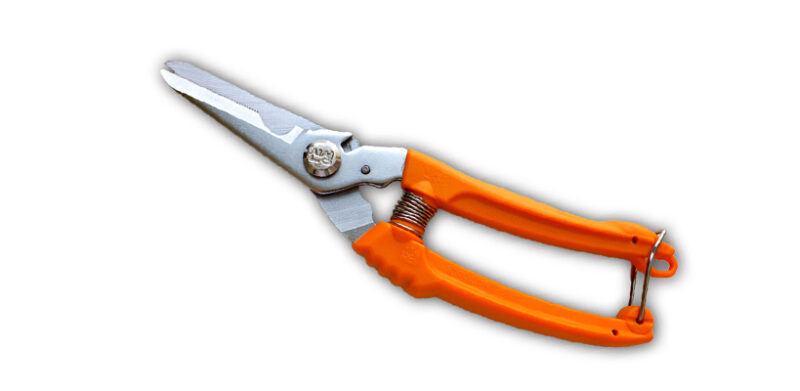
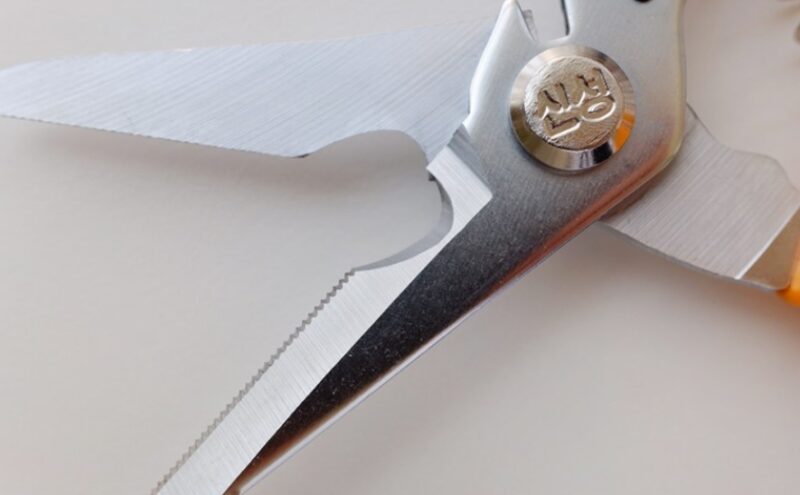
Blade steel is the first practical divider between general scissors and trade-use scissors. SK5 high carbon steel is commonly used where a cutting edge must keep shape under repeated pressure, and Sinseung uses SK5 on the G8 model. The G8 hardware scissors specification lists 3.5 mm blade thickness, 203 mm total length, 170 g net weight, and HRC 56-58 hardness, which gives buyers a concrete basis for comparing the tool with lighter household options.
Hardness supports edge retention
Hardness should be read as a support factor, not a stand-alone guarantee of quality. A blade in the HRC 56-58 range can resist quick deformation during normal cutting, but the tool still depends on proper heat treatment, grinding, pivot alignment, and intended use. For distributors, the useful takeaway is that hardness helps explain durability claims only when it is tied to a named model and matching application.
Thickness supports tool stability
A thicker blade body can help the scissors stay stable when the user cuts dense or layered materials. The G8 uses a 3.5 mm thick blade, which is more relevant to wiring and maintenance work than to delicate paper cutting. That construction helps explain why the tool belongs in a hardware assortment rather than a school or office category.
|
Selection factor |
Why it matters |
G8 evidence |
|
Blade material |
Affects edge durability under repeated cuts |
SK5 carbon steel |
|
Hardness |
Supports resistance to wear and edge deformation |
HRC 56-58 |
|
Length and weight |
Influences handling, storage, and bench use |
203 mm; 170 g |
|
Application range |
Defines suitable shelf placement and sales explanation |
Electric wire, plastic products, leather, aluminum products, fishing net, handicraft, housework, pruning |
Application fit depends on material behavior
A useful product listing should connect the tool to material behavior, not just name many applications. Electric wire and flexible sheathing need controlled closing force. Plastic products and packaging ties need enough bite to prevent sliding. Leather and craft materials need a clean start to the cut so the surface does not wander. Aluminum products should be approached within the tool rating and sample-tested before bulk adoption.
This is where multi-purpose positioning needs discipline. The G8 can sit in a professional hardware scissors range for wiring installation, repair benches, light shop work, and practical household maintenance, but it should not be sold as a replacement for every cutting tool. For thicker metal, powered cutting, structural cable, or safety-critical electrical work, users should follow the material specification and their workplace tool policy.
Common trade-use matches
*Electrical and maintenance kits that need a compact tool for wire-related trimming and flexible jacket work.
*Hardware retail shelves where customers compare scissors by steel, weight, and application range.
*Workshop stations that process plastic straps, soft sheet goods, leather offcuts, or fishing net repairs.
*Garden and household crossover assortments where one stronger scissor-style tool is easier to explain than several single-use tools.
Safety comes from matching force to the job
Hand-tool safety problems often start when workers force a tool through material it was not meant to cut. Workplaces reduce that risk through inspection, secure grip, proper cut direction, and personal protective equipment when the task assessment requires it. For hardware scissors, that means checking pivot movement, keeping fingers outside the closing path, and replacing or servicing tools that need excessive force.
Professional users should also separate cutting from prying, scraping, twisting, and wire bending. A scissor-style tool is strongest when the material is seated correctly and the handles close in line with the blade action.
Wholesale assortments need clear shelf logic
Distributors can reduce returns by positioning hardware scissors around task fit rather than broad promises. A model like G8 is easiest to explain when the listing shows material, hardness, length, weight, and intended work categories together. Within Sinseung cutting tool products, that structure helps a buyer decide whether the item belongs with electrician tools, maintenance accessories, craft-heavy hardware, or general repair supplies.
The same logic helps sales teams avoid overclaiming. Describe the tool as a durable SK5 hardware scissor for mixed light industrial, wiring, repair, and household cutting tasks.
Conclusion
Hardware scissors are most useful when they combine stronger blade steel, comfortable control, and a clearly limited application range. For G8, the strongest evidence is the SK5 blade, HRC 56-58 hardness, 203 mm length, 170 g weight, and documented fit for electric wire, plastics, leather, aluminum products, fishing net, handicraft, housework, and pruning. Trade buyers should match the tool to the bench task, test it on real materials, and avoid forcing it into heavy cutting roles outside its design.
FAQ
What are hardware scissors used for?
Hardware scissors are used for tougher mixed materials than office scissors, including wiring-related trimming, plastics, leather, repair materials, light aluminum products, fishing net, craft materials, and practical household tasks when the tool rating fits.
Are SK5 scissors better for professional work?
SK5 scissors can be better for professional work when the blade design and heat treatment match the task. The steel supports edge strength, but users should still check pivot quality, grip comfort, and material suitability.
Can hardware scissors replace cable cutters?
Hardware scissors should not automatically replace dedicated cable cutters. They can support light wiring and trimming tasks, but thicker or safety-critical cable work should follow the cable specification and workplace tool requirements.
Why does scissor weight matter?
Weight affects hand feel, control, and fatigue during repeated use. A 170 g tool can feel stable for bench work while still remaining compact enough for kits and retail packaging.
How should distributors present hardware scissors online?
Distributors should present material, hardness, length, weight, suitable materials, and use limits together. This helps professional customers compare the tool by function instead of relying on broad claims.
-
 Are Box Cutter Blades Universal?Explain box cutter blade compatibility by width, holder channel, lock design, refill format, and model matching for trade buyers.2026/10/01
 -
How to Safely Snap Off a Utility Knife BladeLearn how to snap off a box cutter blade with controlled extension, safe break direction, secure containment, and practical S103 workstation checks.2026/09/24
-
30 vs 45 Degree Cutter Blades for PrecisionLearn how 30 and 45 degree cutter blade tips affect precision, durability, PPF trimming, and wholesale blade selection.2026/09/24