

How Do Utility Knife Blade Sizes and Types Differ?
2026-07-02
Introduction
Utility cutting operations in packaging, logistics, and light manufacturing depend heavily on steady blade performance. They also require consistent sizing. The utility knife blade size directly impacts cutting depth. It also affects safety control and tool compatibility. Grasping standardized blade systems helps to cut down on operational mistakes. Moreover, it boosts workflow efficiency and promotes safer handling across various work settings.
Standard Utility Knife Blade Sizes in Industrial Use
We notice that most industrial buyers trust standardized utility knife blade sizes. This ensures interchangeability across tools and workflows. In B2B applications, blade size serves as more than just a dimensional reference. It is also a performance metric tied to cutting force and material resistance.
The most widely utilized cutter blade sizes follow three primary industrial formats. These standards help to coordinate purchasing systems. They also minimize mismatches between handles and replacement blades. In warehouse and packaging operations, this standardization guarantees steady performance across multiple teams and shifts.
A thorough grasp of utility knife blade sizes is crucial when picking tools for repetitive cutting jobs. Such tasks include carton opening, film trimming, and cutting insulation materials.
9mm, 18mm, and 25mm Utility Knife Blade Comparison
Various blade widths meet diverse industrial demands. We frequently advise users to align the blade size with their workload intensity.
The 9mm snap-off blades are built for precision tasks. In these jobs, control is more important than raw cutting force. These blades are frequently utilized in light packaging, film cutting, and fine trimming work. Their narrow shape permits smoother handling in tight spaces.
The 18mm utility knife stands as the most balanced option. It is extensively utilized in general industrial cutting. This is especially true in logistics centers and packaging lines. It delivers a solid mix of strength and control. Therefore, it is well-suited for continuous daily use.
The 25mm utility knife is built for heavy-duty environments. It handles greater cutting resistance. It is frequently utilized for thick cardboard, rubber sheets, and industrial-grade materials. The broader blade boosts stability under heavy pressure. It also limits blade deflection during cutting.
The 25mm snap-off knife is frequently chosen in settings where blade renewal speed matters greatly. Its segmented build permits fast restoration of sharp edges. This happens without replacing the entire blade.
|
Blade Size |
Typical Use Case |
Cutting Strength |
Control Level |
|
9mm snap-off blades |
Precision cutting, light packaging |
Low |
High |
|
18mm utility knife |
General industrial use |
Medium |
Medium |
|
25mm utility knife |
Heavy-duty materials |
High |
Medium |
|
25mm snap-off knife |
Industrial continuous cutting |
High |
Medium |
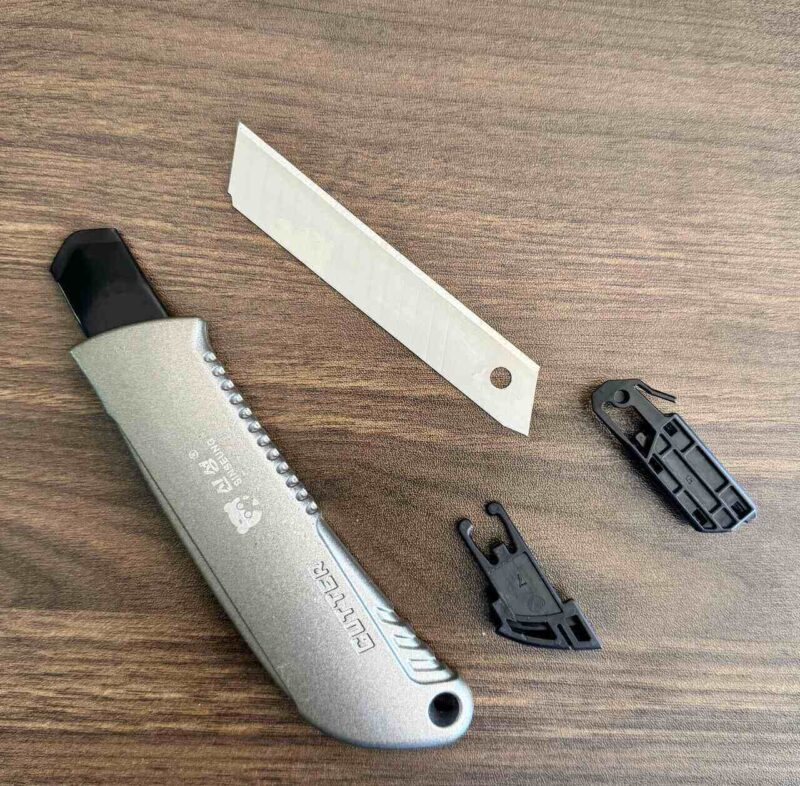
Segmented Blade Design and Snap-Off Mechanism
Snap-off blade systems are built to keep efficiency high during continuous operations. The segmented build lets operators bring back sharpness. They do this without changing out the whole blade.
The utility blade thickness plays a vital part in how each segment snaps. It also affects how the blade performs under pressure. A steady thickness ensures controlled snapping. Furthermore, it delivers uniform cutting performance across every segment.
In industrial workflows, snap-off systems cut down on downtime. They also boost overall productivity. Instead of halting operations for blade replacement, users can easily snap-off a dull segment. Then, they can immediately keep cutting.
Industrial Utility Knife Blade Types and Functional Variants
There are numerous different types of utility blades utilized in industrial settings. Each one is built for a particular material and cutting condition.
Standard straight-edge blades are utilized for general-purpose cutting jobs. They work well for cardboard, tape, and soft packaging materials.
Reinforced heavy-duty blades are utilized in tough environments. These areas demand high resistance and long-lasting durability. These blades keep edge stability intact, even under constant pressure.
Picking the proper blade type ensures steady performance. It also lessens needless wear on both the blade itself and the tool handle.
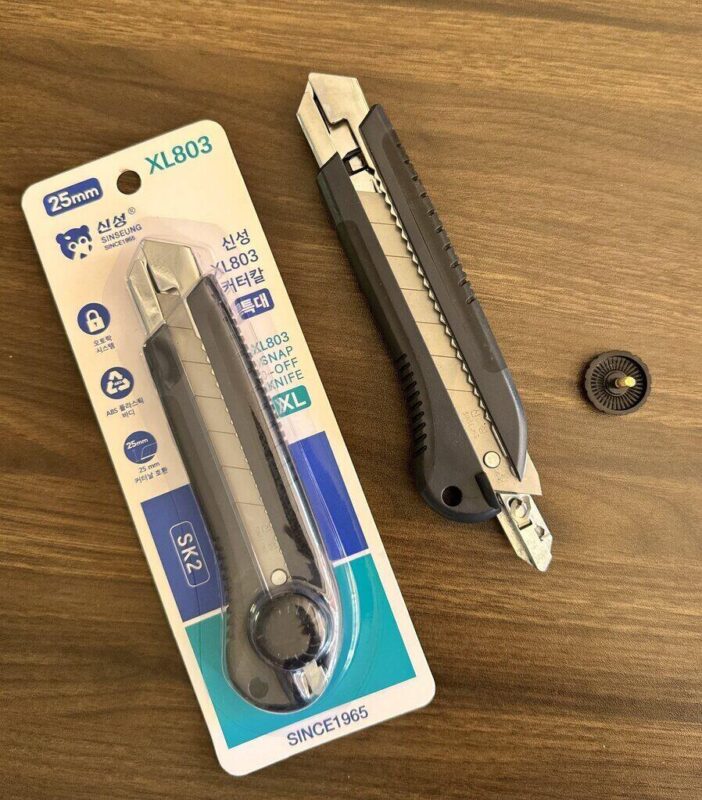
Blade Materials, Thickness, and Manufacturing Standards
Blade performance is heavily impacted by material makeup and structural thickness. Most industrial blades are crafted from high-carbon steel. This material is chosen for steady hardness and strong edge retention.
The utility blade thickness impacts both durability and cutting stability. Thicker blades provide greater resistance to tough materials. Meanwhile, thinner blades deliver smoother precision cutting.
Manufacturing steps like heat treatment boost hardness. They also lengthen the blade’s working life. Proper processing ensures that blades keep their sharpness over repeated usage cycles.
We also notice that steady thickness control is vital. It ensures safe snapping performance in segmented blade systems.
Blade Compatibility with Utility Knife Systems
Blade and handle compatibility is vital in industrial settings. In these places, tools are shared across multiple teams.
The utility knife blade size must perfectly fit the internal rail system of the knife handle. This ensures secure locking during use. Mismatched systems can cause blade shifting. They can also lower cutting accuracy.
The utility knife blade replacement process is also impacted by structural compatibility. A properly matched system permits quick replacement. At the same time, it keeps operational safety high.
Maintenance, Replacement Cycles, and Safe Handling Practices
Blade wear is a standard part of industrial cutting operations. The replacement cycle relies on material type. It also depends on usage frequency and cutting pressure.
Operators must watch cutting resistance. This serves as an early warning of blade dullness. When resistance climbs, blade replacement or snapping becomes necessary.
Safe handling is vital during both replacement and disposal. Used blades must be kept in dedicated containers. This prevents workplace injuries. Proper disposal steps help to meet industrial safety rules.
We advise regular checks. This ensures cutting tools stay in solid condition throughout daily operations.
B2B Procurement Considerations for Utility Knife Blades
Industrial buyers generally assess blade purchasing based on consistency. They also look at durability and supply stability. Batch quality control is vital. It guarantees uniform performance across all shipped units.
The choice of cutter blade sizes must align with operational needs. This prevents wasted effort in material processing. Larger blades are not always the best choice. The proper match relies entirely on the workload type.
A dependable supply flow is also vital. This is especially true in high-volume settings like warehouses and distribution hubs.
Conclusion: Selecting Utility Knife Blade Systems for Industrial Efficiency
Picking the proper blade system relies on understanding utility knife blade sizes. It also involves knowing material demands and operational intensity. A properly matched blade boosts safety. It cuts down downtime and raises total cutting efficiency in industrial settings.
We focus on delivering steady and reliable blade solutions. These solutions back daily industrial operations across packaging, logistics, and manufacturing workflows.
For inquiries, technical support, or fast quotation requests, you can reach our team directly here.
FAQ
What determines the correct utility knife blade size for industrial use?
Blade size is determined by cutting depth and material thickness. It also relies on the needed control level. Common industrial standards include 9mm, 18mm, and 25mm formats.
How often should utility knife blades be replaced?
Replacement relies on usage intensity. In continuous operations, blades are usually replaced or snapped when cutting resistance climbs.
What is the difference between snap-off blades and fixed blades?
Snap-off blades permit segment removal to bring back sharpness. Fixed blades, however, demand full replacement once they become dull.
Are 18mm utility knives suitable for heavy-duty tasks?
An 18mm utility knife is primarily built for general industrial use. Heavy-duty materials usually demand 25mm blade systems.
How should used utility knife blades be disposed of safely?
Used blades must be placed in dedicated blade containers. This prevents injury and complies with workplace safety rules.
-
 Why Are Dull Blades More Dangerous Than Sharp Ones?Dull blades increase cutting force and slip risk. Learn industrial safety control, replacement cycles, and blade handling standards for safer operations.2026/07/09
 -

-