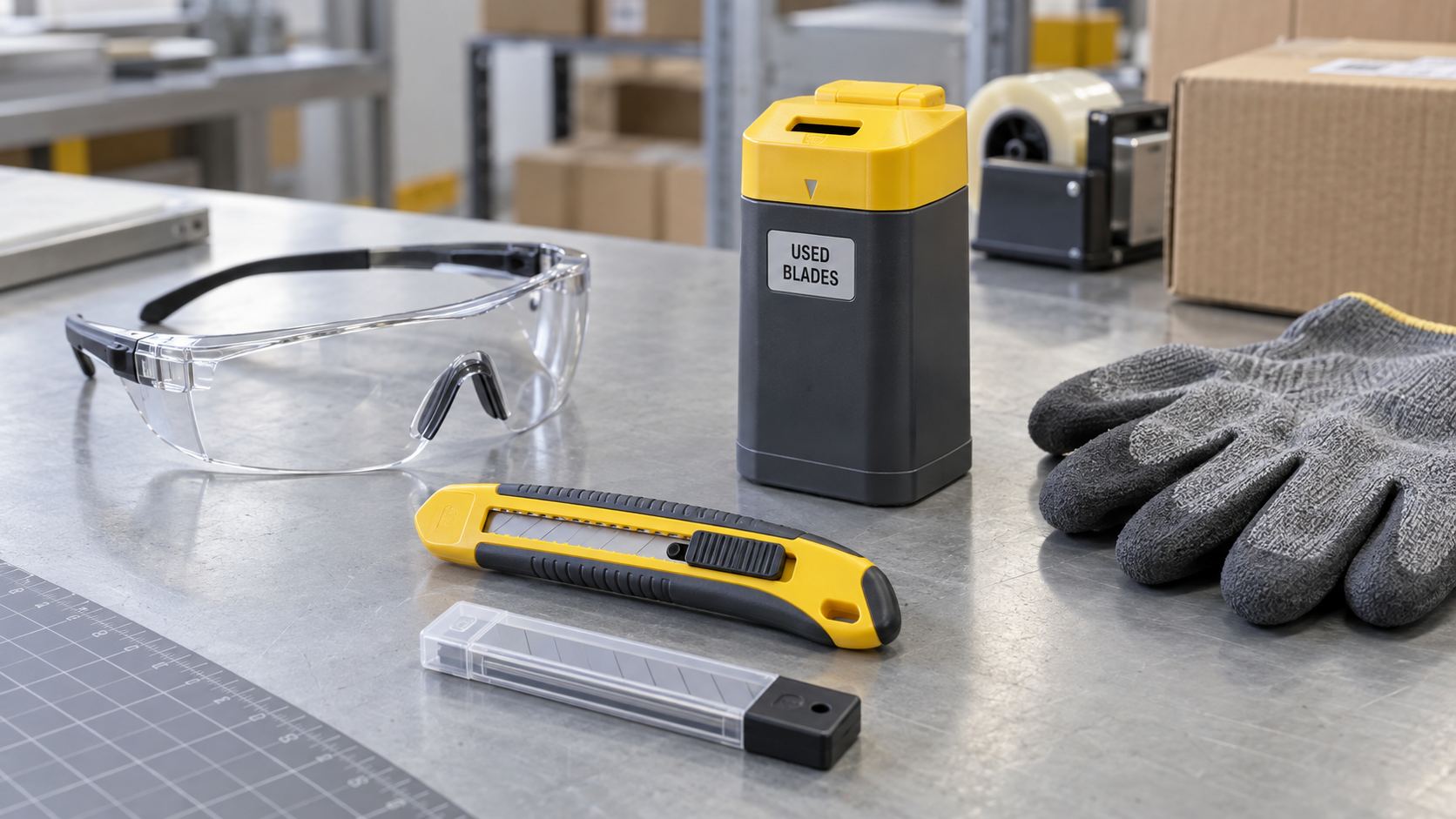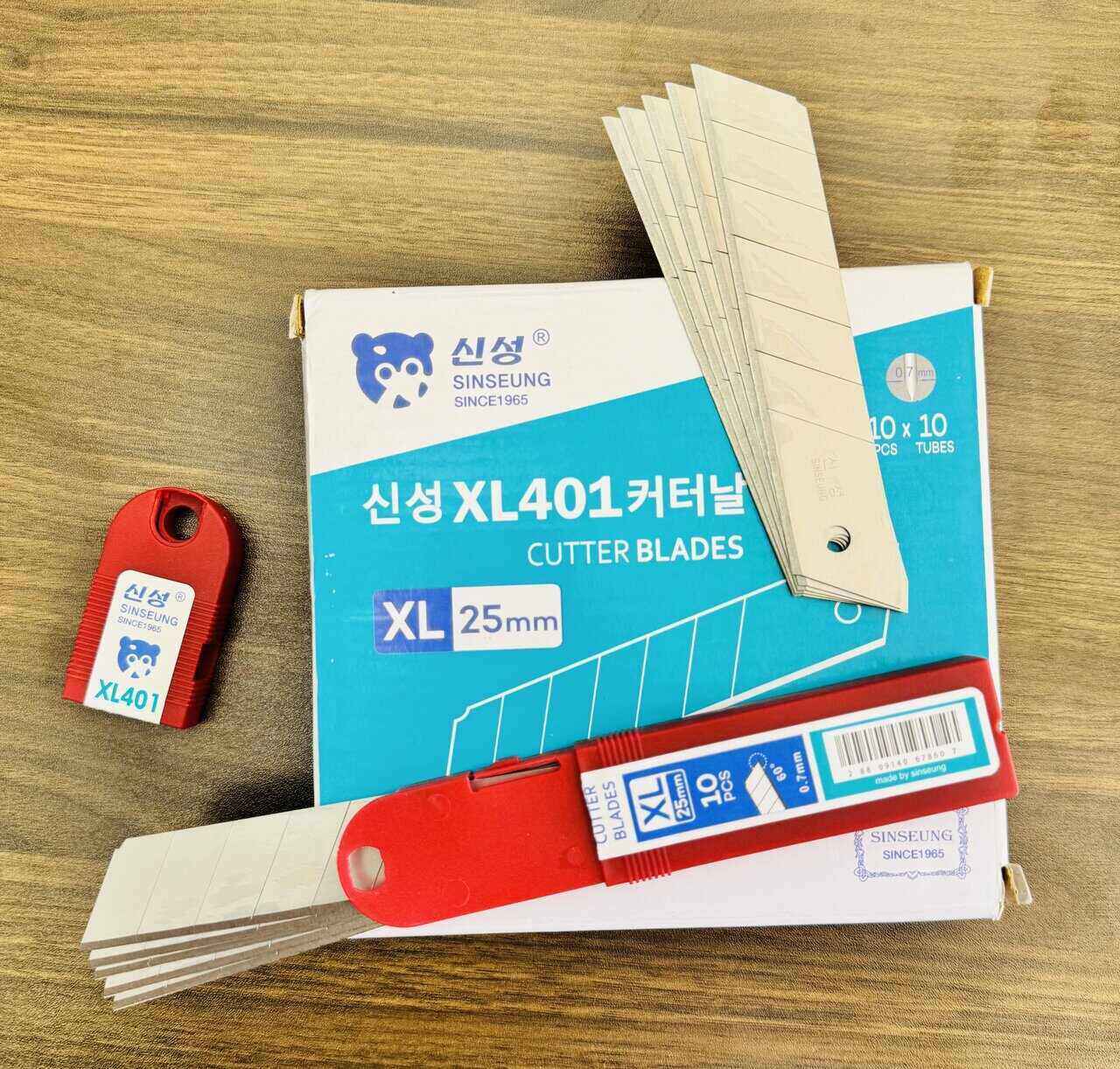

What Are Box Cutter Blades Made Of?
2026-08-20
lâminas de estilete are usually made of hardened carbon steel or alloy steel, sometimes paired with a protective surface treatment. Steel grade alone does not decide performance. Heat treatment, edge grinding, thickness, tip geometry, score lines, and storage condition determine whether a blade cuts cleanly, resists bending, and stays consistent across a professional batch.
Material Sets the Performance Baseline
Carbon steel is widely used because it can be hardened and ground into a keen working edge. For a cutter blade, this creates the potential for clean entry into paper, film, cardboard, leather, and other suitable materials. The tradeoff is that unprotected carbon steel needs sensible storage because moisture and contamination can attack the surface.
Steel Grade Is Only the Starting Point
A grade name helps buyers identify the raw-material family, but it does not reveal the final edge condition. The same nominal steel can behave differently after quenching, tempering, grinding, polishing, or coating. Procurement teams should therefore read a material statement together with hardness control, edge geometry, thickness tolerance, corrosion protection, and lot-level inspection rather than treating the grade as a complete quality verdict.
|
Design factor |
What it influences |
Buyer check |
|
Steel family |
Hardening potential and edge response |
Confirm the named grade for the exact model |
|
Heat treatment |
Hardness, toughness, and batch consistency |
Review process control and sample behavior |
|
Edge grinding |
Initial sharpness and cut finish |
Inspect burrs and test representative material |
|
Surface treatment |
Storage and corrosion resistance |
Check finish uniformity and packing |
|
Blade geometry |
Rigidity, access, and cutting control |
Match width, thickness, tip, and holder |
Heat Treatment Creates the Working Balance
Heat treatment turns suitable steel into a useful cutting component by controlling hardness and toughness. A very soft edge can roll or lose sharpness early, while an excessively brittle edge may chip under side load. Good blades balance these properties for their intended task, holder, extension length, and material rather than chasing one isolated hardness number.
Hardness and Toughness Must Work Together
Hardness supports edge retention, whereas toughness helps the strip tolerate handling and normal cutting forces. A sharp cutter should enter the material with controlled pressure, but operators must still avoid twisting or using excessive extension. Those practices create side loads that a thin precision strip was not designed to absorb, regardless of the steel label printed on the case.
Grinding and Coating Change the Final Result
Grinding defines the actual cutting edge, so edge symmetry, burr control, and finish deserve the same attention as material. A well-ground hardware blade can begin a cut predictably and leave less ragged material at an appropriate feed angle. A sharp cutter edge should also look uniform across several pieces because one attractive sample cannot demonstrate batch consistency.
Segmented Design Adds Renewal, Not Stronger Steel
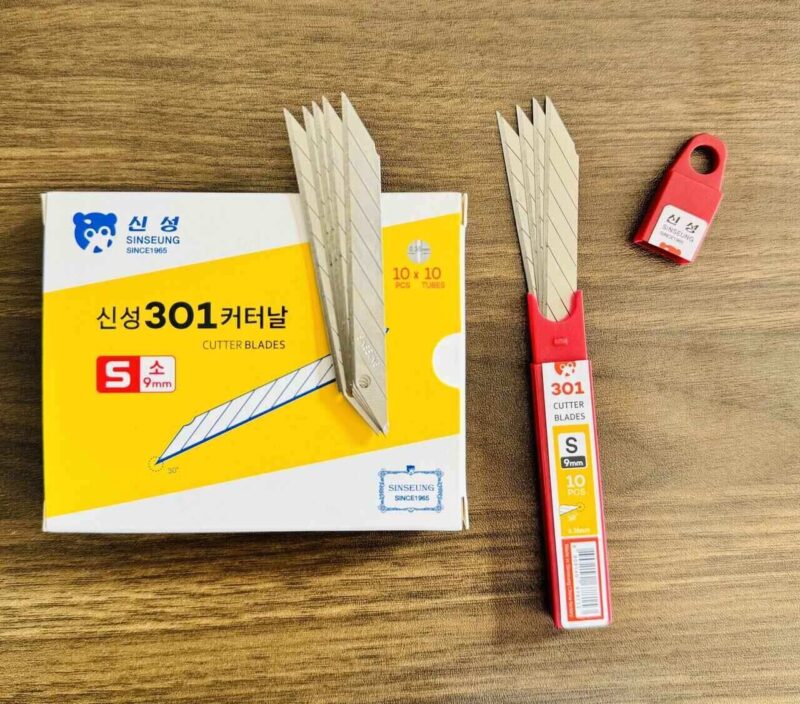
A utility knife segmented blade uses score lines so a worn section can be removed by the holder’s approved method, exposing a fresh tip. The segments do not change the underlying steel grade. They change how the usable edge is renewed, how stock is consumed, and how teams manage spent sharp pieces.
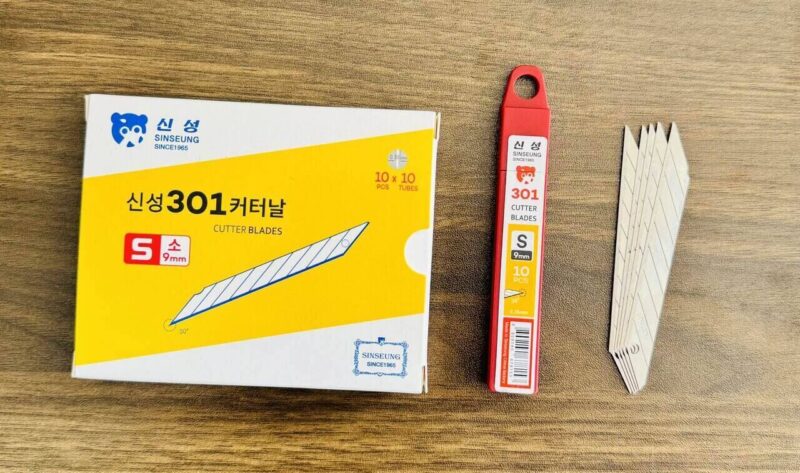
Geometry also changes what the material can do in practice. S301 is a 9 mm, 0.38 mm-thick, 30-degree SK2 blade aimed at precision film and craft work. A wider, thicker strip can provide more rigidity for heavier cuts, but it also needs the matching holder and may be less agile in tight detail work. Material and geometry must be qualified as one system.
Qualify Material Claims With a Repeatable Test
A professional evaluation should reproduce the actual cutting environment. Use the intended holder, representative material, normal extension, and a defined number of cuts. Record entry force, cut finish, edge wear, segment behavior, corrosion after storage, and any bending or chipping. A sharp cutter must repeat that result across the tested pieces, not only on the first cut.
*Confirm the hardware blade model, steel grade, width, thickness, tip geometry, and finish on the approved specification.
*Compare samples from more than one case rather than selecting only the best-looking piece.
*Test the exact materials and holder used by the professional team.
*Inspect edge consistency, score lines, coating coverage, and protective packing.
*Keep an approved hardware blade sample and acceptance record for later shipments.
Sinseung combines automated equipment with manual process control and inspects blade batches through its quality team. Buyers assessing a lâmina cortadora program can use that capability as a starting point, then define measurable acceptance criteria for the selected model. Standard-product trial quantities also allow market and application feedback before a larger commitment.
Material Choice Should End in Application Proof
The practical answer is not simply a steel name. A dependable decision connects steel, heat treatment, edge grinding, coating, geometry, holder fit, and the material being cut. Buyers should approve the complete blade system through representative testing and retain the result as the benchmark for future lots.
Need Reliable Cutter Blades for Your Application?
Choose cutter blades based on verified material, precise geometry, and consistent manufacturing—not steel grade alone. Sinsung provides cutter blade solutions with controlled production and quality inspection for professional cutting applications. Contact our team to discuss your blade specifications, application requirements, and sample testing needs.
FAQ
What are box cutter blades made of most often?
Many professional blades use hardened carbon or alloy steel because these materials can support a keen ground edge. The final result still depends on heat treatment, geometry, finish, and process control.
Is SK2 steel suitable for a cutter blade?
SK2 high-carbon steel is used in Sinseung S301 and S303 blades. Suitability should be confirmed through the exact model specification and a cutting test with the intended holder and material.
Does a black coating make a blade sharper?
A black surface treatment can support corrosion resistance, but sharpness also depends on steel condition and edge grinding. Coating color alone is not proof of a sharper blade.
Why can two blades made from similar steel perform differently?
Heat treatment, edge geometry, thickness, grinding quality, coating, and batch control can all change cutting behavior even when the raw-material family appears similar.
How should a buyer compare blade materials?
Compare verified specifications and test several pieces in the intended holder on representative materials. Record cut finish, force, edge wear, corrosion, bending, and segment behavior against an approved benchmark.
-
 Are Box Cutter Blades Universal?Explain box cutter blade compatibility by width, holder channel, lock design, refill format, and model matching for trade buyers.2026/10/01
 -
How to Safely Snap Off a Utility Knife BladeLearn how to snap off a box cutter blade with controlled extension, safe break direction, secure containment, and practical S103 workstation checks.2026/09/24
-
30 vs 45 Degree Cutter Blades for PrecisionLearn how 30 and 45 degree cutter blade tips affect precision, durability, PPF trimming, and wholesale blade selection.2026/09/24