
How to Source PPF Cutting Blades for Film Tool Wholesalers
2026-08-13
A reliable PPF cutting blade affects more than cutting performance. For film tool wholesalers, distributors, and professional installers, the right blade can influence trimming accuracy, working efficiency, material waste, and repeat order stability. However, sourcing a wholesale vinyl wrap blade should not be based only on finding the sharpest sample or the lowest unit price.
A qualified blade should match the holder system, perform consistently on the intended films, maintain stable quality between batches, and come with clear specifications for future purchasing. This guide explains how buyers can evaluate PPF cutting blades, compare suppliers, and build a practical sourcing process.
Define Your PPF Blade Requirements Before Buying
Before requesting quotations, buyers should first define where and how the blade will be used. A car film blade supplier needs clear application information to recommend a suitable product and avoid unnecessary trial costs.
Important factors include:
*Film type, such as paint protection film, window tint, vinyl wrap, or protective film
*Existing holder type and blade channel size
*Daily cutting frequency and expected workload
*Preferred packaging format for workshops or resale
*Target market and order quantity
A 9mm auto detailing film blade is designed for controlled trimming work, so buyers should evaluate it based on precision, stability, and compatibility rather than comparing it directly with wider general-purpose blades.
For example, professional installers handling detailed edge trimming around vehicle panels may prioritize tip control and clean cutting, while film tool wholesalers and distributors may focus more on consistent production, packaging efficiency, and repeat supply.
Match Blade Design With Film Applications
Different film applications create different demands for blade performance. PPF installation requires controlled trimming around curved surfaces, narrow gaps, and sensitive areas where excessive pressure can affect the finish.
A suitable PPF cutting blade should provide:
*Stable movement inside the holder
*Accurate access to narrow cutting areas
*Consistent edge quality during use
*Predictable performance after segment replacement
For precision applications, blade geometry becomes especially important. A narrower profile and suitable tip angle allow installers to control the cutting direction more easily, especially when working around vehicle edges, corners, and detailed areas.
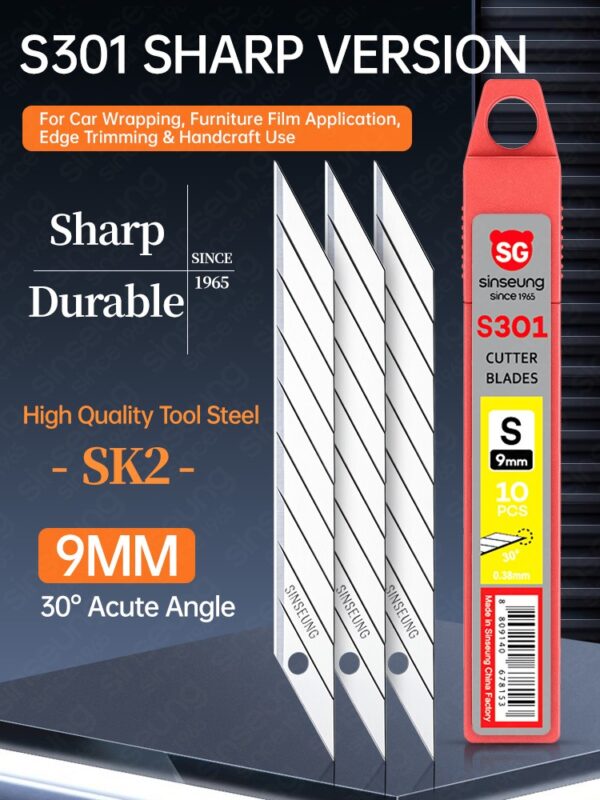
Sinseung’s S301 PPF cutting blade is designed for precision film trimming. It measures 86 mm in length, 9 mm in width, and 0.38 mm in thickness, with a 30-degree acute tip. This design supports detailed cutting tasks while the segmented structure allows users to expose a fresh edge when the working section becomes worn.
Evaluate Blade Specifications Before Ordering
Professional buyers should review measurable specifications before approving a blade for wholesale purchase. Product dimensions, material selection, tip design, and packaging details all influence whether a blade fits the intended application.
|
Decision Point |
What to Verify |
S301 Reference |
|
Blade geometry |
Holder compatibility and cutting access |
86 × 9 × 0.38 mm; 30-degree tip |
|
Material |
Edge stability and production consistency |
SK2 high-carbon alloy steel |
|
Segments |
Ease of replacing worn sections |
Eight usable snap-off sections |
|
Packing |
Storage and resale convenience |
Ten blades per polypropylene case |
|
Application range |
Performance on target materials |
PPF, car wrap, tint, furniture film, leather, rubber sheet |
Material selection is another important consideration. SK2 high-carbon alloy steel is commonly used for precision cutting applications because it supports a balance between hardness and edge performance. However, material alone does not guarantee quality. Buyers should also confirm manufacturing consistency and inspection procedures.
Test Samples Under Real Wrap Conditions
A sample evaluation should reflect actual working conditions instead of relying only on appearance or initial sharpness.
Distributors and professional installers should test:
*Cutting smoothness and drag resistance
*Edge cleanliness on real PPF or vinyl materials
*Blade movement inside the holder
*Tip control around detailed areas
*Segment breaking performance after use
The approved sample should become the reference standard for future orders. A supplier that provides a good first sample but cannot maintain consistency between production batches creates additional risk for distributors and installers.
A practical testing process should use the same holder, film type, cutting method, and inspection points. This makes it easier to compare different samples and identify whether performance differences come from the blade itself or from the working method.
Check Supplier Capability and Order Reliability
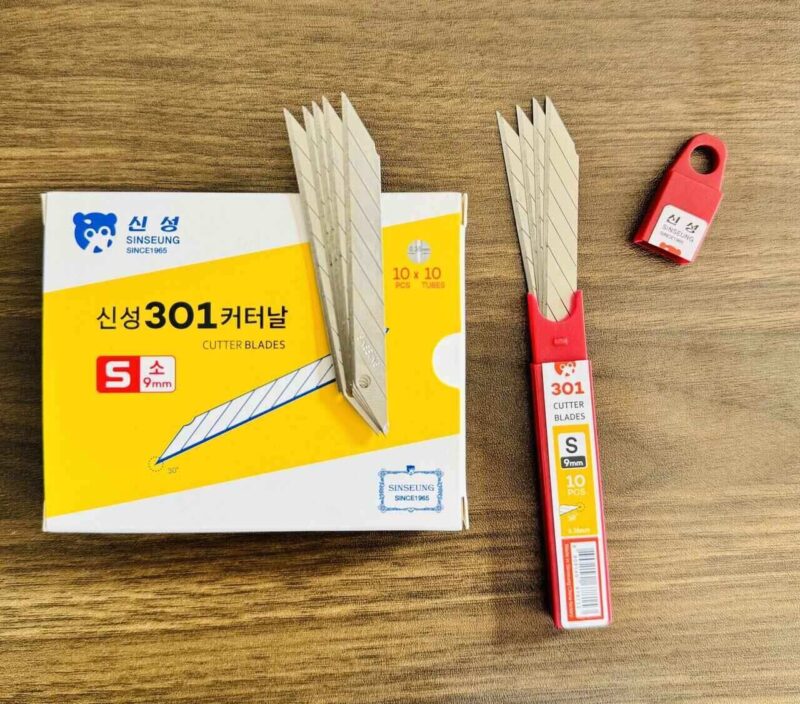
A qualified PPF blade wholesaler should provide more than a product specification sheet. Buyers should evaluate whether the supplier can maintain consistent production, control quality, and support repeat orders.
Key supplier checks include:
*Production process and inspection methods
*Batch consistency controls
*Packaging accuracy
*Response process for quality issues
*Ability to support repeat purchasing requirements
Sinseung combines automated production equipment with manual quality checks to maintain blade consistency. For wholesale buyers, this type of production control helps reduce variation between approved samples and future shipments.
Supplier evaluation is especially important for businesses building their own product lines or maintaining workshop supply chains. A reliable source should make it easier to reorder the same blade specification without repeating the entire qualification process.
Compare Total Purchasing Value Instead of Unit Price
The lowest blade price does not always represent the lowest purchasing cost. Buyers should consider the full landed value, including:
*Blade unit cost
*Packaging efficiency
*Shipping cost
*Order quantity requirements
*Quality inspection risk
*Potential replacement or rejection costs
A wholesale vinyl wrap blade packed in practical cases can simplify inventory management and resale operations. Buyers should request complete quotation details, including carton information, shipping terms, lead time, and packing configuration before making a purchasing decision.
Sinseung supports flexible purchasing for standard blade products, including trial orders where buyers cover shipping costs. This allows distributors and workshops to evaluate product performance before moving to larger purchasing volumes.
Prepare a Clear RFQ for PPF Cutting Blades
A complete quotation request helps suppliers provide accurate information and reduces unnecessary communication.
A professional RFQ should include:
|
Quotation Information |
Why It Matters |
|
Blade model or approved sample |
Prevents specification changes during production |
|
Film application |
Helps confirm product suitability |
|
Holder type |
Ensures compatibility |
|
Trial or bulk quantity |
Supports accurate pricing and availability |
|
Destination |
Allows freight calculation |
|
Packaging requirements |
Supports storage and resale planning |
|
Quality requirements |
Defines acceptance standards |
For example, buyers sourcing the S301 model should confirm the current specification, pack quantity, carton details, lead time, payment terms, and quality handling process before placing a commercial order.
A professional car film blade supplier should provide clear technical information and practical support throughout the purchasing process. The right sourcing decision combines product performance, supplier reliability, and long-term supply stability.
Prepare Your Next Sourcing Step
If you are sourcing PPF cutting blades for film tool wholesalers, distributors, or private-label programs, prepare your film applications, holder requirements, destination, and expected order quantity before contacting a supplier.
Sinseung provides precision cutting blade solutions, including S301 PPF cutting blades for film trimming applications. Contact Sinseung with your requirements to discuss blade specifications, sample evaluation, packing options, and wholesale supply solutions.
FAQ
How should buyers test a wholesale vinyl wrap blade?
Buyers should test the blade using actual film materials, the intended holder, and consistent cutting methods. Important factors include cutting smoothness, edge quality, stability, and segment performance.
Can new buyers place a small trial order?
Trial order availability depends on current product conditions and shipping arrangements. Sinseung supports smaller evaluations for standard products when buyers cover shipping costs, allowing customers to assess performance before larger orders.
What should buyers confirm with a PPF blade wholesaler?
Buyers should confirm blade specifications, material, packing details, carton information, lead time, shipping terms, quality inspection methods, and the process for handling production issues before approval.
-
 Are Box Cutter Blades Universal?Explain box cutter blade compatibility by width, holder channel, lock design, refill format, and model matching for trade buyers.2026/10/01
 -
How to Safely Snap Off a Utility Knife BladeLearn how to snap off a box cutter blade with controlled extension, safe break direction, secure containment, and practical S103 workstation checks.2026/09/24
-
30 vs 45 Degree Cutter Blades for PrecisionLearn how 30 and 45 degree cutter blade tips affect precision, durability, PPF trimming, and wholesale blade selection.2026/09/24