
How Snap Off Blades Work in Professional Cutters
2026-08-27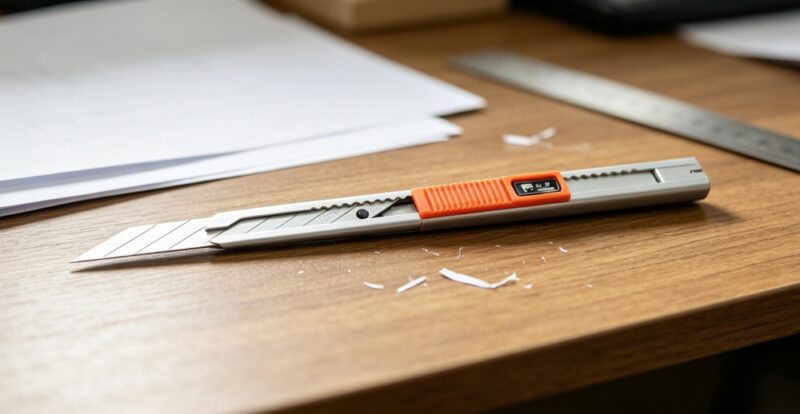
A snap off blade is a continuous steel strip divided by angled score lines. The holder advances and locks the strip; each scored section provides a working tip that can be retired after wear. For professional users, the value is controlled edge renewal, compact spare inventory, and repeatable cutting without replacing the whole strip every time the leading section loses performance.
A Segmented Blade Stores Several Working Sections
The visible diagonal lines are intentional reductions in the blade cross-section. They divide one strip into a sequence of sections while leaving enough material for the strip to travel through its holder as one piece. The cutting edge continues across the sections, so advancing the strip places the next usable edge at the front. This architecture explains why snap off blades can serve repeated work cycles from one refill.
Score Lines Define Renewal Points
A score line is not a second cutting edge. It is a planned separation point. Its angle, depth, spacing, and consistency affect whether a section separates predictably and leaves a practical next tip. A shallow or irregular line may resist separation; an overly weak line can reduce stability. Buyers should inspect score-line uniformity together with straightness, thickness, edge finish, and the intended holder rather than judging the line in isolation.
|
System element |
Primary job |
Qualification question |
|
Cutting edge |
Enters and separates the material |
Is the grind clean and consistent? |
|
Scored sections |
Provide planned edge-renewal points |
Are spacing and depth uniform? |
|
Blade channel |
Guides the strip during travel |
Does the strip move without wobble or binding? |
|
Slider or carrier |
Advances and retracts the strip |
Does it engage every required position? |
|
Lock |
Holds the selected extension |
Does it resist movement in the approved task? |
The Holder Turns the Strip into a Cutting System
The blade cannot deliver stable work by itself. A snap-off cutter knife needs a channel that supports the strip, a carrier that controls movement, and a lock that holds the selected position. These parts determine how much of the blade is exposed and how much lateral movement reaches the tip. Excessive extension increases leverage on the strip, so operators should use only the extension allowed by the current tool instruction and task assessment.
Alignment and Locking Protect Cut Quality
A straight strip in a clean, correctly sized channel tracks more consistently than a loose or contaminated assembly. The lock must hold during the representative cut without unintended travel. A buyer evaluating breakaway blades should therefore test the complete blade-and-holder combination. Visual sharpness, steel grade, or a smooth unloaded slider cannot substitute for controlled cutting and lock-retention checks.
*Confirm the exact blade width, thickness, tip form, segment pattern, and approved holder.
*Check that the strip seats straight and travels through the required positions without binding.
*Verify positive locking and retraction before cutting representative production material.
*Compare edge finish, drag, tip stability, and segment consistency across the sampled lot.
*Record the approved model, sample, packaging, and inspection limits for receiving control.
Why Professional Teams Use Segmented Systems
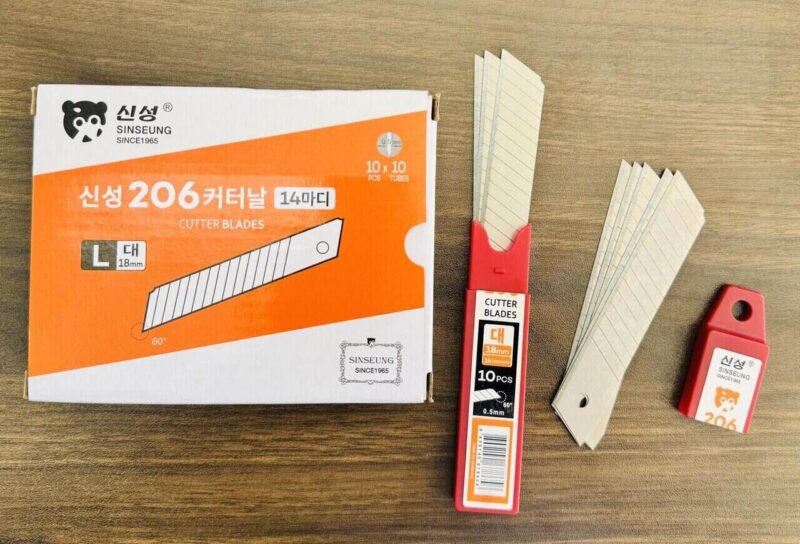
Segmented systems make several working sections available in one compact strip. This can reduce interruptions during film trimming, carton work, craft production, and suitable construction tasks because operators do not need to replace the entire blade as soon as the leading tip becomes worn.
The format also gives teams a practical way to standardize edge condition. Instead of allowing operators to continue cutting with a dull or damaged tip, a workplace can define when the leading section should be retired and when the next section should be brought into service. That approach can improve consistency, but only when the blade is used within the limits of the holder, material, and approved cutting procedure.
Blade Geometry Still Has to Match the Task
Segmented construction does not make every blade interchangeable. Width, thickness, tip angle, steel specification, and segment layout all influence how the blade behaves in a particular holder and material.
Use a Controlled Sample Plan to Compare Suppliers
A useful supplier comparison controls the variables that can affect cutting performance. Fit each candidate blade to the approved holder, use the same extension, material batch, cutting direction, and operator method, and then record the results under representative working conditions.
Relevant checks may include:
*Smooth blade travel through the holder
*Positive locking at the required positions
*Retraction without sticking
*Cut finish and cutting drag
*Tip stability during the intended cut
*Score-line consistency
*Blade straightness and surface condition
*Packaging condition and lot consistency
Testing several pieces from the same sample lot is more informative than approving a single blade that happens to perform well. Where purchasing volume is significant, buyers may also compare multiple lots to determine whether dimensional control and cutting behavior remain consistent over time.
Turn the Trial Result into a Purchasing Specification
The purpose of a sample trial is not simply to decide whether a blade feels sharp. It is to establish which blade-and-holder combination performs acceptably and which characteristics need to remain controlled in future deliveries.
Once a candidate passes the trial, the approved specification can record the blade model, dimensions, material designation, tip geometry, segment pattern, compatible holder, packaging format, and relevant inspection limits. Reference samples or agreed inspection criteria can then be used during receiving checks and future supplier reviews.
This creates a clearer link between initial product selection and ongoing production control. Instead of relying only on catalog descriptions, the purchasing team has a documented basis for confirming that later shipments continue to match the application that was originally qualified.
Evaluate the Complete Cutting System
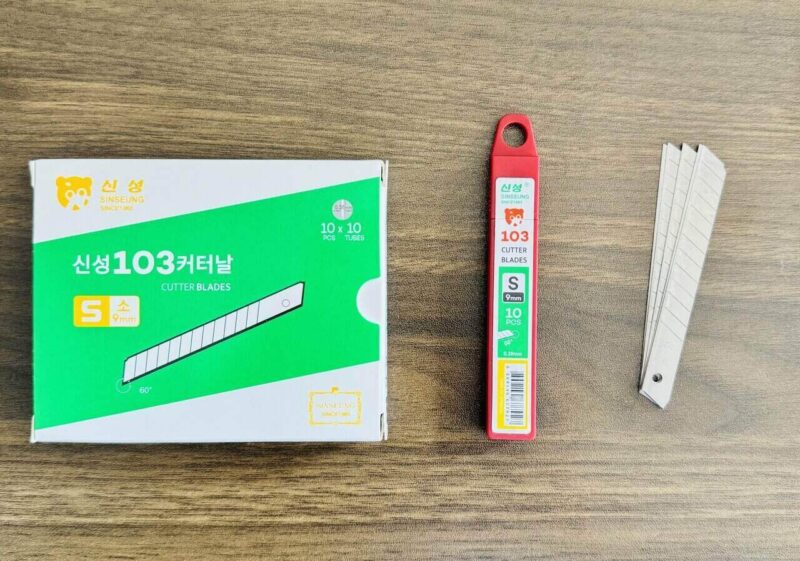
A snap-off blade works because several elements perform together. The cutting edge enters the material, the scored sections provide controlled renewal points, the channel guides the strip, the carrier positions it, and the lock supports the selected extension.
For that reason, professional blade selection should go beyond sharpness alone. A suitable segmented blade should fit the intended holder correctly, advance and retract consistently, remain stable during the approved cut, and provide predictable working sections throughout its usable length.
When those conditions are verified through a controlled sample process, segmented blades can provide a practical combination of compact inventory, repeatable edge renewal, and consistent cutting performance.
To compare standard segmented blade options, send the holder model and trial material to Sinseung and request confirmation of the current specification, packing, availability, and sample route. Providing the intended holder and application details at the beginning of the inquiry can also make it easier to identify an appropriate blade configuration for testing.
FAQ
Why do snap off blades have diagonal lines?
The diagonal lines are planned separation points that divide the strip into working sections. Their geometry helps define where a worn front section separates while allowing the remaining strip to continue functioning in the holder.
Does every segment have a cutting edge?
The sharpened edge continues along the blade strip, so each section provides a usable leading edge after the previous section is retired. Consistent grinding and score-line placement are important for repeatable cutting behavior.
Are segmented blades interchangeable between holders?
No. Width, thickness, strip length, tip geometry, carrier engagement, and lock design can differ between systems. The exact blade and holder combination should be verified before approval.
What should a buyer inspect on a segmented blade sample?
A sample evaluation can include straightness, dimensions, edge finish, score-line uniformity, surface condition, packaging, holder travel, locking, retraction, cut finish, cutting drag, and tip stability on the intended material.
Do segmented blades eliminate full blade replacement?
No. Segment renewal extends the usable life of one strip by making additional working sections available, but the complete blade still needs to be replaced after the usable sections are exhausted or when the applicable tool instruction requires removal.
What information should be provided when requesting a blade sample?
Useful information includes the holder model, required blade width and thickness, material being cut, preferred tip geometry, typical blade extension, packaging requirements, and any inspection or performance criteria that need to be confirmed. Providing these details helps the supplier and buyer evaluate the same application conditions from the beginning.
-
 SK2 vs SK5 Utility Blades for Different JobsCompare SK2 and SK5 utility blade grades by sharpness, toughness, edge life, and job fit for wholesale blade selection.2026/10/07
 -
Are Box Cutter Blades Universal?Explain box cutter blade compatibility by width, holder channel, lock design, refill format, and model matching for trade buyers.2026/10/01
-
How to Safely Snap Off a Utility Knife BladeLearn how to snap off a box cutter blade with controlled extension, safe break direction, secure containment, and practical S103 workstation checks.2026/09/24