
How to Remove a Stuck Utility Knife Blade
2026-08-13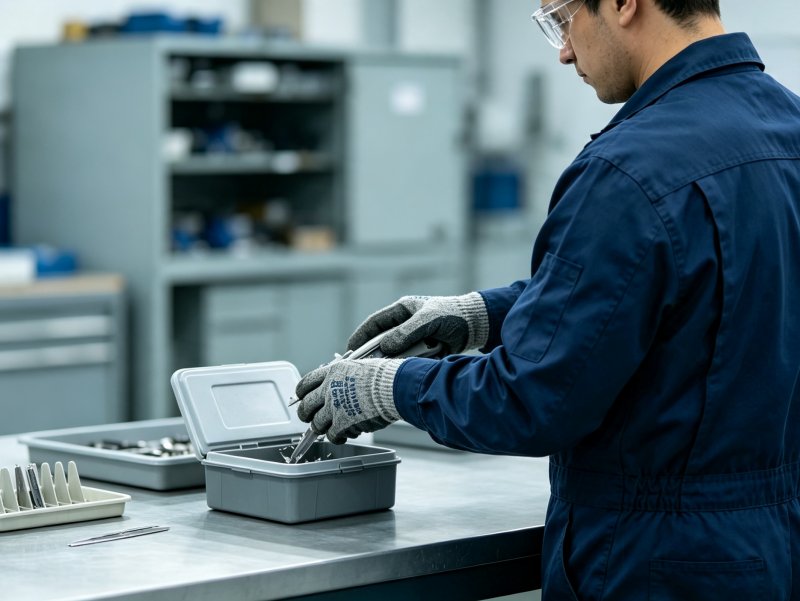
When the blade stops moving or remains trapped inside the holder, the priority is not to force it out but to understand why it happened. Do not pull an exposed strip by hand or force the slider. A controlled diagnosis separates simple debris from a bent blade, damaged carrier, failed lock, or holder that must be replaced. At Sinseung, we focus on reliable utility knife blade solutions and help users select compatible cutting components based on application requirements, holder design, and replacement needs.
Stop Work and Classify the Jam
A trapped blade may be held by adhesive, compacted dust, a fragment in the channel, corrosion, a bent strip, or a misaligned carrier. The first response is the same: place the material aside, keep the cutting path clear, and prevent anyone from testing the knife. If the blade cannot retract, place the tool in a rigid temporary container or guarded maintenance area with the edge protected.
Use Symptoms to Select the Next Check
|
Observed symptom |
Likely area |
Safe next action |
|
Slider moves but blade does not |
Carrier engagement |
Remove from service and inspect by instructions |
|
Blade moves roughly |
Residue or channel damage |
Open only if the holder is serviceable |
|
Blade is visibly bent |
Strip and possibly track |
Contain the edge; do not straighten in place |
|
Lock will not hold |
Slider or lock |
Do not return the knife to cutting work |
|
Rust or liquid is present |
Storage and internal parts |
Quarantine and assess replacement |
If a jam follows a drop, impact, or side load, assume the holder may also be damaged. A jammed box cutter should not be restored by striking it, levering the strip against the nose, or adding force to the slider. Those actions can release stored tension suddenly and leave a hidden defect that appears during the next cut.
Follow the Holder’s Removal Sequence
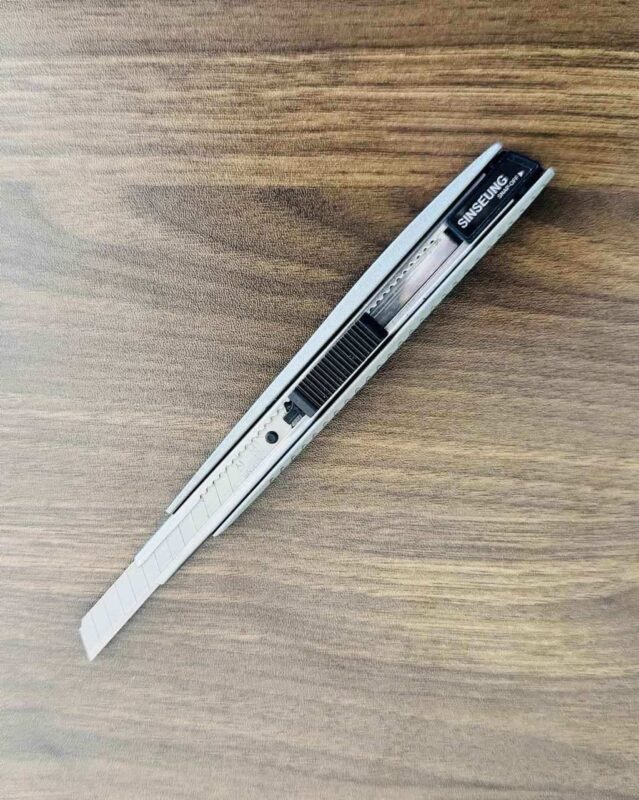
Before disassembly, obtain the instructions for the exact holder model. Designs differ: some use a removable end clip and sliding carrier, while others use screws or captive parts. Guidance on how to remove cutter blade strips must match the mechanism. If the holder is sealed, spring-loaded, broken, or not intended for service, replace it rather than improvising an opening method.
Control the Blade Throughout Removal
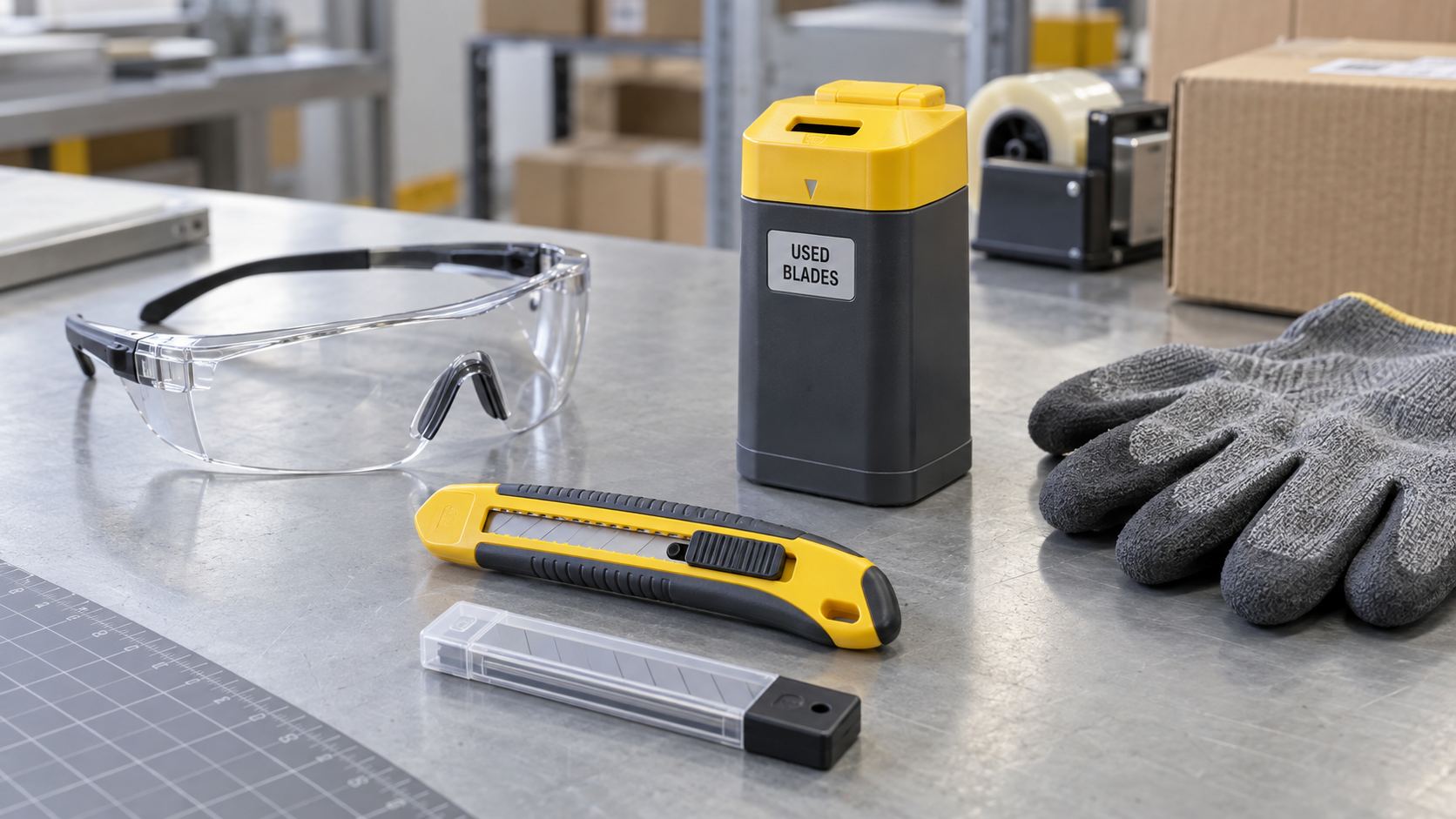
*Wear the protective equipment specified by the site’s risk assessment.
*Work over a clear tray so loose parts and fragments remain visible.
*Keep the knife pointed away from the body and maintain control of the strip.
*Use approved tools for the holder; never grip a cutting edge with bare fingers.
*Transfer removed blades and fragments directly to a closable sharps container.
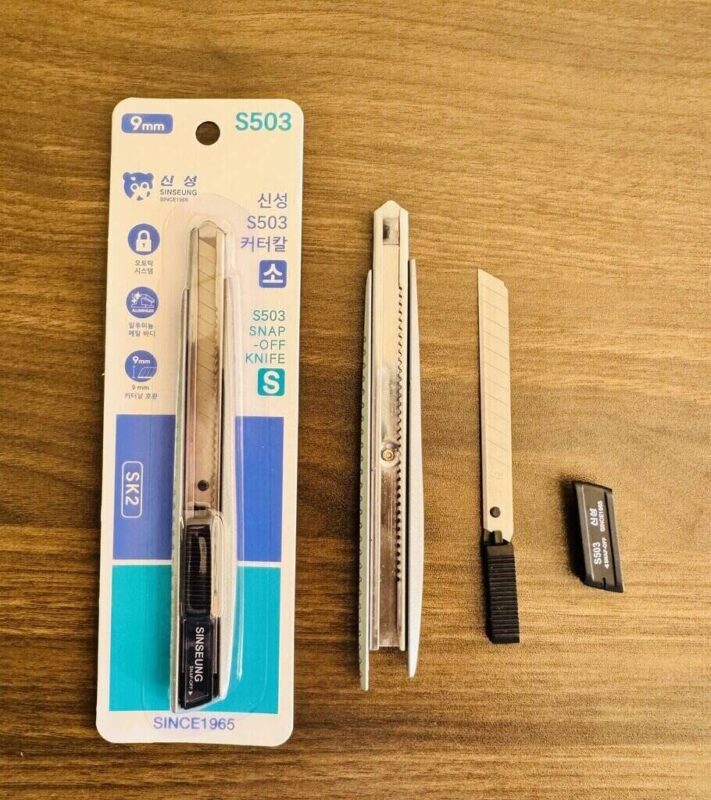
For a serviceable sliding design, retract the blade if it will move, release the designated end component, and withdraw the carrier as the manufacturer directs. Support the blade by its non-cutting area with an approved gripping method. If the strip will not move with light controlled pressure, stop. Escalate the stuck utility knife blade to a trained maintenance person or replace the holder.
Clean the Channel Without Creating Damage
Teams learning how to clean a box cutter should begin with dry removal of visible debris using the maker-approved brush or wipe. Avoid reaching into the channel. Do not use compressed air where it can project fragments, and do not add oil or solvent unless the holder instructions permit the exact product. Some liquids can trap dust, attack plastic, or interfere with the lock.
Inspect Parts Before Reassembly
Utility knife maintenance should check the channel, carrier, slider, lock, end component, and replacement strip under good light. Reject parts with burrs, cracks, deformation, heavy corrosion, or uncertain engagement. Dispose of the removed strip safely even if only one area appears damaged; reinstalling a distorted blade can reproduce the jam or weaken lock performance.
Install a Verified Refill and Test the Lock
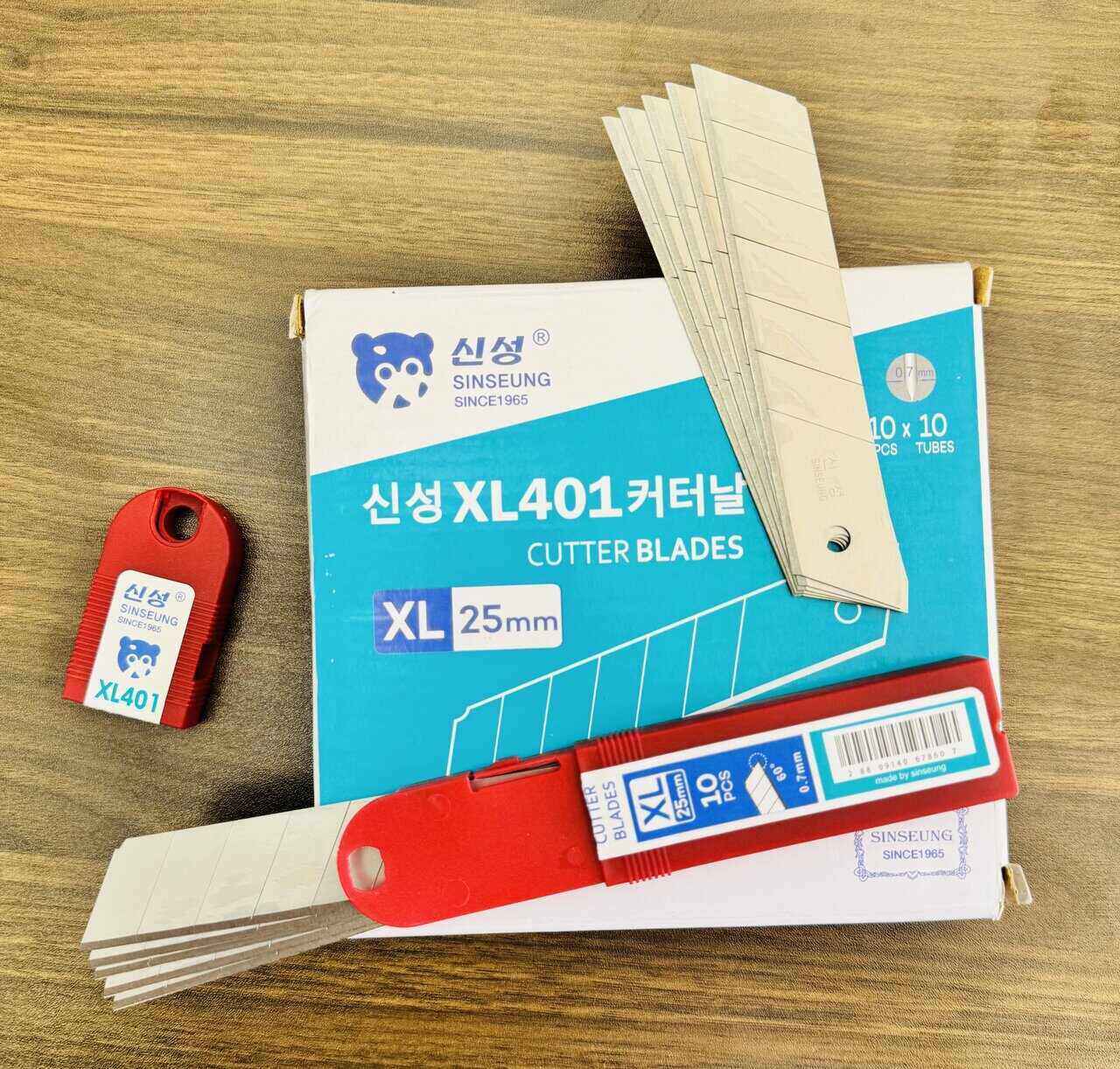
A clean holder should receive only a compatible, undamaged blade. Sinseung supports customers in evaluating blade specifications such as thickness, length, end geometry, carrier engagement, and score pattern to ensure the refill matches the intended holder system. Nominal width alone is not a complete fit specification.
Reassemble the holder in order, then cycle the slider with the edge directed away from people. Confirm smooth advancement and full retraction. Extend only the minimum needed for a controlled scrap test and verify the lock holds without wobble. A jammed box cutter that binds, slips, or opens at a joint fails the test and should remain out of service.
Prevent Repeat Jams at Busy Workstations
A short utility knife maintenance routine prevents many repeat events. Inspect before issue, wipe adhesive from the exterior after compatible tasks, keep the knife dry, store it retracted, and use only the extension needed for the cut. Train operators to report resistance or slider changes early rather than continuing until the mechanism locks completely.
Document each stuck utility knife blade by holder model, refill lot, material, contamination, and observed damage. This record helps distinguish a single dirty channel from repeated mismatch or process abuse. For purchasing teams, this information is also valuable when working with suppliers such as Sinseung to review refill consistency, blade specifications, and long-term cutting performance.
For workplaces that rely on utility knives in daily operations, choosing the right blade and holder combination is as important as proper maintenance. A reliable supplier can help confirm blade compatibility, material requirements, replacement frequency, and bulk supply needs to reduce unexpected downtime caused by poor fit or inconsistent quality. If your team is sourcing compatible utility knife blades or cutting solutions for industrial applications, contact Sinseung’s specialists to discuss your requirements and find a suitable supply option.
FAQ
How do I remove a cutter blade that is stuck?
Stop work, guard the exposed edge, identify the exact holder mechanism, and follow its removal instructions over a clear tray. If light-controlled pressure does not release it, keep the knife quarantined for trained maintenance or replacement.
Should I force the slider on a jammed box cutter?
No. Extra force can release the blade suddenly or damage the lock and carrier. Remove the knife from service, identify the cause, and use only the documented service method.
Can oil free a stuck utility knife blade?
Use oil only when the exact holder instructions permit it. Unapproved liquids can trap debris, affect plastic, or impair the lock. Begin with the approved dry-cleaning method.
How to clean a box cutter channel safely?
Disassemble only as instructed, contain the blade, remove visible debris with an approved brush or wipe, inspect parts, and keep the channel dry unless the manufacturer specifies another method.
-
 Are Box Cutter Blades Universal?Explain box cutter blade compatibility by width, holder channel, lock design, refill format, and model matching for trade buyers.2026/10/01
 -
How to Safely Snap Off a Utility Knife BladeLearn how to snap off a box cutter blade with controlled extension, safe break direction, secure containment, and practical S103 workstation checks.2026/09/24
-
30 vs 45 Degree Cutter Blades for PrecisionLearn how 30 and 45 degree cutter blade tips affect precision, durability, PPF trimming, and wholesale blade selection.2026/09/24