
How to Choose Utility Knife Blade Size
2026-08-20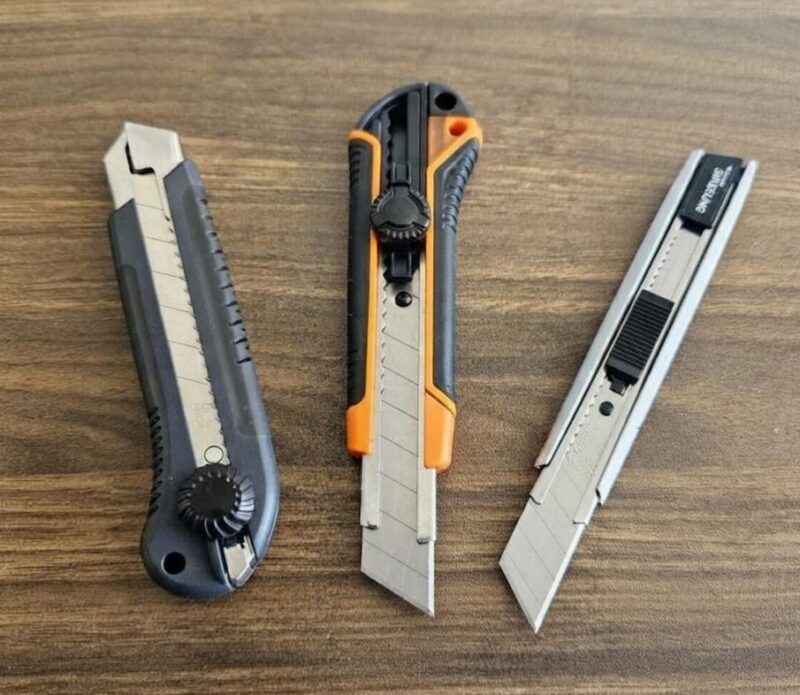
Picking the right utility knife blade size goes beyond just finding the thickest or widest option. You must find a good balance. This balance involves your cutting control and the stiffness of the tool. It also depends on holder compatibility and the specific material you need to cut.
Professional buyers usually look at three standard sizes. These are 9 mm, 18 mm, and 25 mm. Each size serves a distinct purpose. A 9 mm option gives you tight control for detailed cuts. Meanwhile, an 18 mm version brings a handy mix of traits for daily professional tasks. Finally, a 25mm utility knife blade offers extra stiffness for tough materials.
Still, width by itself will not dictate how well a tool cuts. Purchasers need to look at a few other details before buying in bulk. You should check the thickness and the tip design. You also need to review the holder stability and the maximum extension length. Always run real-world cutting tests first.
Understand the Factors Behind Utility Knife Blade Selection
Before comparing blade sizes, buyers should understand the main factors that influence cutting performance.
|
Factor |
Impact on Blade Selection |
|
Blade width |
Affects rigidity, control, and accessibility in different cutting environments |
|
Blade thickness |
Influences resistance to bending and overall durability |
|
Tip angle |
Changes cutting behavior and suitability for different materials |
|
Holder design |
Determines blade stability, locking strength, and safe extension |
|
Material properties |
Determines the required cutting force and edge performance |
A suitable blade size is the result of matching these factors with the actual working condition. A larger blade may provide more stability, but it can reduce flexibility and control in detailed work.
Blade Width Does Not Equal Cutting Depth
People often mistakenly think a wider blade will always cut deeper. In reality, your cutting depth relies on a few different things. These include the usable extension and the shape of the holder nose. The cutting angle, the toughness of the material, and your personal technique also matter.
Think about a 25mm utility knife setup. It will not automatically slice deeper than a 9 mm version. This happens if the handle restricts the reach. It also happens if the target material demands a unique cutting style.
Blade size mainly defines the working characteristics of the blade system:
*Smaller blades improve access and precision.
*Medium blades provide balanced control and strength.
*Larger blades improve rigidity under higher cutting loads.
Therefore, buyers should select a blade size based on the required cutting performance rather than width alone.
Choose 9 mm Blades for Precision Cutting
A 9 mm size fits tasks that need high control and clear sightlines. In these jobs, exact cuts matter much more than raw stiffness.
This slim shape makes handling much easier during intricate jobs. It helps workers trace curves, follow edges, or navigate tiny spots. People often use these 9mm snap off blades for film trimming and leather edging. They also work great for slicing rubber and similar delicate chores.
The Sinseung S301 9mm snap off blades feature SK2 high-carbon steel. They have a 0.38 mm thickness along with a 30-degree tip angle. This specific build aids highly controlled movements. It works perfectly when accuracy and easy steering remain crucial.
When Should Buyers Choose 9 mm?
A 9 mm blade is suitable when:
*The cutting path requires high visibility and control
*The material is relatively thin or flexible
*Operators need frequent directional changes
*A narrow blade profile improves working efficiency
However, buyers should avoid excessive blade extension or heavy side pressure because the smaller strip has less resistance to bending compared with larger sizes.
Move to 18 mm Blades for General Professional Applications
An 18 mm utility knife blade is often the most versatile choice for professional users because it provides a balance between control and rigidity.
Compared with a 9 mm blade, the wider and thicker structure reduces flexing during higher-resistance cuts while maintaining good handling. It is commonly used for packaging materials, construction-related materials, carpet, rope, foam, acrylic, leather, and similar applications.
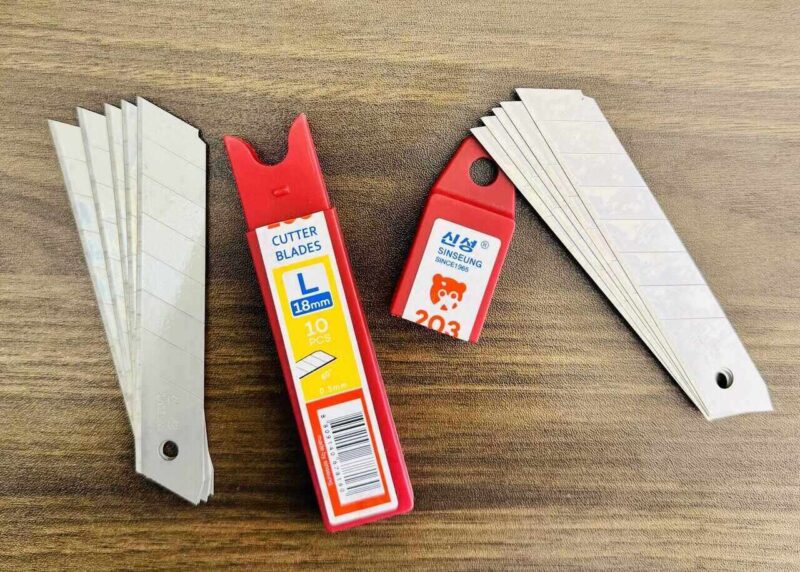
Sinseung’s L203 18 mm snap-off blade features a 0.5 mm thickness, 60-degree tip angle, and SK2 alloy steel construction. This specification provides increased stability for users who need more cutting strength than a precision blade can provide.
When Should Buyers Upgrade From 9 mm to 18 mm?
An upgrade to 18 mm is worth considering when:
*The blade begins to flex during normal cutting
*More cutting force is required
*Operators need better stability for repeated work
*The application involves thicker or harder materials
For many professional environments, 18 mm provides the most practical balance between precision and strength.
Select 25 mm Blades for Maximum Rigidity
A 25 mm utility knife blade is designed for applications where stability under load is the priority.
The larger blade structure provides greater resistance to bending and is suitable for demanding workshop and construction applications involving materials such as drywall, foam board, dense cardboard, carpet, rope, and other high-resistance materials.
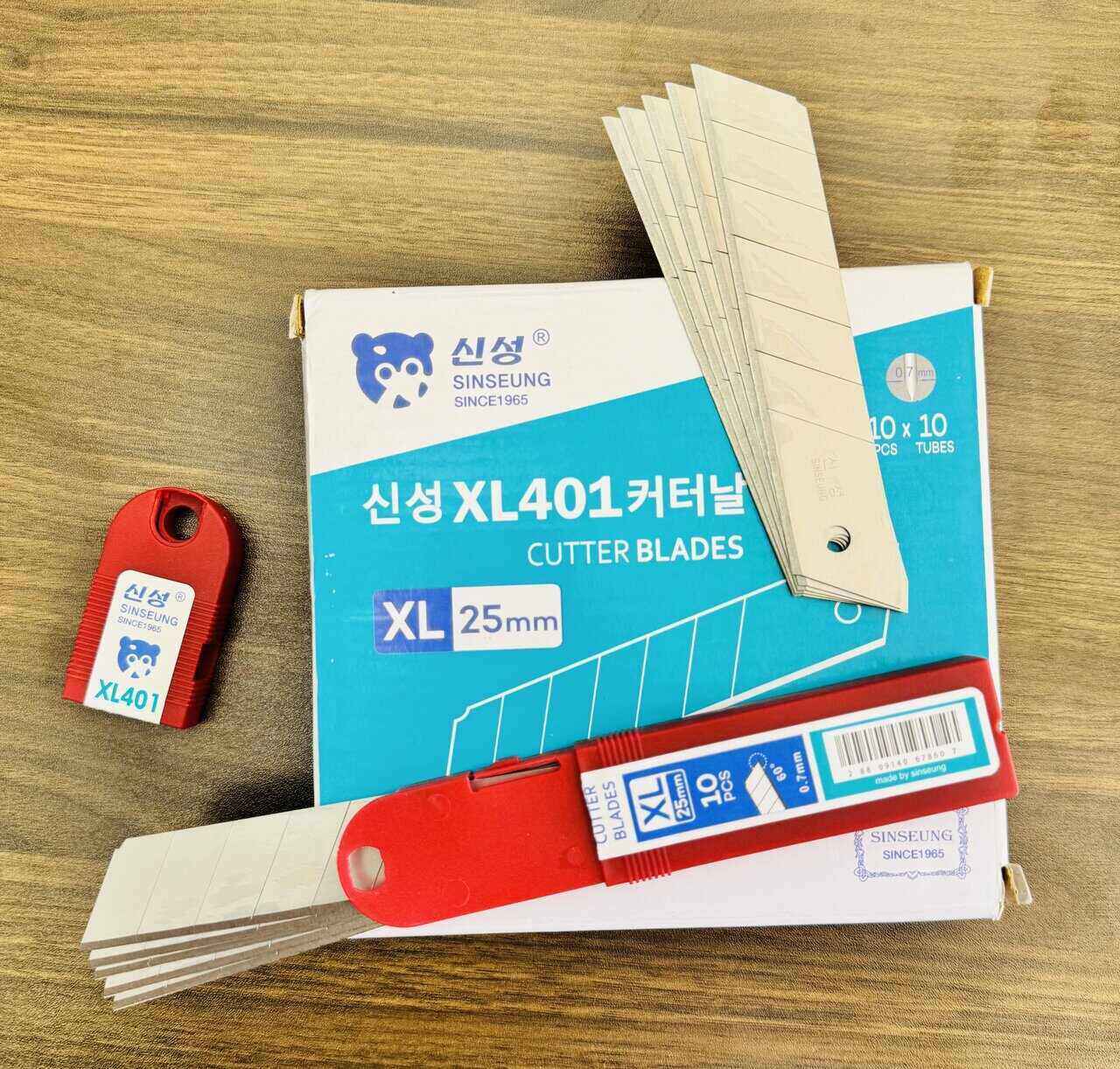
Sinseung XL401 25 mm snap-off blade features a 0.7 mm thickness, SK2 high-carbon steel construction, and a 60-degree tip angle. This specification is developed for users who require stronger blade support during heavier cutting operations.
When Should Buyers Choose 25 mm?
A 25 mm blade is appropriate when:
*An 18 mm blade does not provide enough rigidity
*Cutting stability is more important than maneuverability
*The material creates higher resistance during operation
However, larger blades are not always the better choice. Their wider profile may reduce flexibility in narrow spaces or detailed cutting applications.
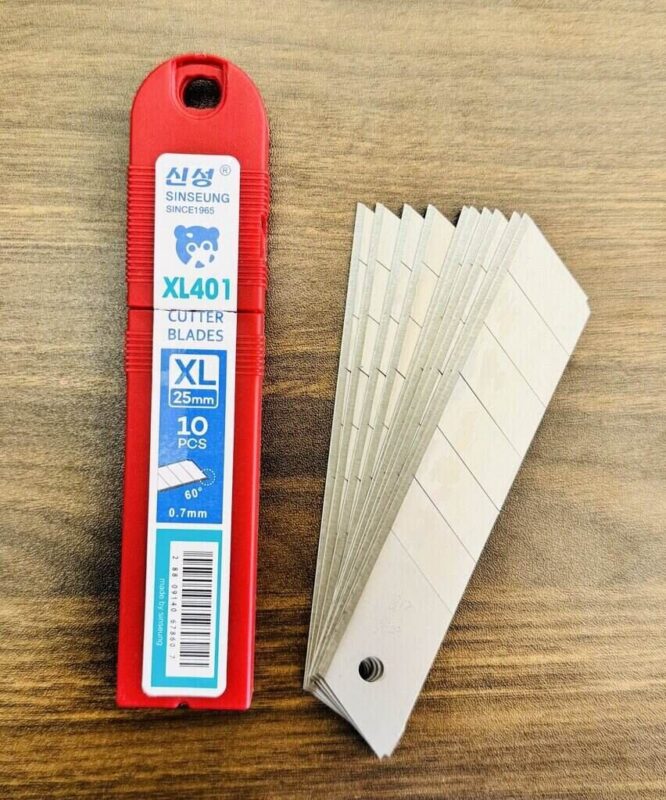
Compare 9 mm, 18 mm, and 25 mm Blade Sizes
|
Blade Size |
Example |
Thickness |
Main Advantage |
Suitable Applications |
|
9 mm |
S301 |
0.38 mm |
Precision and control |
Film, leather detail, rubber trimming, fine cutting |
|
18 mm |
L203 |
0.5 mm |
Balance between strength and handling |
Packaging, construction materials, carpet, rope |
|
25 mm |
XL401 |
0.7 mm |
Maximum rigidity |
Heavy-duty workshop and construction applications |
These size classes help buyers narrow their options, but final selection should always be confirmed through real material testing.
How Buyers Should Validate Blade Size Before Bulk Orders
Selecting a blade size for production use should involve practical testing rather than relying only on specifications.
Before approving a large order, buyers should evaluate:
1. Test With the Actual Cutting Material
Different materials create different levels of resistance. A blade that performs well on cardboard may not provide the same results on film, leather, or construction materials.
2. Check Holder Compatibility
The blade and holder work as one system. Buyers should confirm:
*locking stability
*smooth blade movement
*safe extension range
*replacement convenience
3. Evaluate Cutting Results
A proper trial should check:
*cutting accuracy
*blade flexing
*edge durability
*replacement frequency
*operator handling experience
Sinseung has specialized in cutter blades and related cutting tools since 1965, supplying products for industries including stationery, construction materials, automotive detailing, hardware, and leather applications. The company develops cutter blades with independently developed heat treatment and grinding technologies to maintain consistent cutting performance.
Final Selection Rule: Choose the Smallest Blade Size That Meets the Requirement
The correct utility knife blade size is the smallest size that provides enough stability, safety, and cutting performance for the approved application.
*Choose 9 mm when precision and control are the priority.
*Choose 18 mm when general professional versatility is required.
*Choose 25 mm when higher rigidity is necessary.
For buyers sourcing utility knife blades in volume, the best approach is to define the application, test representative samples, confirm the holder system, and then finalize the specification.
FAQ
Is a larger utility knife blade always better?
No. Larger blades provide more rigidity but may reduce maneuverability. The correct size depends on the material, cutting method, and working requirements.
What is the difference between 9 mm and 18 mm utility knife blades?
A 9 mm blade focuses on precision and control, while an 18 mm blade provides greater rigidity for general professional cutting tasks.
When should I use a 25 mm utility knife blade?
A 25 mm blade is suitable when cutting conditions require higher stability and resistance to bending, especially for demanding workshop or construction materials.
Does blade thickness matter when choosing a utility knife blade size?
Yes. Thickness affects bending resistance and durability. Buyers should consider width and thickness together when selecting a blade.
Should buyers test utility knife blades before placing bulk orders?
Yes. Sample testing with actual materials helps confirm cutting performance, holder compatibility, and long-term suitability before large-scale purchasing.
-
 Are Box Cutter Blades Universal?Explain box cutter blade compatibility by width, holder channel, lock design, refill format, and model matching for trade buyers.2026/10/01
 -
How to Safely Snap Off a Utility Knife BladeLearn how to snap off a box cutter blade with controlled extension, safe break direction, secure containment, and practical S103 workstation checks.2026/09/24
-
30 vs 45 Degree Cutter Blades for PrecisionLearn how 30 and 45 degree cutter blade tips affect precision, durability, PPF trimming, and wholesale blade selection.2026/09/24