
Top 5 Materials Of Cutter Blades: Learn How to Choose the Right One
2026-09-01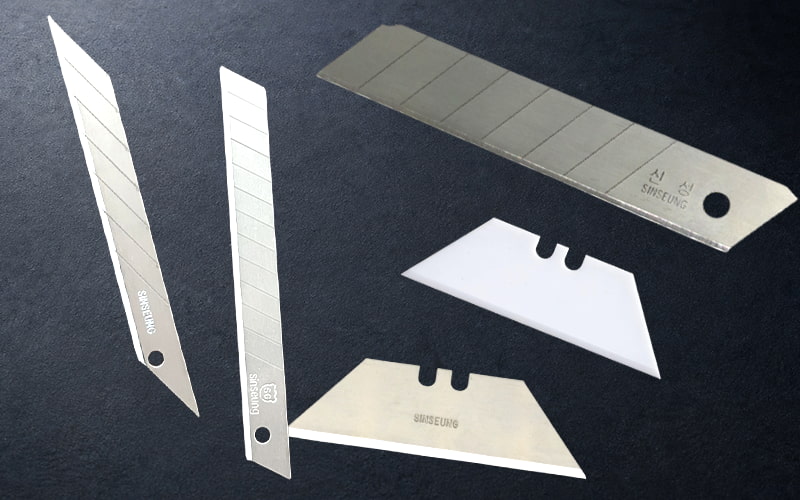
Comparison-of-high-carbon-steel-stainless-steel-HSS-and-ceramic-utility-knife-blade-materials
What Are Cutter Knife Blades Made Of?
Cutter knife blades may look simple, but their performance depends on much more than whether the edge feels sharp when it is new. Blade material, heat treatment, edge geometry, grinding accuracy and surface treatment all affect sharpness, toughness, corrosion resistance and service life.
This guide will introduce the 5 most common practical blade materials. They are High Carbon Steel, Alloy Steel, Martensitic Stainless Steel, High-Speed Steel(HSS), and Zirconia Ceramic.
Quick Answer: Which Utility Knife Blade Material Should You Choose?
• For office work, cartons and everyday cutting, choose a High-carbon steel blade.
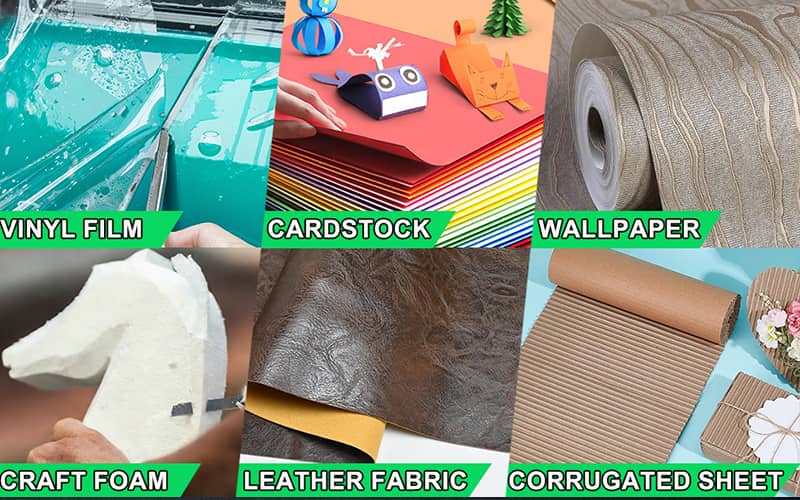
• For PPF, car wrap and window film installation, choose a precision-ground 30-degree high-carbon steel blade with a consistent tip and low cutting resistance.
• For drywall, carpet, rubber and heavy-duty construction work, choose tough high-carbon steel, alloy steel or a high-speed steel.
• For humid, outdoor, food-packaging or washdown environments, choose martensitic stainless blade steel.
• For non-magnetic, rust-free or metal-sensitive light-duty applications, consider a zirconia ceramic blade.
There is no single “best” utility blade material for every job. The right blade matches the material being cut, the cutting motion, the working environment and the required balance between sharpness, toughness and wear resistance.
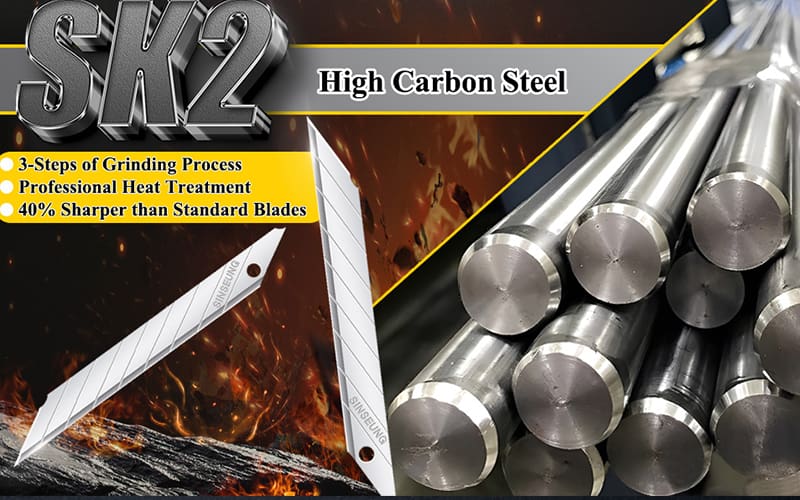
sk2-high-carbon-steel-for-ppf-vinyl-wrap
1. High-Carbon Steel: The Standard Utility Blade Material
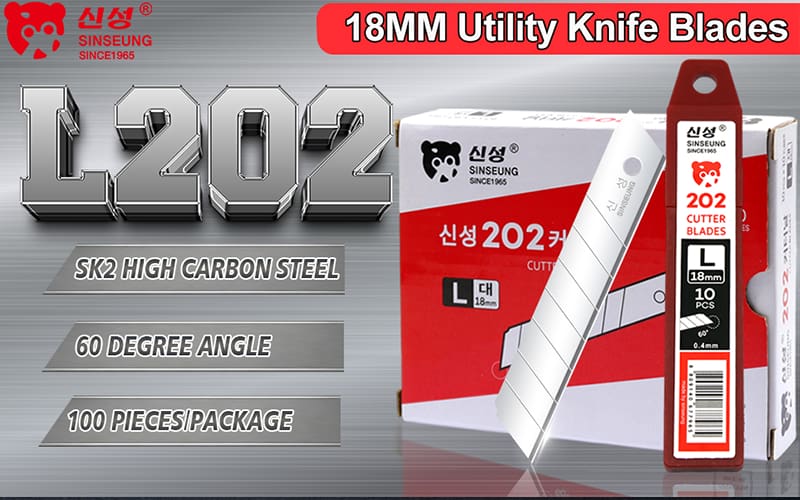
High-carbon steel is the most widely used material for utility knife blades. Include SK5(designated SK85 under the newer JIS naming system), SK2(designated SK120 under the newer JIS naming system).
Main uses:
• 9 mm snap-off blades
• 18 mm heavy-duty snap-off blades
• 30-degree precision blades
• Trapezoid and general-purpose safety blades
Typical working environments:
• Cutting paper, cardboard, packing tape and plastic packaging
• Trimming automotive PPF, vinyl wrap and window film
• Model making, sign work and detailed craft cutting
• Opening cartons in warehouses and e-commerce fulfillment centers
• Cutting leather, thin rubber and soft plastic sheets
Advantages:
High-carbon steel can be ground to a thin, extremely sharp edge while maintaining useful toughness.
Limitations:
The main weakness is general corrosion resistance.
SK2 generally has a higher carbon content and greater hardness potential, which can benefit precision tips and edge retention. The S301, S303, and S102 of SINSEUNG are all made of SK2.
SK5 typically offers a more forgiving balance of sharpness, toughness and cost, such as L605.
2. Alloy Steel: For Heavy-Duty and Industrial Cutting
Alloy steels contain elements such as chromium, molybdenum and vanadium to improve hardenability, wear resistance, compressive strength and dimensional stability. Common families include O1, A2 and D2.
Main uses:
• 18 mm and 25 mm heavy-duty blades
• Industrial trapezoid and hook blades
• Blades for rubber, leather, cork and thick plastics
• Specialty slitting, trimming and die-cutting tools
Typical working environments:
• Cutting drywall and insulation on construction sites
• Carpet installation, flooring work and roofing applications
• Repetitive factory cutting of rubber gaskets, leather and plastic sheet
• Production processes requiring better wear resistance and dimensional stability
Advantages:
Alloy steel can provide higher wear resistance and more consistent through-hardening than basic carbon steel.
Limitations:
Greater wear resistance does not always mean greater resistance to chipping. D2, for example, is strongly wear-oriented, while A2 offers a more balanced property profile.
Blade selection must consider wear, rolling, chipping and gross fracture together. Uddeholm’s cold-work tool steel guide likewise emphasizes the trade-off between wear resistance, toughness and resistance to cracking.
How-to-choose-a-utility-knife-blade-material-by-sharpness-toughness-wear-resistance-and-cost
3. Martensitic Stainless Steel: For Wet and Corrosive Environments
Stainless cutter blades are not normally made from general-purpose 304 stainless steel. They require a hardenable martensitic stainless blade steel, such as selected 420-series grades, 440A, 12C27, 13C26 or specialized stainless razor-blade steel.
Main uses:
• Rust-resistant utility blades
• Food-packaging and medical-support cutting blades
• Outdoor and high-humidity tools
• Safety blades that require frequent cleaning
Typical working environments:
• Cold storage, food processing and humid packing areas
• Coastal locations, marine maintenance and outdoor tool kits
• Greenhouses, horticulture and agricultural packaging
• Medical consumables, clean packaging and corrosion-sensitive facilities
Advantages:
Martensitic stainless steel combines useful blade hardness with substantially better corrosion resistance than carbon steel. It is easier to clean and better suited to damp storage or repeated contact with moisture.
Limitations:
The material and heat-treatment costs are generally higher.
Professional stainless blade grades can balance hardness, edge retention, toughness and corrosion resistance. For example, Alleima 10C28Mo2 was developed for razor blades and knives with demanding corrosion-resistance requirements.
4. High-Speed Steel(HSS): A Wear-Resistant Edge on a Tough Body
The blade body uses a tough spring or alloy steel, while the cutting edge uses high-speed steel, or HSS. The two sections are joined through a controlled bonding or welding process.
Main uses:
• Professional trapezoid blades
• High-toughness safety blades
• Carpet and roofing blades
• Industrial maintenance blades
Typical working environments:
• Cutting heavy cardboard, carpet, rubber and cork
• Construction work where the blade may flex
• Applications involving impact or less-than-ideal cutting angles
Advantages:
The HSS edge supplies strong wear resistance and hot hardness, while the tougher body helps the blade tolerate bending.
Limitations:
Bond integrity, heat control and grinding accuracy are critical, and the finished blade costs more.
High-speed steel is widely used in demanding cutting tools because of its hardness, wear resistance, hot hardness and fracture resistance. See the BÖHLER high-speed steel overview for further material background.
5. Zirconia Ceramic: Rust-Free and Non-Magnetic
Ceramic utility blades are usually made from engineered zirconia rather than ordinary household ceramic.
Main uses:
• Food and clean-packaging applications
• Cutting materials sensitive to metal contamination
• Non-magnetic or low-conductivity environments
Typical working environments:
• Laboratories and controlled production areas
• Food and pharmaceutical packaging
• Damp or chemically corrosive environments with light cutting loads
Advantages:
Zirconia does not rust and can retain a usable edge for a long time in appropriate materials.
Limitations:
Ceramic blades should not be twisted, pried, dropped or subjected to heavy lateral loads. Kyocera’s zirconia material information confirms the material’s high hardness, wear resistance and chemical stability.
Utility blade applications for automotive film, cardboard and drywall, wet packaging, and abrasive fiberglass composites
Utility Knife Blade Material Comparison
|
Blade Material |
Initial Sharpness |
Edge Retention |
Toughness & Chip Resistance |
Corrosion Resistance |
Relative Cost |
Typical Applications |
|
High-Carbon Steel |
Excellent |
High |
High |
Low |
Low to medium |
General utility knives, snap-off blades, 30-degree precision blades |
|
Alloy Steel |
Very good |
Very high |
Medium to high |
Low to medium |
Medium |
Heavy-duty blades, industrial cutting and hook blades |
|
Martensitic Stainless Steel |
Very good |
Medium to high |
High |
Very high |
Medium to high |
Humid, food, outdoor and corrosion-sensitive applications |
|
High-Speed Steel(HSS) |
Very good |
Very high |
Very high |
Low |
High |
Trapezoid blades, carpet, rubber and demanding construction work |
|
Zirconia Ceramic |
Very good |
Extremely high |
Low |
Excellent |
High |
Non-magnetic, rust-free and specialized light-duty cutting |
These ratings describe typical trends rather than guaranteed performance for every grade. Actual blade performance also depends on hardness, microstructure, heat treatment, edge angle, thickness and manufacturing consistency.
-
 Are Box Cutter Blades Universal?Explain box cutter blade compatibility by width, holder channel, lock design, refill format, and model matching for trade buyers.2026/10/01
 -
How to Safely Snap Off a Utility Knife BladeLearn how to snap off a box cutter blade with controlled extension, safe break direction, secure containment, and practical S103 workstation checks.2026/09/24
-
30 vs 45 Degree Cutter Blades for PrecisionLearn how 30 and 45 degree cutter blade tips affect precision, durability, PPF trimming, and wholesale blade selection.2026/09/24