
Box Cutter Inspection: What to Check Before Each Shift
2026-11-05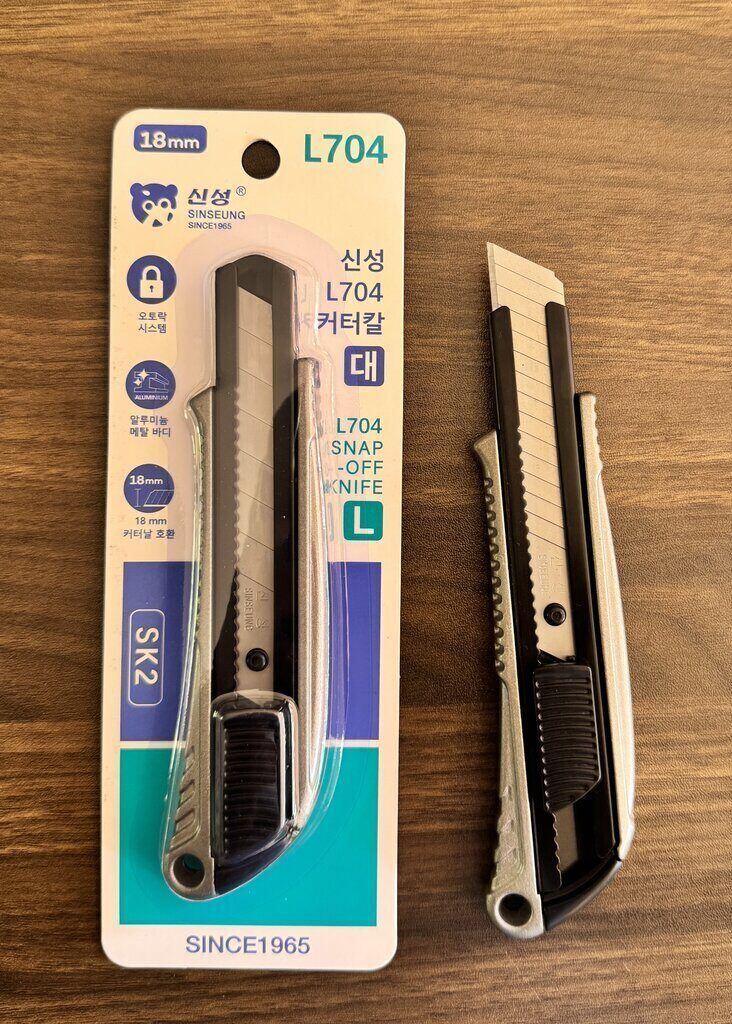
The orders are waiting, the cartons are stacked, and somebody has left a cutter at the packing bench. Is it ready to use? For the incoming warehouse operator, that is still an unanswered question. A pre-shift check gives it an answer before the first cut: either this tool meets its checks, or it goes to the person who can assess the problem.
The Checks That Belong Before the First Cut
The question ‘why do you need to inspect the blade of a box cutter?’ comes down to what you cannot know from yesterday’s work. Yesterday’s successful cut tells you about yesterday’s condition. A tool left between shifts could have acquired a bent tip or a change in blade position. You are looking for evidence of its condition now, while you can still put it aside without having started a cut.
Make room for the inspection before picking up the parcel. You need light on the tool and no package demanding attention in the other hand. Keep your fingers clear of the bevel, including when a mark is hard to see. There is no need to touch an edge to report that you cannot identify a mark on it.
The instructions are the reference for normal operation. A new operator cannot diagnose ‘different’ until someone has explained what normal looks like on that model. This matters with shared stock: a familiar-looking cutter may operate differently from the one used on the previous shift. Keep disassembly out of this routine; an inspection before issue is no occasion for exploring the mechanism.
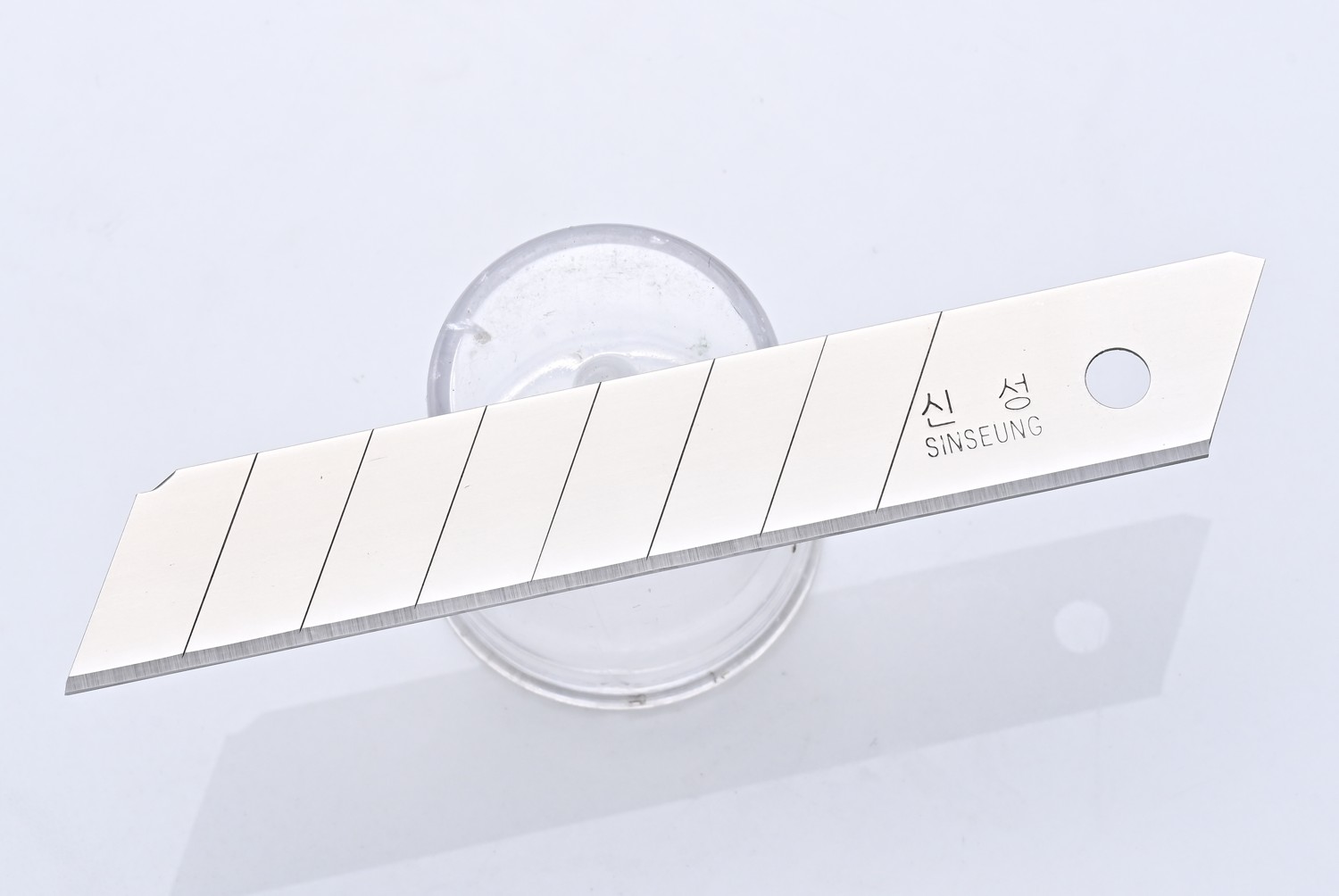
Visible Blade Condition and Seating
Edge Damage Worth Stopping For
A chip, crack, or bend is enough to hold the cutter out of service for assessment. There is no useful reason to force it through a box to see whether the damage matters. The defect is already visible. Pass that observation to the person responsible for tools and use an inspected replacement.
An uncertain mark deserves a second opinion. A scratch across the blade’s broad face may look very different from a crack running into its edge, but a busy operator should not have to become a metal specialist to settle the question. “Mark near tip; unable to identify it” is a perfectly useful report. Leave the diagnosis to the assessor.
A Blade That Sits Where It Should
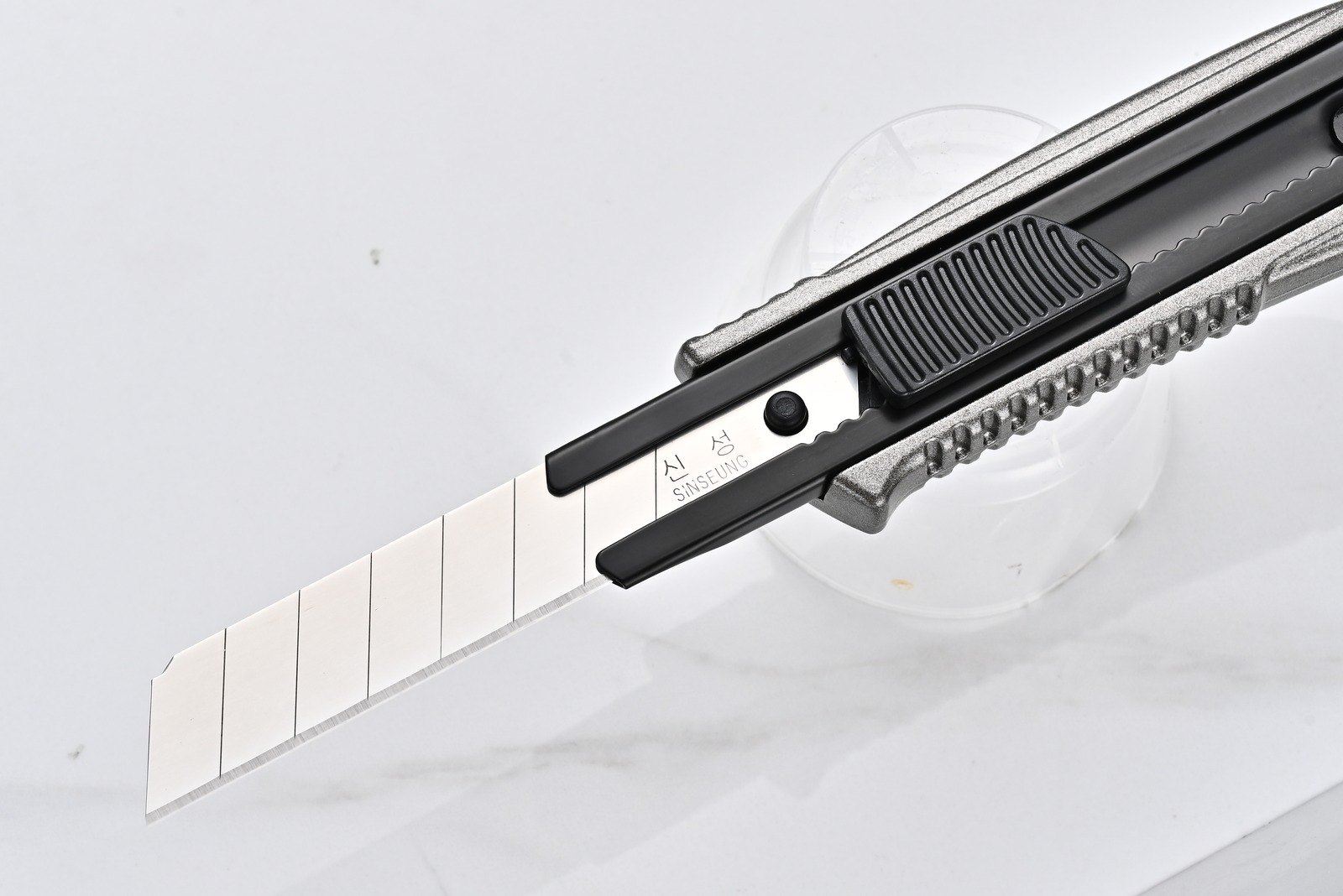
Blade position is a separate check from edge appearance. Look for a skewed blade, an unexpected length of exposed metal, or a part sitting outside its normal track. Only inspect the portions accessible through the approved routine. A clean-looking edge offers no reassurance when the blade is sitting incorrectly in the holder.
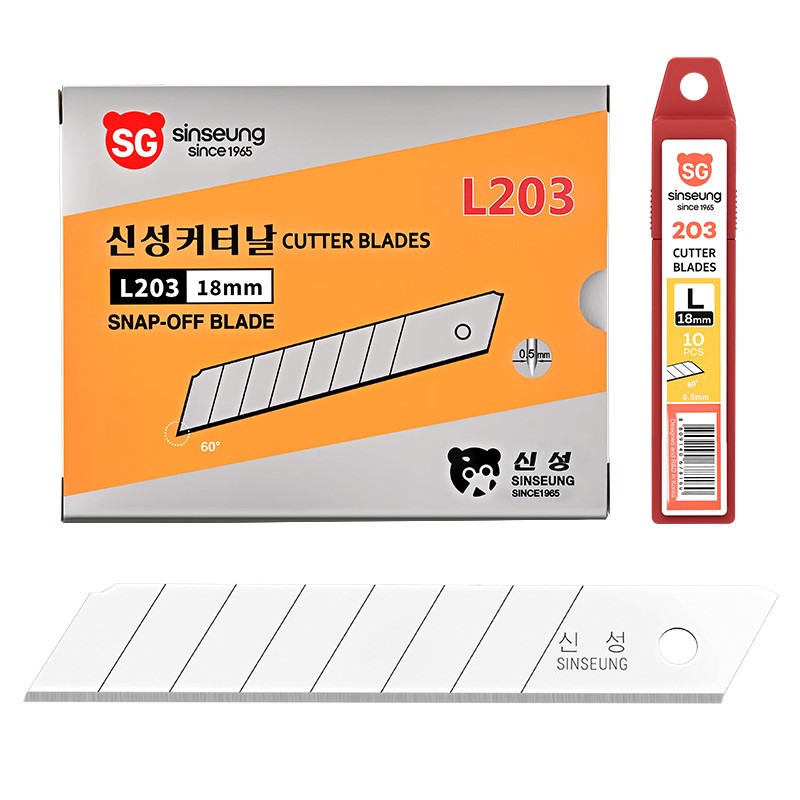
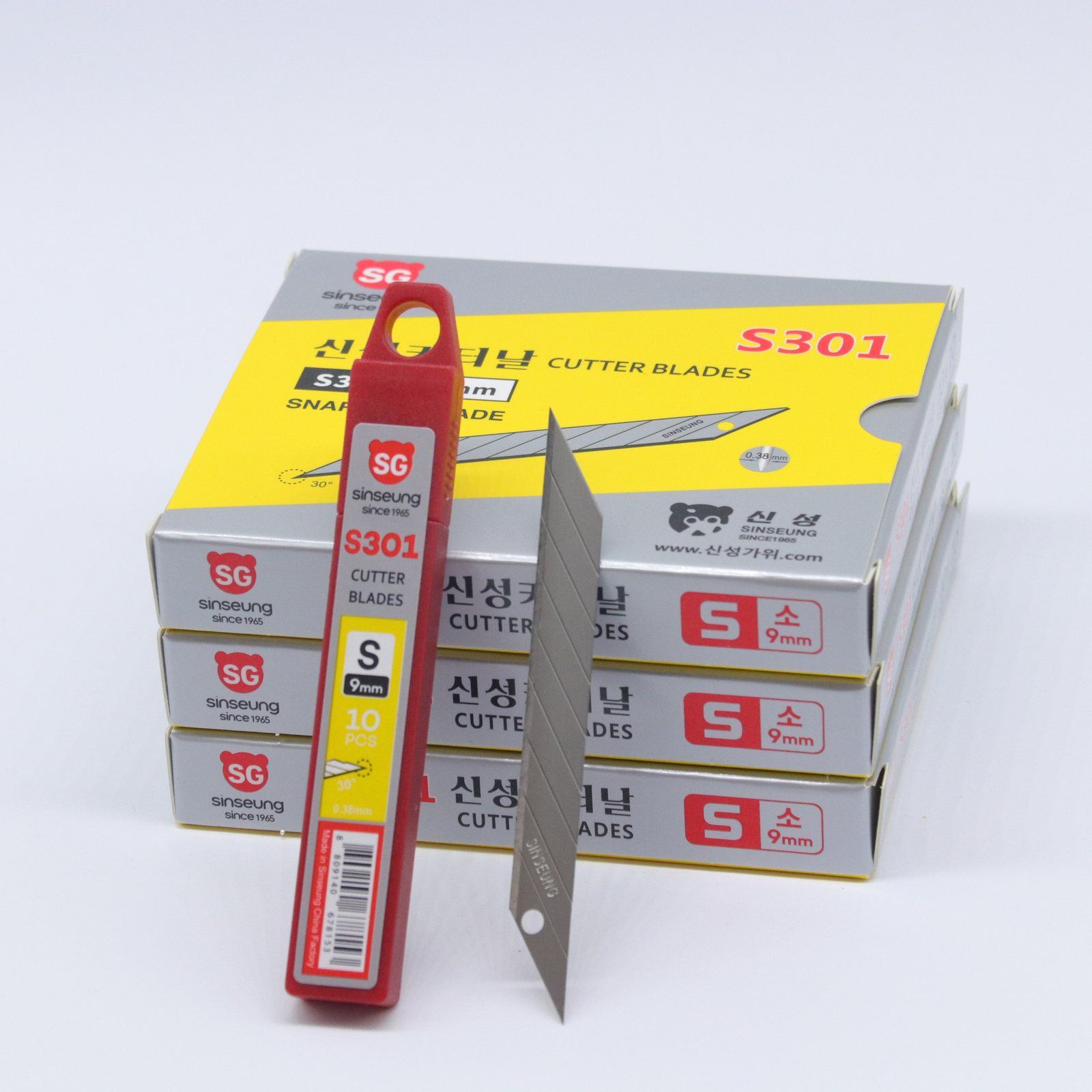
Blade labels help when a tool room holds several formats. In Sinseung’s range, S103, S301, and S303 identify 9mm snap-off blades, while L203 identifies an 18mm snap-off blade. Use that model distinction when discussing box cutter safety checks for 18mm blades. They cannot replace the holder instructions: matching the printed width is only an identification step, not a compatibility decision.
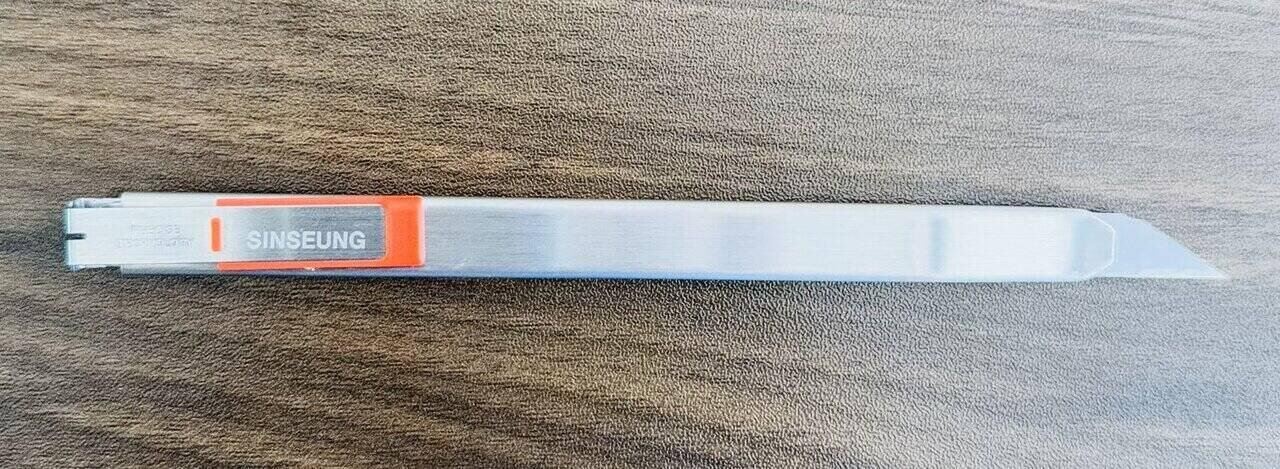
Handle, Slider, and Retention Checks
The housing deserves its own look, even when the blade appears sound. Include the blade opening, any separation along the handle, and loose parts visible through the permitted checks. Finding a crack gives you a reason to stop. Finding something you want to tighten or wedge gives you a different task to refer; keep that repair out of the issue routine.
Watch the mechanism only through the operation the instructions permit. With the opening directed away from people, does the slider travel normally, and does the blade reach its intended stored position? Irregular movement or failed retention ends the check. Pressing against a palm or a handy object would turn an observation into an improvised load test, which has no place here.
Useful box cutter safety tips for 9mm cutters need a particular tool in view. S506, for instance, identifies a Sinseung 9mm cutter. An operator still needs the applicable instructions and a demonstration of its checks. A supervisor can ask the worker to explain the routine back; that reveals more than asking whether the handle looks familiar.
|
Area |
What the Operator Notices |
Outcome Before Issue |
|---|---|---|
|
Edge |
Chip, crack, bend, or uncertain damage |
Hold for assessment |
|
Seating |
Blade skewed or unexpectedly exposed |
Keep out of service |
|
Housing |
Crack, separation, or loose part |
Withdraw the cutter |
|
Mechanism |
Irregular travel or failed retention |
Stop the check |
|
Identity |
Operating method is unfamiliar |
Obtain the correct instructions |
The table gives a supervisor useful stop points to explain. Add the observations required for each design rather than turning these rows into a universal certificate. A tick beside “blade” says very little unless workers understand what they were meant to look for.
A Failed Check Needs a Clear Destination
A failed cutter needs a destination everyone recognizes. ‘Over there’ is too vague when a colleague may come looking for a spare. Show staff the site’s withdrawal arrangement during training, including whom to call if the damage prevents safe transfer. In that case, leave the tool undisturbed and bring the supervisor to it.
A useful defect note records what happened during the check. “Slider moves; blade will not stay in selected position” tells the assessor much more than “broken.” Include the tool identifier if available. The next shift should be able to understand the complaint without repeating an unsafe experiment or trying to guess which cutter the note concerns.
The handover can be brief:
Identify the cutter and the shift reporting it.
Describe the visible defect or unusual movement.
Name the person responsible for the assessment.
Replacement stock needs a check as well. Taking another cutter from a drawer does not establish its condition, particularly where tools are shared. For a mixed inventory, pre-use inspection across box cutter blade formats belongs in the training discussion. Workers need a routine for the tool handed to them, with a clear route for questions.
Consistent Checks Across a Busy Team
Uncertainty belongs in the training demonstration. Ask what a worker would do with a mark they cannot explain, as well as an obvious defect. The useful answer is a referral with a description. After the lesson, account for every demonstration tool; a damaged example must stay under control and away from stock available for issue.
A check record earns its space when another shift can use it. ‘Checked’ and a signature may be enough for a routine pass under the site system, but a failure needs an identifiable tool and an intelligible complaint. Try reading a sample at the next handover. Can the incoming colleague find the cutter and understand the complaint from the note alone? That is the test the record has to pass.
A Cutter Ready for Its Next Shift
Box cutter safety at handover depends on a clear outcome. Keep a tool available only when it meets its applicable checks; refer doubts for assessment. Blade appearance, seating, housing, and permitted mechanism checks belong together. A good result leaves the next operator with an inspected cutter, while the assessor receives a specific problem to resolve.
If you cannot identify a Sinseung tool for its inspection routine, contact us with the model marking and the point that needs clarification.
FAQ (questions fréquentes)
Should a Box Cutter Be Inspected Even If It Was Used Yesterday?
Check the tool presented for this shift using its pre-use instructions. A previous operator’s satisfactory report is useful background, but you still have the current cutter to examine.
Can Fingers Be Used to Check Blade Sharpness?
Keep fingers away from the edge. Describe what you can see and carry out only the permitted operating checks. Touching the bevel adds no answer to a question about blade retention.
Does a Retracted Blade Mean the Cutter Has Passed?
Retraction is one observation within the routine. Continue with the other checks specified for the model; the housing, for example, could still have damage.
What If the Operator Cannot Identify the Model?
Refer it to whoever identifies and issues tools at the site. You need the right operating instructions before you can say whether its operation is normal.
Who Should Decide What Happens to a Failed Cutter?
Use the assessor named in the workplace procedure. Your report supplies the tool identity and what you observed. The assessor then owns the diagnosis and the decision about returning it to work.
-
 Can You Sharpen Box Cutter Blades? Limits and Trade-OffsExplore whether box cutter blades can be sharpened, what edge design changes, and why approved methods and verifiable results matter in professional use.2026/11/19
-
How to Cut Carpet Cleanly With Straight Utility BladesA practical guide for flooring teams and trade suppliers on clean carpet trimming, cut control, backing support, and blade replacement.2026/11/12
-
How to Check Snap-Off Blade Consistency in BulkA buyer-focused method for checking product identity, visible condition, fit information, and batch records when purchasing snap-off blades in quantity.2026/11/12