
How Safety Cutter Knives Reduce Workplace Cutting Risks
2026-08-27
Safety cutter knives lower workplace cutting hazards. They limit blade exposure. They also keep the cutting path predictable. This gives your hand a stronger anchor point. These tools do not eliminate danger completely. Instead, they decrease uncontrolled movements during a cut. Safety cutter knife design is highly important. It matters most in areas where workers handle boxes, plastic film, and constant trimming every day.
What Makes a Safety Cutter Different
A safety cutter is more than just a tiny blade. It is a specific tool built to keep the steel well-supported. It also offers a steady grip. Furthermore, it keeps the sharp edge firmly managed while a worker performs a cut.
Controlled exposure is the first layer of safety
The biggest safety benefit comes from limiting the visible steel. The tool shows only a small amount of the blade at a given time. Less visible steel means fewer accidents. It stops a stray finger, shirt sleeve, or box edge from hitting the sharp part by mistake.
This careful management is crucial in fast-paced jobs. Workers often rush between opening boxes, trimming edges, and removing waste. A safer tool drops the risk of sudden hand injuries during these quick actions.
The handle must do more than hold steel
A good grip matters because the hand should guide the tool instead of chasing it. That is why compact 9 mm formats can still feel safer than a larger general-purpose knife when the task is narrow and controlled.
On a long shift, a stable handle also reduces fatigue. Less hand tension means workers are less likely to over-grip the tool, and that usually translates into better line control and cleaner edges.
*The blade sits in a more controlled channel.
*The handle gives the hand a firmer resting point.
*The tool can be easier to return to a safe position after the cut.
*The operator spends less time forcing the blade through material.
|
Tool type |
Main behavior |
Risk-control effect |
|
Standard box cutter |
Blade often sits more openly in the work path |
Useful, but less forgiving when control slips |
|
Safety cutter knife |
Blade support and exposure are more controlled |
Better for repetitive workplace use |
|
Blade used in a stable channel |
Less wobble during the cut |
Helps the operator follow the line |
|
Retracted or covered blade when idle |
Edge stays out of the hand path |
Reduces incidental contact |
For teams comparing safety cutter blades, the most useful question is not only how sharp the edge feels. It is how confidently the blade stays in line when the job gets repetitive.
That is where procurement can make a real difference. A tool that looks simple on paper can save time and reduce stop-start motion if the blade support, grip, and replacement rhythm all fit the work.
Where the Risk Reduction Shows Up
This fact matters deeply in large warehouses and busy packing stations. It also applies to plastic film rooms and loading docks. In these places, staff perform the exact same slice hundreds of times. Standard industrial safety rules always repeat one core idea. You must pick the correct item for the specific job, and you must maintain it well.
A keen yet secure slicer works wonderfully in these areas. It slices easily with very little pushing. Requiring less energy gives the employee superior control. Better handling naturally leads to fewer dangerous slips. It also prevents ruined packaging.
Warehouse and packing lines
Cartons, tape, and straps create a high-repeat environment. A safety cutter helps because the operator can open packages with less overreach and a more stable cutting posture.
That is also why safety training and tool selection belong together. The best knife cannot make up for bad habits, but it can make good habits easier to repeat across a shift.
Film, plastic, and detail work
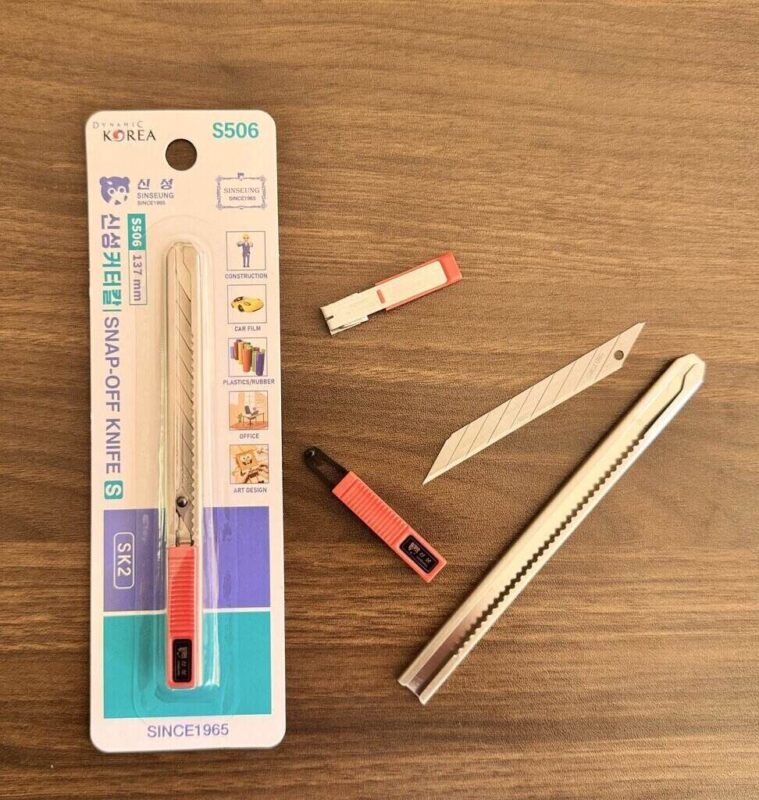
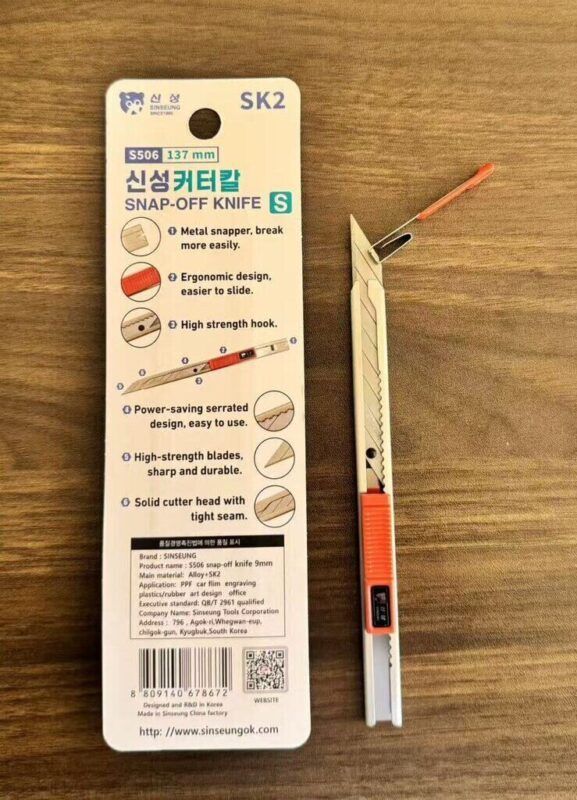
The same control helps in wrap and plastic work, where a wandering blade can damage the finish or force a second pass. Sinseung’s S506 is a practical example because it is built around a 9 mm format that suits compact, controlled cutting.
In those jobs, the buyer usually wants a tool that feels light in the hand but still stays settled against the surface. That balance is what makes the safety cutter category worth comparing on its own.
That is also where training matters. Even a well-designed tool still depends on the worker’s motion, so how to use a box cutter safely remains part of the safety system, not a separate topic.
How Teams Choose Between Similar Models
When buyers compare similar cutters, the real decision is about control points. A box cutter safety blade should be checked against blade support, lock feel, grip shape, and how quickly the tool can return to a safe state after the cut.
|
Selection cue |
What to check |
Why it matters |
|
Blade support |
Whether the blade sits steady inside the head |
Reduces wobble and improves line control |
|
Grip shape |
Whether the handle fits gloved and bare hands |
Improves posture and lowers slip risk |
|
Idle position |
Whether the edge is easy to retract or cover |
Cuts accidental contact during handling |
|
Task fit |
Whether the knife matches cartons, film, or detail work |
Avoids forcing one tool into every job |
For Sinseung buyers, the S506 gives the team a compact reference point for comparing safety-style knives with the broader product family and seeing where the 9 mm format belongs.
That keeps a utility cutter knife from being bought on a single feature while the real safety system is ignored.
Summary
Safety cutter knives lower slicing hazards significantly. They manage exposed steel carefully. They boost hand traction. They also make the slicing direction highly predictable. These are not magical items. However, they drastically decrease clumsy mistakes that cause bodily harm.
Warehouse groups and packing crews have a clear next step. They must pair the device style with the specific chore. Then, they need to verify the handle feel and internal support. They must also check the blade-swapping routine. When these three factors align perfectly, making a purchase becomes incredibly easy.
Do you need to review Sinseung options for your shipping facility? If so, simply contact Sinseung. Please share your primary materials, daily usage rates, and preferred swapping schedules.
أسئلة متكررة
What makes a safety cutter knife different?
It controls how much blade is exposed and usually gives the hand a steadier control point, which helps in repetitive cut work. Some models also make it easier to keep the blade parked safely between cuts.
Why does a sharp blade still matter for safety?
A sharp blade needs less force, so the operator is less likely to push hard, slip, or wander off the cut line. In safety work, less force is usually a good thing because it gives the hand more control.
How does blade stability reduce risk?
A stable blade follows the intended line more cleanly. Less wobble means fewer sudden changes in direction and fewer accidental contacts, especially on long repetitive runs.
Which jobs fit a 9 mm safety cutter?
It fits carton opening, film trimming, light plastic work, and other detail jobs where control matters more than deep penetration. The narrow format is helpful when the team wants precision without carrying a bulkier knife.
What should teams compare first?
Start with blade support, grip feel, blade exposure, and whether the tool matches the actual cut task in the workplace. If those four pieces fit, the rest of the product comparison is usually straightforward.
-
 SK2 vs SK5 Utility Blades for Different JobsCompare SK2 and SK5 utility blade grades by sharpness, toughness, edge life, and job fit for wholesale blade selection.2026/10/07
 -
Are Box Cutter Blades Universal?Explain box cutter blade compatibility by width, holder channel, lock design, refill format, and model matching for trade buyers.2026/10/01
-
How to Safely Snap Off a Utility Knife BladeLearn how to snap off a box cutter blade with controlled extension, safe break direction, secure containment, and practical S103 workstation checks.2026/09/24