
How Can Buyers Verify Compatible 9mm Snap-Off Blades for Film Installation Tools?
2026-08-06
A 9mm label alone does not confirm blade compatibility. For film installation applications, buyers need to verify that the blade, cutter holder, slider mechanism, rail structure, and intended use work together as a complete system. This guide explains how to evaluate 9mm snap-off blade options, confirm utility knife blade size, and match replacement blades with PPF, vinyl wrap, and other film installation tools before placing a larger order.
Start With the Cutter, Not the Blade Pack
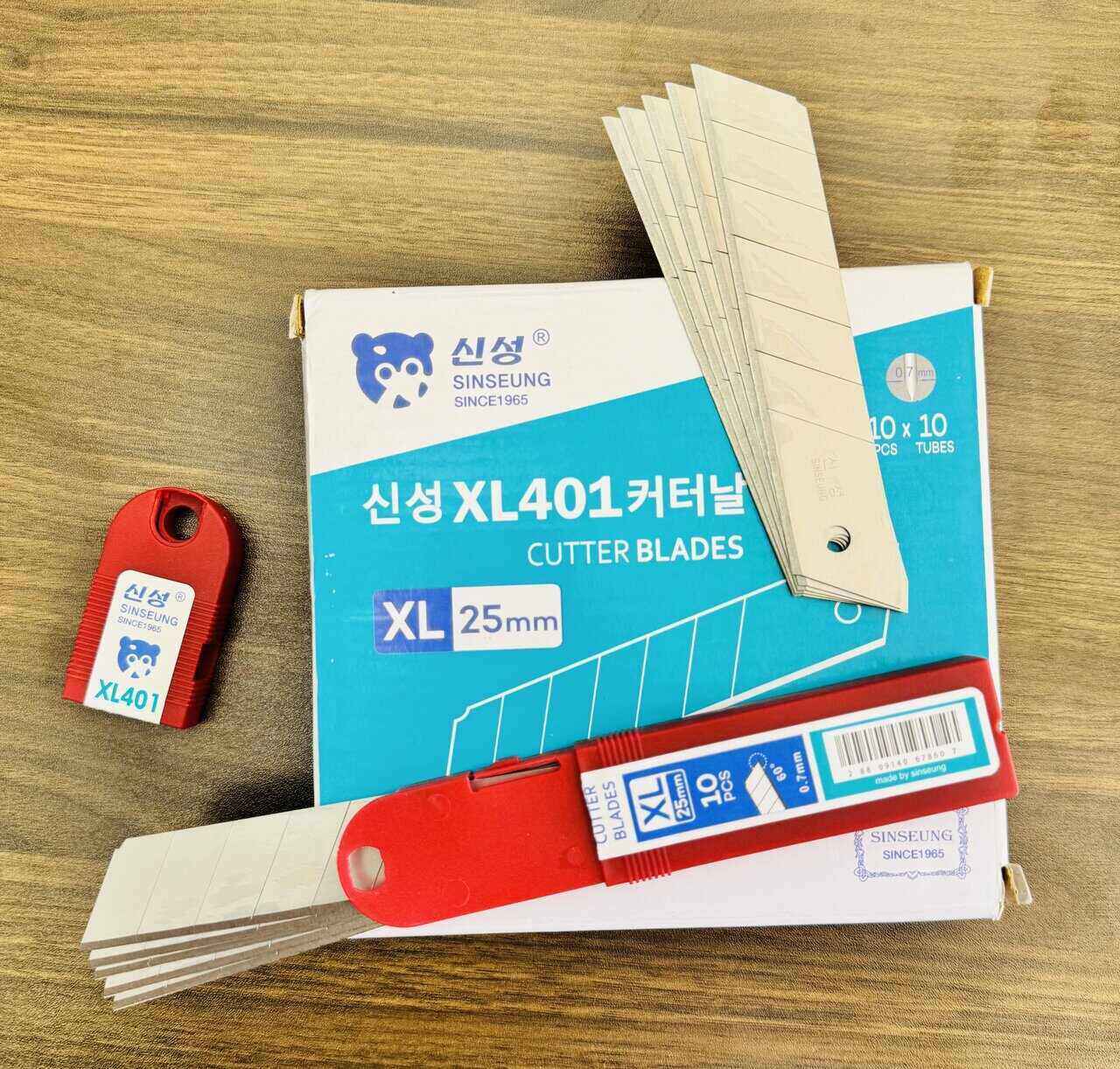
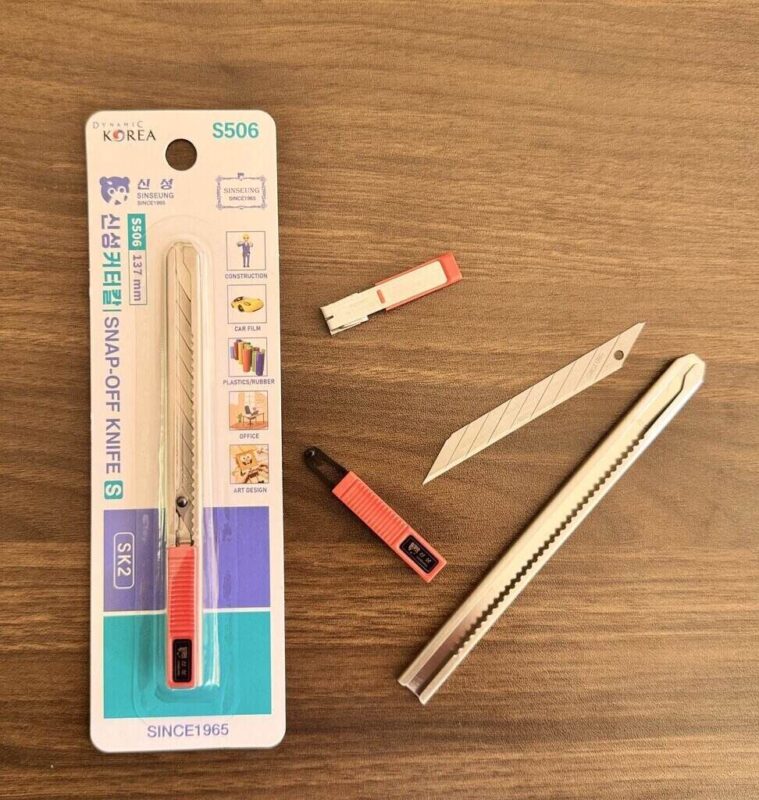
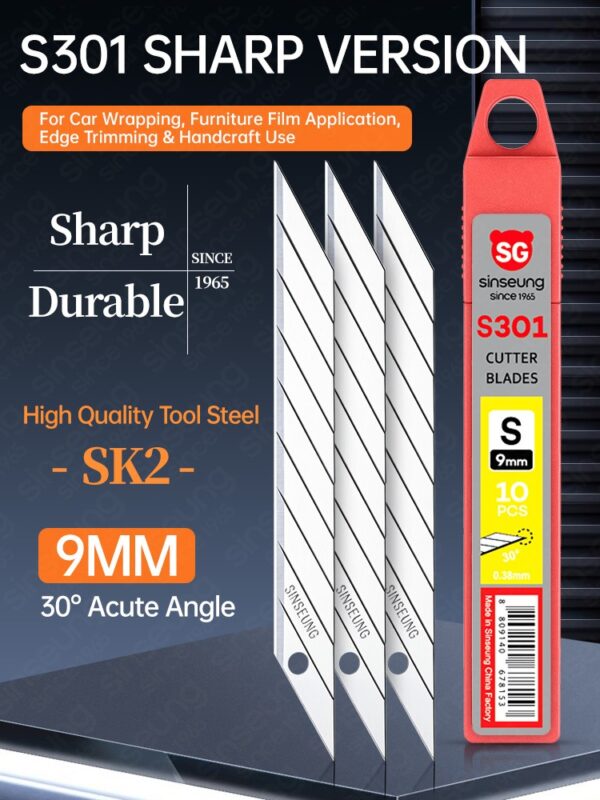
Compatibility begins with the cutter already used by the installation team. A nominal utility knife blade size describes only one part of the fit; buyers should also check the rail width, blade thickness accepted by the holder, engagement point for the slider, segment layout, and permitted extension. Sinseung lists S301 and S303 as 9mm snap-off blades and S506 as a 9mm utility cutter, giving procurement teams a defined model set for a fit review.
A controlled comparison prevents a common sourcing error: purchasing knife replacement blades by width alone. Two products can share a nominal width yet differ in how the blade engages with a slider or sits inside the rail. Buyers should therefore compare the existing cutter and candidate blade side by side, record visible utility blade dimensions, and confirm the model pairing with the supplier before a volume order.
Five compatibility checks for a purchase file
- Record the cutter model, nominal width, and current blade model.
- Compare the rail, slider engagement point, blade hole, and segment pattern.
- Check that the blade retracts, locks, and advances without side play.
- Test the pairing on representative PPF, car film, or graphic vinyl offcuts.
- Approve the combination only after the operator and purchasing records agree.
Compare the Models Against the Application
Application context determines whether a technically fitting blade is commercially suitable. Sinseung supplies specialized blades for car wrap, window film, architectural film, and furniture film work, while S301 and S303 sit within its 9mm snap-off blade range. A buyer evaluating a PPF cutting blade should state the film type, cutting stage, cutter model, and expected control needs instead of requesting a generic 9mm refill.
|
Decision point |
Buyer evidence |
Release condition |
|
Nominal fit |
Cutter and blade model; utility knife blade size |
Models and holder interface are confirmed |
|
Mechanical fit |
Rail, slider, lock, retraction |
Blade advances and retracts smoothly |
|
Application fit |
PPF, vinyl, window, or furniture film sample |
Controlled test produces acceptable handling |
|
Supply fit |
Pack format, freight, availability |
Order record identifies the approved models |
The comparison should distinguish the blade from the complete tool. S301 and S303 are blade models, whereas S506 is a 9mm utility cutter. That distinction matters when a request for a vinyl wrap cutter actually requires a complete holder, or when an existing holder only needs compatible knife replacement blades. Clear line-item naming reduces quotation errors and makes incoming inspection easier.
Use a small verification lot before replenishment
A small verification lot gives both purchasing and operations a shared decision point. Sinseung states that standard products have no minimum order quantity, although freight and current availability still need confirmation. Buyers can use that policy to validate utility blade dimensions and operator handling before setting a larger replenishment quantity, without assuming that every 9mm product is interchangeable.
Build a Supplier Evidence Checklist
Supplier evaluation should connect quality controls to the specific products under review. Sinseung states that it uses stable steel materials, combines automated machinery with manual processes, and has engineers inspect each production batch. These controls are relevant evidence, but they do not replace the buyer’s own fit check for a graphic-film workflow or the exact utility knife blade size used at each workstation.
A useful quotation request should identify the approved cutter, blade model, usage environment, monthly consumption estimate, delivery destination, and preferred pack format. It should also ask the supplier to confirm the proposed model relationship in writing. This information lets a supplier distinguish a PPF cutting blade request from a complete-tool request and helps the buyer compare quotations on the same basis.
Control the Compatibility Record After Approval
An approved compatibility record should be easy for warehouse and installation staff to follow. Record one approved blade model against each cutter model, attach a product image, list the observed utility blade dimensions, and note the test material. When knife replacement blades arrive, receiving staff can compare model labels and packaging with the record before releasing stock to installers.
Change control protects the original decision when a supplier, pack, or tool model changes. A new vinyl wrap cutter should trigger another mechanical and application check even if its label says 9mm. The same rule applies when a buyer changes from one blade model to another: repeat the fit, lock, retraction, and offcut tests rather than relying on nominal width.
Need Help Confirming the Right 9mm Blade Model?
Selecting the correct replacement blade requires more than checking the 9mm width. If you are unsure whether a blade matches your existing cutter, send your cutter model, blade photos, dimensions, and application details.
Reach out to our team. We can help review the compatibility requirements and recommend the suitable blade or cutter solution before bulk ordering.
أسئلة متكررة
Are all 9mm snap-off blades interchangeable?
No, nominal width alone does not prove interchangeability. Buyers should confirm the holder rail, slider engagement, blade hole, thickness tolerance, segment pattern, locking behavior, and retraction before approving any 9mm pairing.
How should a buyer test a graphic vinyl cutting blade?
A buyer should first verify mechanical fit, then run a controlled trial on representative offcuts using the intended cutter and normal work procedure. The result should be recorded against the exact model combination.
What information belongs in a PPF blade quotation?
The inquiry should include the cutter model, current blade, film applications, monthly consumption estimate, pack preference, delivery destination, and photographs or measurements needed to confirm fit.
Can standard products be ordered for a verification lot?
Sinseung states that standard products have no minimum order quantity, with shipping charged separately. Buyers should still confirm current availability, freight, and the exact approved model before ordering.
-
 Are Box Cutter Blades Universal?Explain box cutter blade compatibility by width, holder channel, lock design, refill format, and model matching for trade buyers.2026/10/01
 -
How to Safely Snap Off a Utility Knife BladeLearn how to snap off a box cutter blade with controlled extension, safe break direction, secure containment, and practical S103 workstation checks.2026/09/24
-
30 vs 45 Degree Cutter Blades for PrecisionLearn how 30 and 45 degree cutter blade tips affect precision, durability, PPF trimming, and wholesale blade selection.2026/09/24