
Can You Sharpen Box Cutter Blades? Limits and Trade-Offs
2026-11-19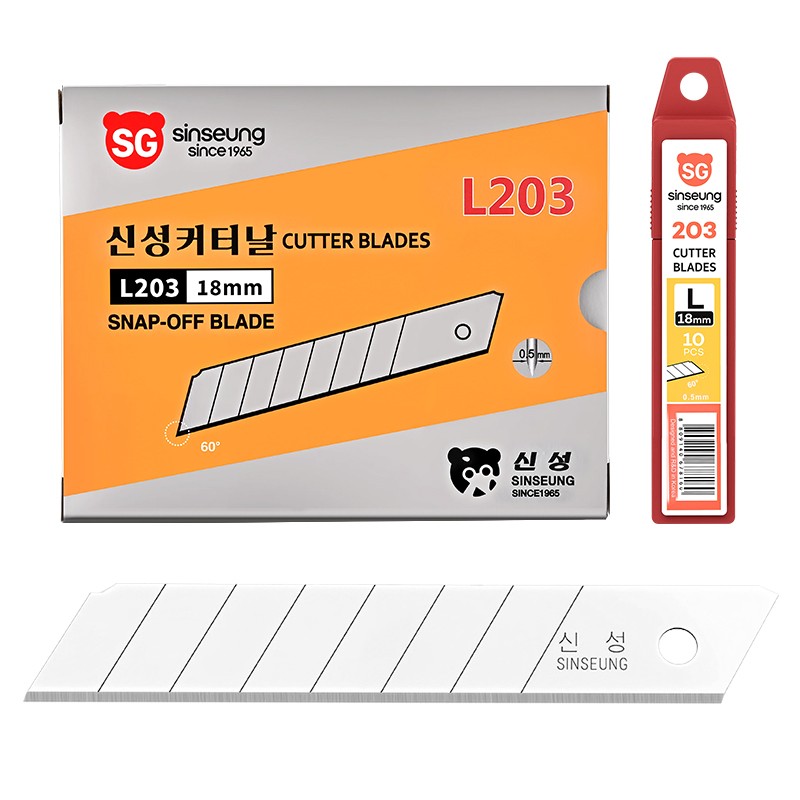
A box cutter blade can take a new edge when metal is removed with an abrasive. That does not make every worn strip a good candidate for the bench. Before investing time in sharpening, look at the whole blade and its maintenance instructions. This article explains what grinding changes, why disposable formats leave little room for rework, and which questions a workshop needs answered before counting a blade as recovered.
What Sharpening Can Recover
Think of the blade in cross-section. The ground surfaces come together at its cutting edge. To renew that edge with an abrasive, metal has to come away from those surfaces until they meet again. Nothing is added back. This explains both the appeal and the limitation of the process: the renewed edge belongs to a blade whose shape has been reduced.
A chipped point makes the limitation easier to picture. Grinding enough metal away to remove that chip changes the surrounding profile too. The missing piece will still be missing after a light touch-up. For a useful answer to how to sharpen box cutter blades, separate dullness from missing metal, then check whether resharpening falls within the instructions for the blade in question.
Suppose the reworked strip cuts a scrap cleanly. It would be easy to stop there, particularly when the purpose of the exercise was to recover sharpness. That leaves the blade’s altered shape unexamined. A point, bevel, and remaining strip have to work together inside the holder. The scrap offers no answer about a feature that its cut never brought into use.
What the Edge Design Changes
Thin Geometry Leaves Little Room for Error
Grinding spends metal from a limited shape. Work near the bevel can change the edge angle, the point, or the width remaining behind it. There is also little safe gripping area on a loose thin blade. Supporting that piece properly is a separate problem from choosing a stone, and an improvised hand grip is no answer.
A finished edge also has a production history. Heat treatment, grinding, and production inspection are all part of Sinseung’s blade manufacturing and quality control. These sharpening considerations for factory-finished box cutter blades put a touch-up in perspective: it is work on an already finished part. Calling the result ‘factory sharp’ would need more support than a successful cut, particularly if the original edge profile has not been checked.
Segmented Blades Add Another Constraint
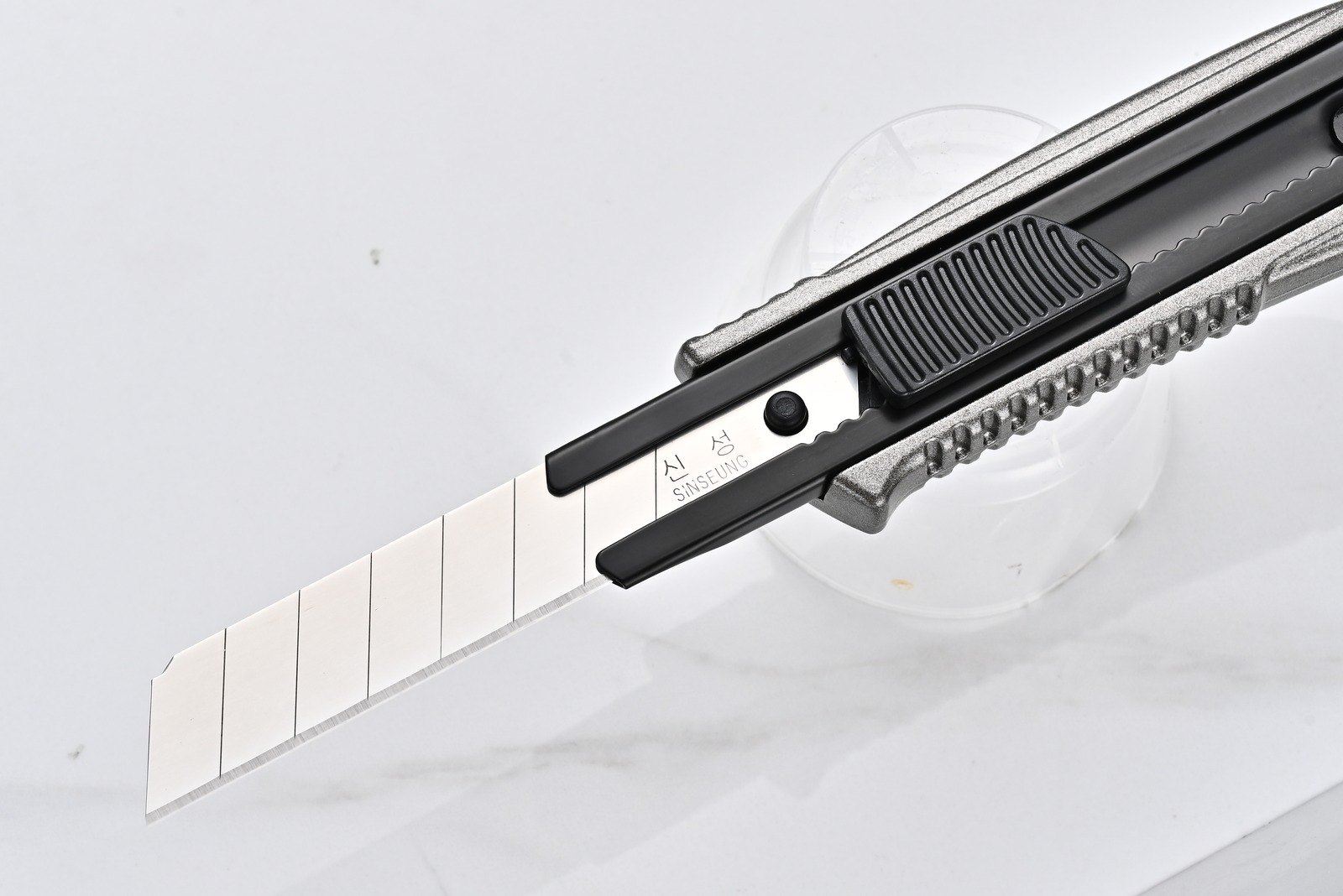
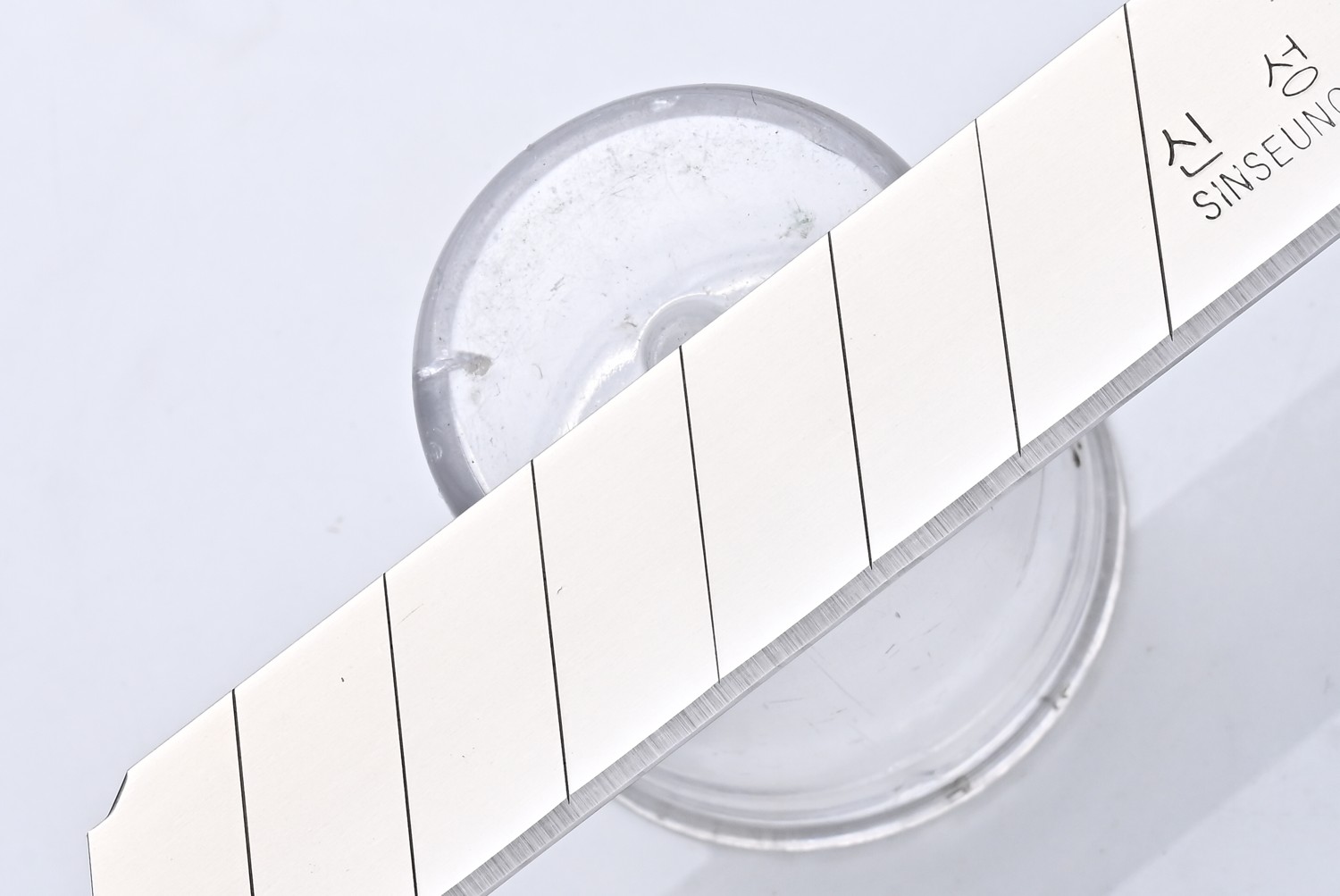
Look along a snap-off strip and the score lines are immediately apparent. They remain there while the strip is held or worked; shortening the piece in a drawing does not make it a solid knife. Any proposed holding arrangement must account for this construction. Segment removal is another operation altogether, governed by the cutter instructions rather than by a sharpening demonstration.
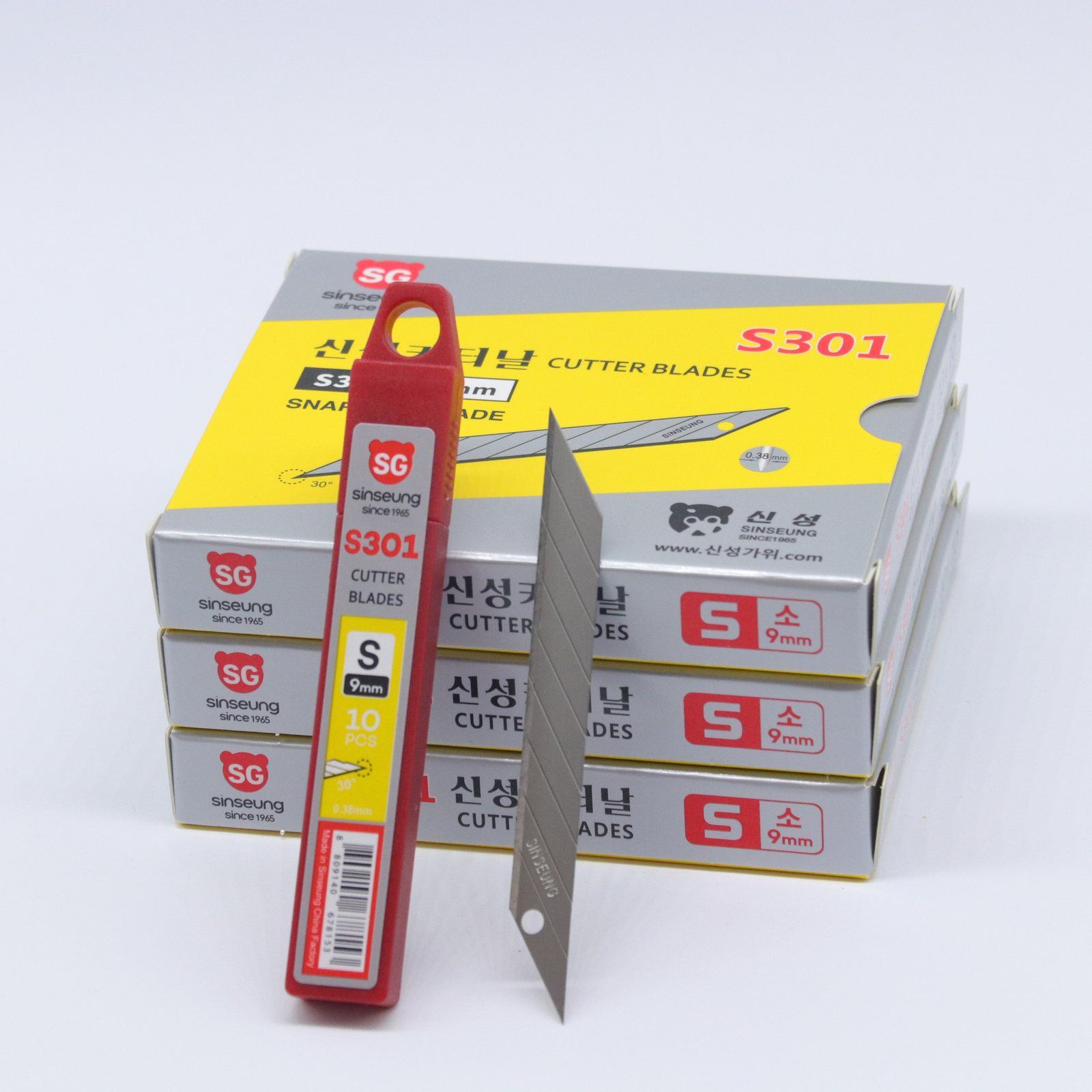
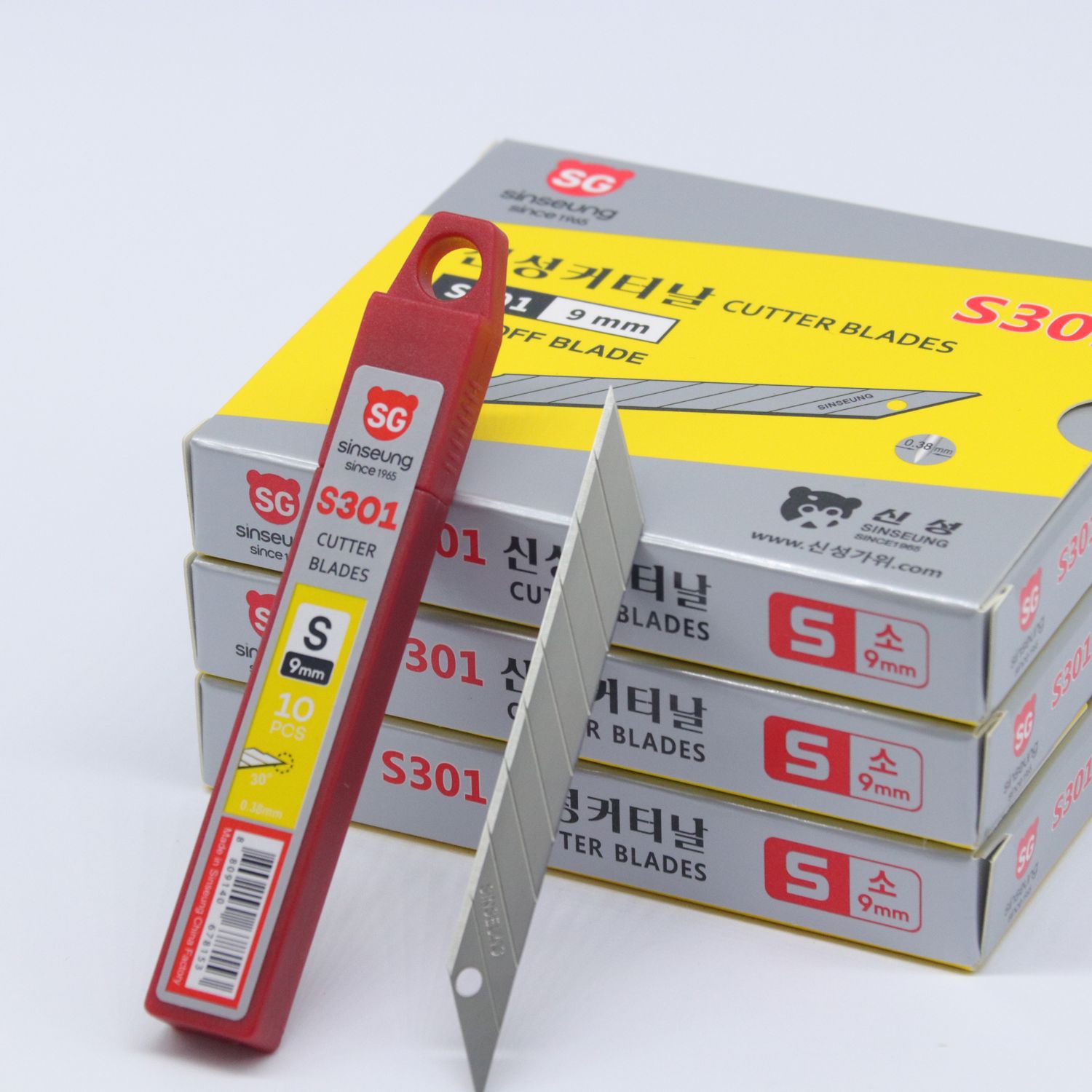
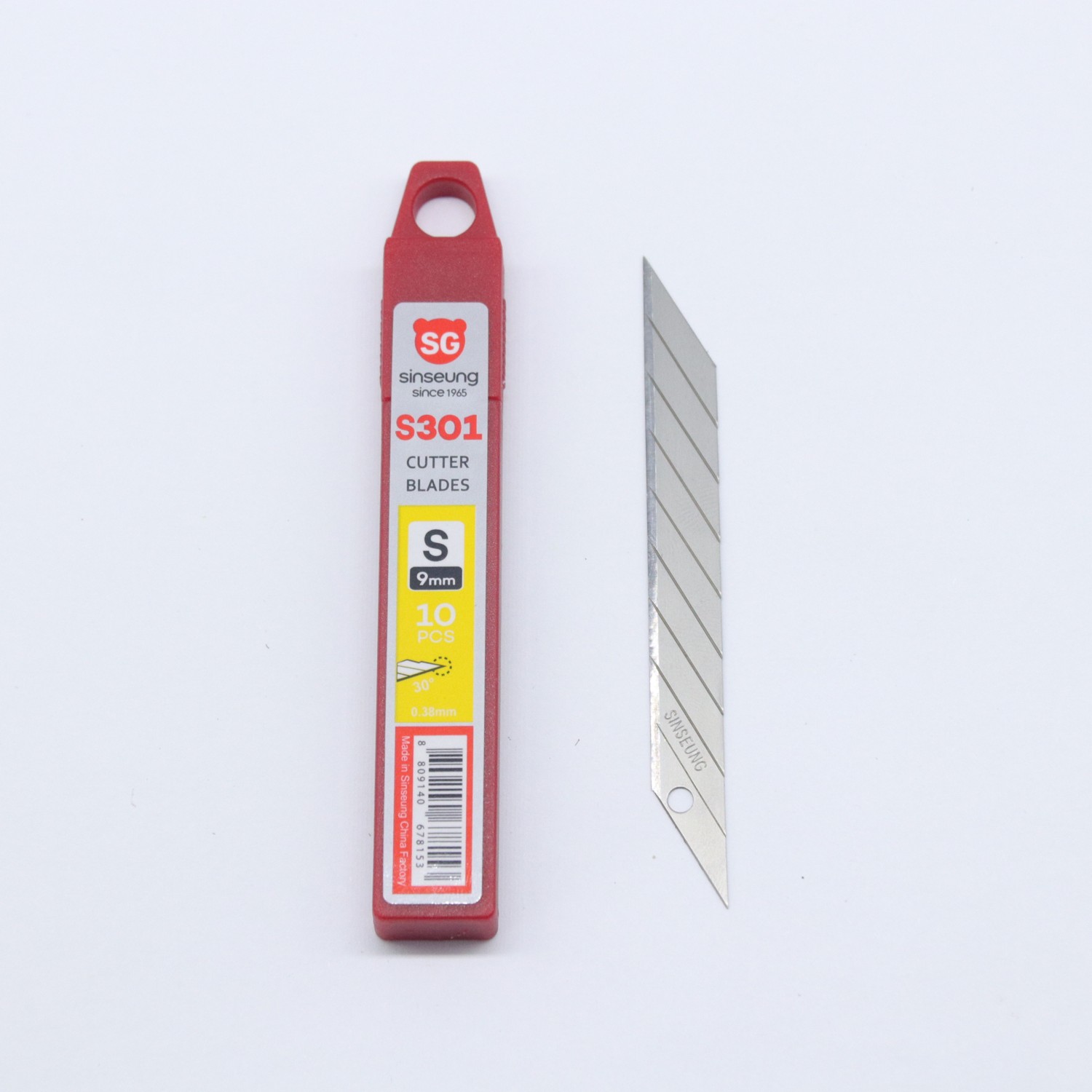
For an enquiry about how to sharpen a box cutter blade, start with the marking on its pack. Sinseung S301 denotes a 9mm snap-off blade, whereas L203 denotes an 18mm snap-off blade. S301 gives a supplier something specific to investigate when asked about sharpening a 9mm box cutter blade. There is no approved resharpening procedure established here for either model.
Why a Tool-Free Shortcut Is a Poor Workshop Standard
Searches for ‘how to sharpen a box cutter without tools’ often begin with the desire to use whatever is at hand. Yet the rough object pressed into service is still an abrasive tool. Its ordinary household purpose tells a workshop very little about how it will remove metal. The blade also needs support; finding a rough surface solves only one part of the arrangement.
A paper-cutting demonstration is worth watching right through to its ending. Does it ever return to the cutter, or show the point closely after grinding? If those views are missing, the demonstration leaves much of the finished part unseen. Before adopting the idea for a team, the supervisor would need to fill in those gaps and judge the result for the material actually being cut.
Any proposed workshop method needs four answers:
Does the manufacturer permit resharpening this exact product?
How is the blade supported without unsafe hand exposure?
What finished geometry and condition are required?
What will the final inspection measure, and who will do it?
There may be no need to take the proposal any further. Perhaps the instructions rule out resharpening, or perhaps nobody can define an acceptable finished profile. Either gap is enough to keep the method off the workshop bench. Explaining which answer is missing helps colleagues understand the decision, instead of leaving them with a refusal that seems to have no reason behind it.
The Time Cost Extends Beyond Grinding
The minutes spent grinding are the most visible cost. Preparation is less visible: checking the product, finding its instructions, arranging support, and making the final inspection. All of it uses somebody’s time. Work with the site’s own labor rate and consumable costs; a saving quoted for another workshop may omit the very activities that make the proposal workable at yours.
Rejected work belongs in the calculation. Suppose a proposed trial includes several blades that cannot be accepted afterward: time spent on them has still been spent. Count only accepted results as recoveries, and include the rejected attempts when assessing labor. This is a way to evaluate a proposal, not a prediction of how many blades will pass.
|
Part of the Proposal |
Evidence Needed |
Reason to Pause |
|---|---|---|
|
Permission |
Method approved for the product |
Approval cannot be established |
|
Geometry |
Required finished profile and fit |
Only sharpness is considered |
|
Support |
Controlled holding arrangement |
Fingers serve as the fixture |
|
Inspection |
Suitable acceptance criteria |
A paper cut is the entire check |
|
Economics |
Labor, abrasives, and rejected work |
Savings omit preparation time |
The proposal is worth reviewing before anyone sets up a bench. A blank in the permission or inspection row is a technical gap, regardless of how attractive the claimed saving looks. Even with a permitted method, the workshop may find that the handling and verification involved make little sense for its disposable blades. There is no universal saving to quote.
The Model Behind the Maintenance Question
Loose strips make maintenance enquiries awkward. The width can be measured, but that alone may not reveal which product the workshop has been using. Retain the pack reference where possible and include the cutter model when asking for advice. The photograph that looks perfectly clear on a phone may conceal the very features needed to establish the blade’s identity and fit.
Take how to sharpen box cutter blades in 18mm formats as an example. Identifying an 18mm snap-off strip as Sinseung L203 settles the stock reference, while the sharpening method remains unestablished. Put both points in the reply. Leaving the second one unsaid could turn an ordinary stock identification into an unintended maintenance recommendation.
Useful product advice includes an honest limit. ‘We have not established an approved sharpening method for this product’ is a clear answer when that is the position. Promises of repeated recoveries or a factory-equivalent edge would need separate support. Customers need to know where the answer ends, particularly when they intend to turn the advice into a routine for other operators.
When the Proposal Has Reached Its Limit
Sharpening looks attractive when the alternative seems to be throwing away an edge that might cut again. The discussion becomes more useful once it includes the metal removed, the holding arrangement, and the inspection afterward. Review those points against the product’s maintenance instructions. A proposal with no permitted process or no way to accept the result has reached its limit, however promising the demonstration appears.
Need to identify a Sinseung blade before asking about maintenance? اتصل بنا with the model reference and cutter details.
أسئلة متكررة
Can Every Box Cutter Blade Be Sharpened?
Some steel blades can be given another cutting edge, but the maintenance recommendation is product-specific. Consult the instructions before treating a disposable blade as a resharpenable tool.
Is a Sharpening Stone Enough to Make the Process Acceptable?
A stone is one component. You would also need to know how the blade will be supported and how its finished condition will be checked, within a method permitted for that product.
Can a Segmented Blade Be Treated Like a Solid Knife?
The score lines remain part of the strip during handling. Use guidance for the segmented product; a solid knife’s maintenance method gives no automatic basis for working on it.
Does a Successful Paper Cut Verify the Reworked Blade?
The sample tells you something about cutting paper. To accept the blade for work, you still need to examine its condition and fit against the requirements of the intended tool and job.
Should Distributors Recommend Tool-Free Sharpening Tricks?
Use the approved instructions as the boundary for advice. If the proposed trick falls outside them, a distributor has no basis here for recommending it as workplace maintenance.
السابق : لا أحد
التالي : how-to-cut-carpet-cleanly-with-straight-utility-blades
-
 How to Cut Carpet Cleanly With Straight Utility BladesA practical guide for flooring teams and trade suppliers on clean carpet trimming, cut control, backing support, and blade replacement.2026/11/12
-
How to Check Snap-Off Blade Consistency in BulkA buyer-focused method for checking product identity, visible condition, fit information, and batch records when purchasing snap-off blades in quantity.2026/11/12
-
How to Dispose of Box Cutter Blades in the WorkplacePlan workplace blade disposal with suitable containers, clear responsibilities, fill limits, and an accepted waste route that protects later handlers.2026/11/05