
Buying Replacement Utility Blades in Bulk
2026-09-17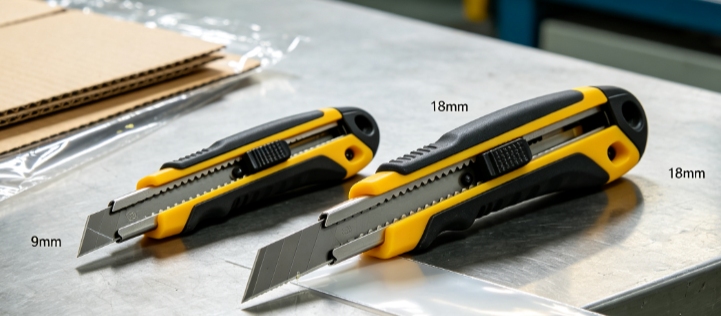
Bulk replacement blade buying looks simple until the wrong refill arrives at a busy work site. A distributor or tool-room manager has to check blade width, thickness, segment style, case packing, material fit, and handle compatibility before the order becomes daily cutting stock.
Bulk Buying Starts With Use Cases
Replacement blades should be selected around the work material before the buyer studies price or carton quantity. Fine film trimming, office cutting, carton opening, drywall scoring, leather work, foam cutting, and plastic sheet trimming do not put the same stress on the blade.
A strong box cutter refill stock planning process separates light precision stations from heavier cutting stations. This prevents a warehouse from issuing narrow blades where broader support is needed or oversized blades where workers only need short controlled exposure.
Size Compatibility Comes Before Quantity
The most common refill mistake is treating all snap-off blades as interchangeable. Width, thickness, length, segment count, and handle channel design must work together, because a blade that fits loosely can wobble and a blade that is too thick may jam in the carrier.
شفرات 9 مم
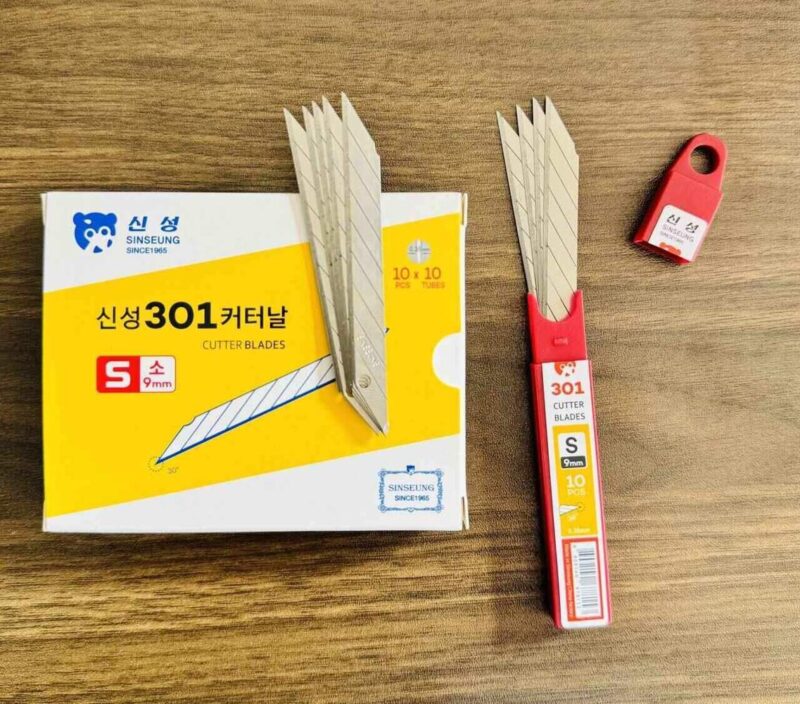
A 9mm snap-off blade is usually chosen for detail work where the user values visibility and a small exposed point. Sinseung S301 is a 9mm 30-degree SK2 alloy steel snap-off blade designed for car wrap film, window tinting, paint protection film trimming, vinyl sticker work, leather edging, rubber sheet trimming, and general precision craft cutting.
The S301 format is especially relevant when utility blade sizes for film work have to support clean narrow lines. It has 8 snap-off usable sections and is packed 10 blades per PP case, which gives buyers a practical unit for sample evaluation and stock counting.
18mm blades
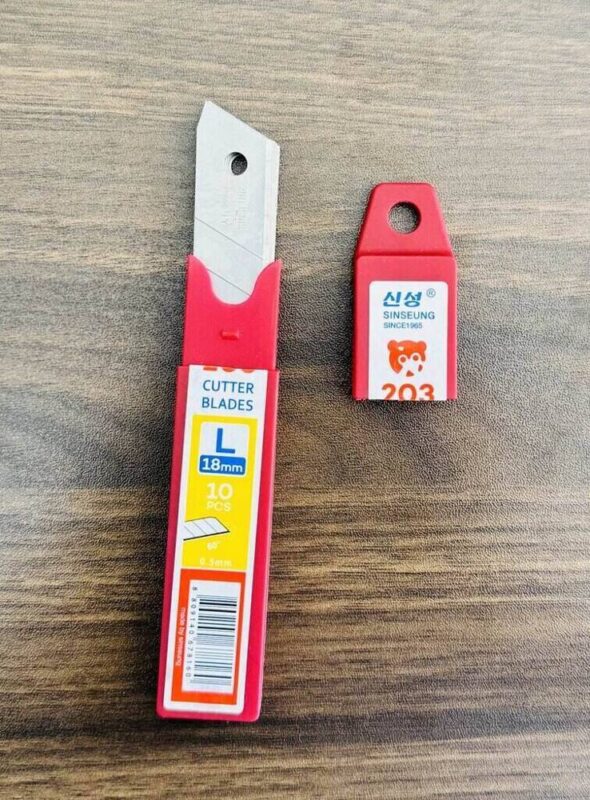
An 18mm blade suits heavier general cutting because the wider body supports more load. Sinseung L203 is an 18mm wide snap-off blade with a 100mm by 18mm by 0.5mm dimension and a 10-blades-per-PP-case pack format for refill handling.
The L203 page connects the blade to cardboard, drywall, leather, fabric, acrylic, thin aluminum sheet, sponge, foam, and tarp cutting. Those applications make box cutter blade dimensions for heavy cutting a real buying check rather than a minor catalog detail.
|
Bulk check |
9mm refill focus |
18mm refill focus |
|
Primary work |
Film, vinyl, paper, trimming, fine craft lines |
Cardboard, drywall, leather, foam, tarp, sheet materials |
|
Control concern |
Tip visibility and low blade exposure |
Rigidity and enough blade width for workload |
|
Compatibility check |
9mm snap-off handle channel and carrier engagement |
18mm large utility knife channel and lock support |
|
Stocking unit |
10 blades per PP case for S301 |
10 blades per PP case for L203 |
Packaging Checks Reduce Stockroom Errors
Packaging matters because replacement blades move through receiving, counting, shelf storage, team issue, and disposal. A case that protects the edge also helps the buyer confirm whether workers are consuming the correct blade size at the expected rate.
Wholesale buyers should record the case count, inner packing, carton quantity, and label language before repeating an order. Sinseung also notes that standard products can be discussed without a fixed minimum order quantity, so buyers can test market response before expanding the stock position.
Compatibility Should Be Checked With the Actual Handle
A refill blade should be tested in the handle that workers actually use, not only measured on paper. The blade should slide without scraping, engage the carrier, lock at normal working extension, retract cleanly, and remain stable during shallow cuts on scrap material.
Handle testing also protects product reputation after the shipment leaves the distributor’s warehouse. If workers receive a blade that technically matches the nominal width but feels unstable in a common handle, the complaint usually lands with the reseller, not only with the tool-room manager.
*Confirm blade width and thickness against the handle channel.
*Load one blade and check whether the carrier tab drives it smoothly.
*Test short extension first instead of exposing multiple sections immediately.
*Keep 9mm and 18mm refills in separate labeled locations.
*Track slow-moving refill sizes before increasing carton volume.
Quality Signals Worth Verifying
Bulk replacement buying should include a small receiving inspection before blades become open stock. Buyers can inspect edge consistency, segment lines, case closure, visible rust or residue, and whether the blade count matches the case and carton records.
Sinseung positions replacement blades as its core business and uses batch inspection during production. That kind of process evidence is useful for distributors who want repeatable refill quality rather than one-time samples that do not represent regular supply.
Stock records should also separate trial demand from replenishment demand. A first shipment can validate material fit, case handling, and complaint frequency, while later repeat orders can be adjusted around actual consumption by department, market, or customer segment.
Summary for Bulk Blade Buyers
Overall, buying replacement utility blades in bulk works best when the order is built around actual cutting tasks, handle compatibility, and replenishment needs rather than carton price alone. Buyers should confirm the blade size and thickness for each workstation, review case and carton packing, and test a small quantity in the handles and materials used by their teams.
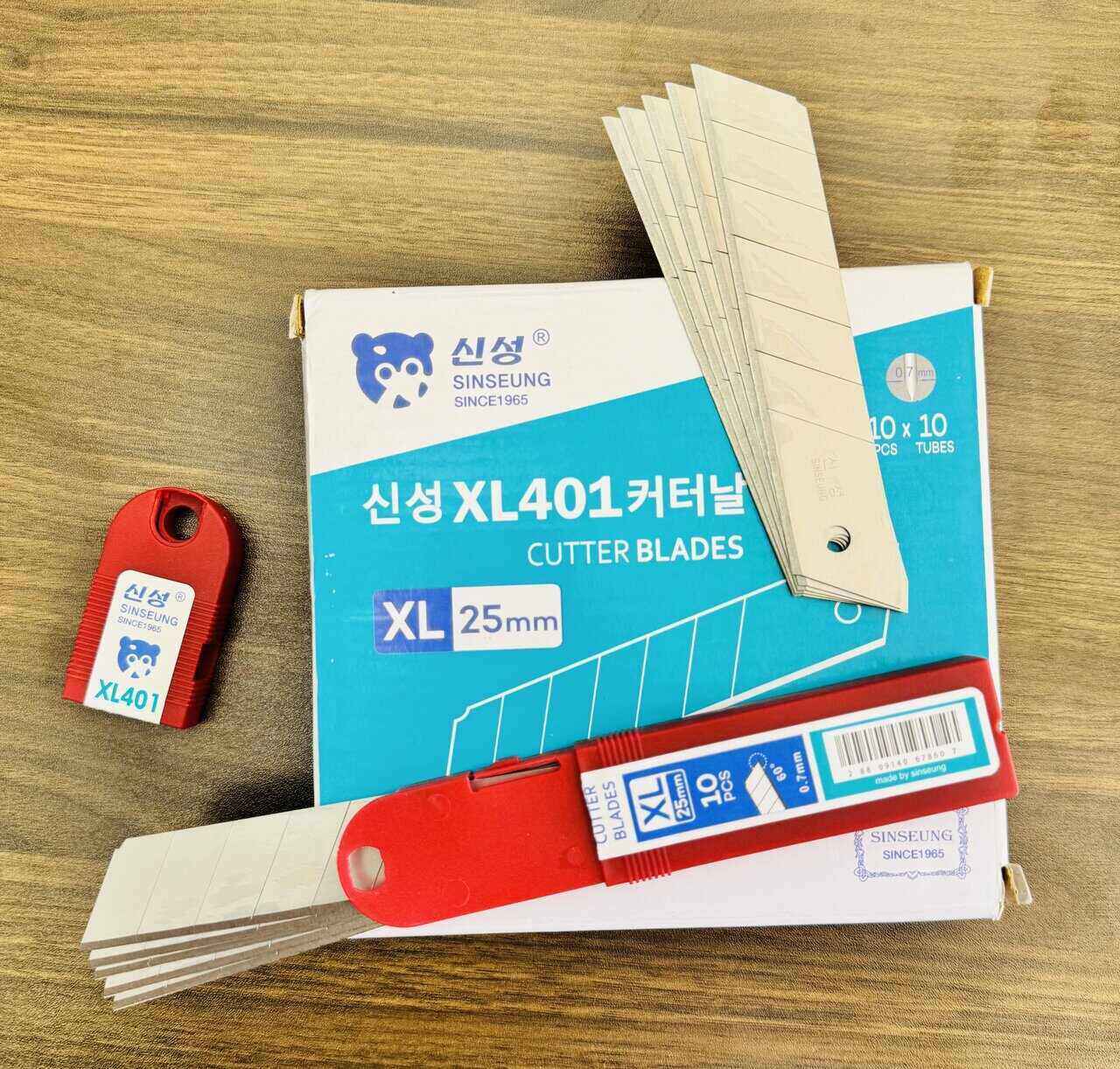
For buyers comparing common refill formats, سينسونغ offers a straightforward starting point: the S301 is a 9mm snap-off blade for film, vinyl, and other precision trimming, while the L203 is an 18mm option for cardboard, drywall, foam, and other heavier materials. Reviewing these two formats side by side can help distributors and tool-room managers choose the right stock mix before placing a larger repeat order.
أسئلة متكررة
What should buyers check before ordering box cutter refills in bulk?
Buyers should check blade width, thickness, length, segment style, handle compatibility, case quantity, carton packing, application fit, and safe storage needs.
Are 9mm and 18mm utility blades interchangeable?
No. A 9mm blade and an 18mm blade use different handle channels and different workload assumptions, so they should be stocked and labeled separately.
Why do box cutter blade dimensions matter for safety?
Dimensions affect support inside the handle. A blade that is too loose may wobble, while a blade that is too thick or wide may jam or fail to lock.
How many blades should be in a refill case?
The case count depends on the product. S301 and L203 are both presented with 10 blades per PP case, which is useful for counting and issue control.
Should a distributor test blades before a large repeat order?
Yes. Testing blades in actual handles and materials helps confirm fit, cutting feel, packing accuracy, and worker acceptance before larger replenishment.
-
 Are Box Cutter Blades Universal?Explain box cutter blade compatibility by width, holder channel, lock design, refill format, and model matching for trade buyers.2026/10/01
 -
How to Safely Snap Off a Utility Knife BladeLearn how to snap off a box cutter blade with controlled extension, safe break direction, secure containment, and practical S103 workstation checks.2026/09/24
-
30 vs 45 Degree Cutter Blades for PrecisionLearn how 30 and 45 degree cutter blade tips affect precision, durability, PPF trimming, and wholesale blade selection.2026/09/24