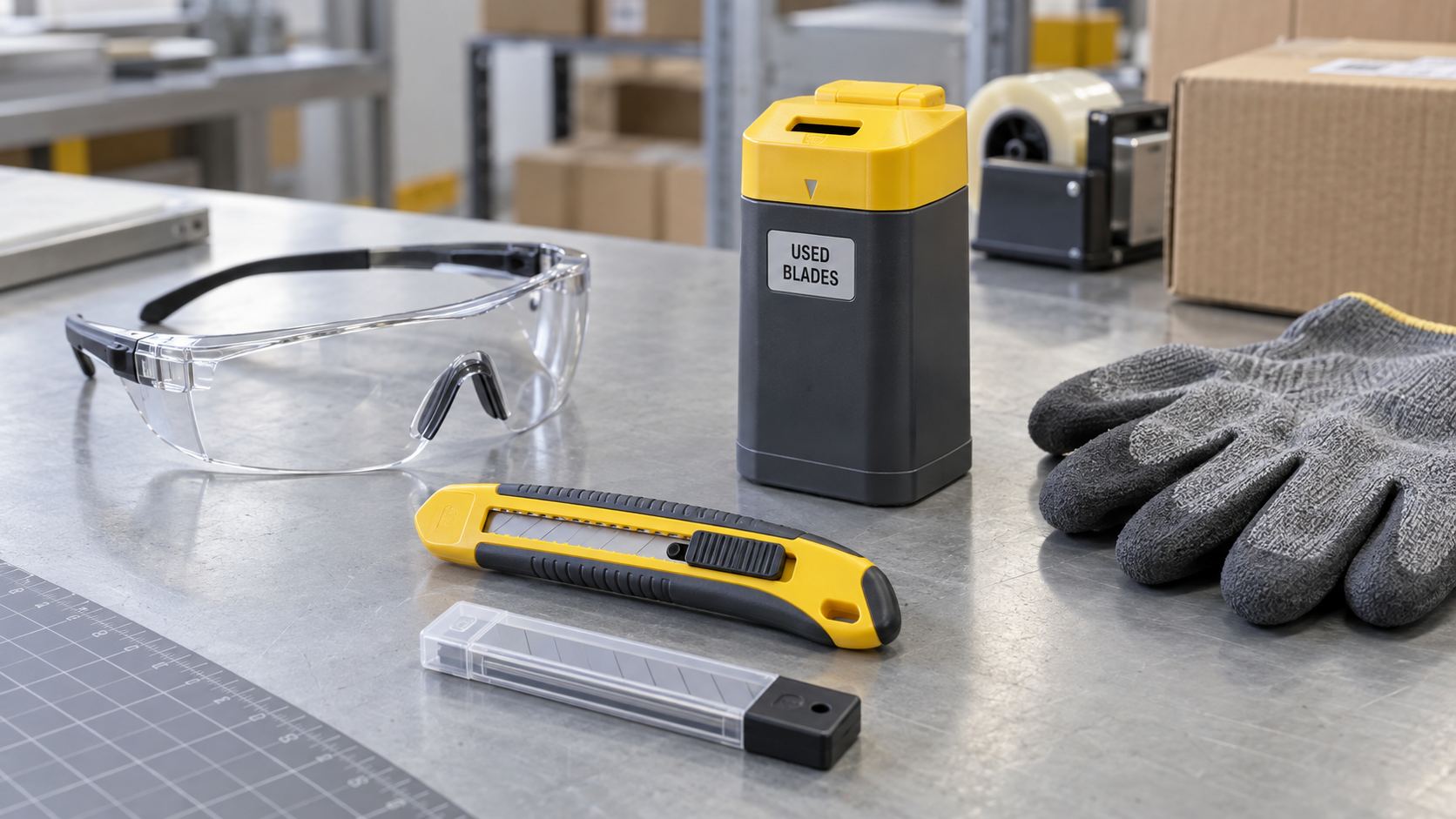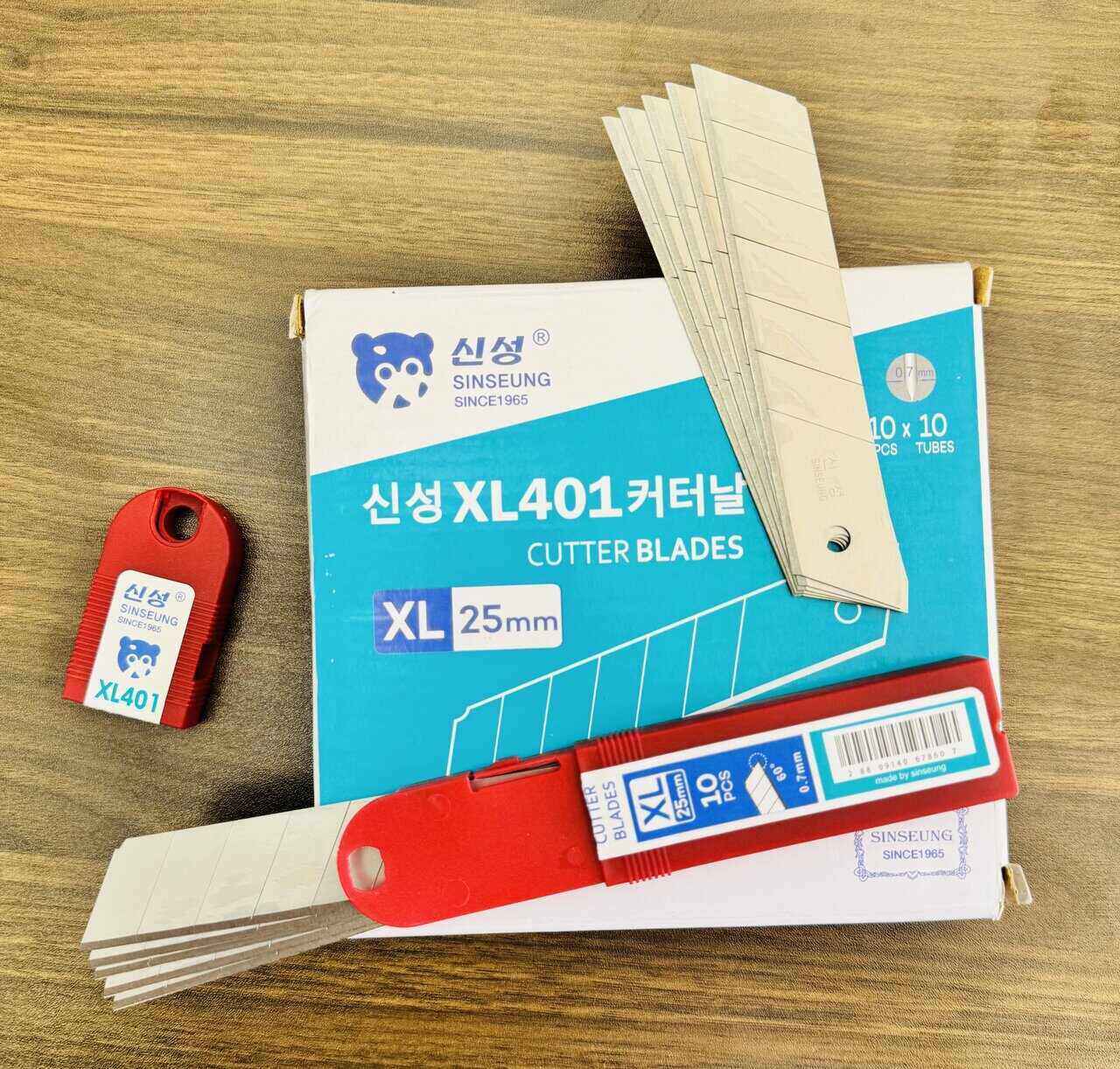

Inside a Utility Knife: Carriers, Locks, Reassembly
2026-09-17
When a utility knife stops advancing smoothly, the problem is often inside the handle rather than at the cutting edge. Trade users who understand the carrier, lock, housing, and blade channel can restore a cutter more safely, screen damaged tools faster, and avoid forcing parts that should move with light control.
Why the Internal Layout Matters
A utility knife turns a thin blade into a controlled hand tool by holding the cutting edge on a predictable path. The handle does more than cover the blade; it guides extension, limits wobble, supports retraction, and keeps the user from pressing directly on the steel.
Professional teams often notice internal problems only after a cutter jams, rattles, or refuses to lock at the desired length. A structured look at utility knife parts in compact cutters helps supervisors separate normal blade wear from damage inside the tool.
The Main Parts Inside a Snap-Off Cutter
Blade carrier
The blade carrier is the moving support that advances or retracts the blade. It should keep the blade aligned with the nose of the housing so the cutting edge exits straight instead of leaning sideways during detail trimming.
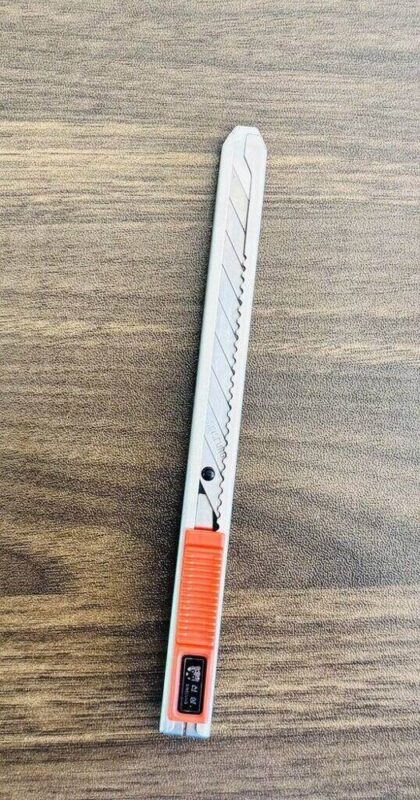
Small cutters used for film, paper, and light packaging depend heavily on carrier stability because the exposed blade is narrow. Sinseung S506 is a compact 9mm snap-off utility knife with a self-locking slider, anti-slip push rod, built-in blade snapper, and metal housing, which makes it a useful product example for this internal-control topic.
Locking control
The lock is the part that resists unwanted blade movement once the cutting length is set. Slide locks are common on compact snap-off cutters, while rotary knobs are often used on larger 18mm cutters where deeper cuts create more pressure on the blade.
Locking style should match the task instead of being treated as a decoration. Film trimming rewards fine incremental extension, while cardboard, carpet, plastic sheeting, wallpaper, and similar materials often need a firmer larger-handle grip.
How Reassembly Usually Goes Wrong
Incorrect reassembly usually begins when someone changes the blade while the carrier is not seated in the guide path. If the carrier sits above the rail, below the rail, or reversed inside the body, the slider may move while the blade remains stuck.
A second failure point is the lock position. A slide lock or rotary control should be released before parts are aligned, then tightened or engaged only after the blade is seated and the housing is closed.
|
Symptom |
Likely internal cause |
Practical response |
|
Blade advances unevenly |
Carrier is tilted or debris sits in the channel |
Remove the blade, clean the channel, and reseat the carrier |
|
Slider moves but blade does not |
Blade slot is not engaged with the carrier tab |
Reload the blade so the carrier drives the blade body |
|
Blade slips under pressure |
Lock is not fully engaged or the housing is worn |
Stop use and check the lock before returning the cutter to work |
|
Handle will not close |
Blade stack, end cap, or carrier is misaligned |
Open slowly and confirm the correct blade count and orientation |
A Practical Reassembly Check
Safe reassembly should be a slow alignment check, not a forceful repair. Workers should keep the blade retracted or removed, place the carrier in its guide path, and confirm that the lock moves through its full travel before cutting begins.
- Check that no loose blade segment remains inside the housing.
- Confirm that the blade notch or slot engages with the moving carrier.
- Advance only one short section first, then test lock resistance on scrap material.
- Remove the cutter from service if the housing is bent or the lock slips repeatedly.
This workflow matters because cutter blade assembly for stable trimming depends on clean contact between the blade, carrier, and lock. Extra pressure can hide the real problem until the blade jumps, bends, or breaks during use.
How Different Cutter Sizes Change the Check
Compact 9mm cutters and larger 18mm cutters share the same basic idea, but the parts face different loads. A 9mm cutter supports shallow, precise lines, while an 18mm cutter gives a broader blade and handle for higher workload materials.
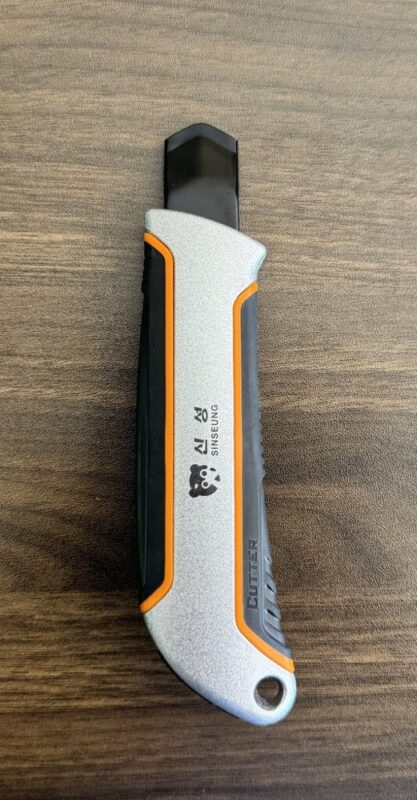
The Sinseung L705 is an 18mm alloy and rubber-coated utility knife with a rotary knob and a carton pack format of 10 pieces per inner box and 100 pieces per carton. That larger format makes box cutter assembly with rotary control especially relevant for teams that issue cutters to packaging, construction, leather, wallcovering, and general cutting stations.
Storage and Maintenance After Reassembly
A correctly assembled cutter can still become unreliable if it is stored dirty or loaded with damaged blades. Dust, adhesive film residue, paper fiber, and small broken segments can settle in the channel and change how the carrier moves.
Routine checks should focus on movement rather than only blade sharpness. If the slider feels gritty, if the lock takes extra force, or if the blade nose does not sit squarely, the tool needs cleaning or removal from shared use.
Summary for Trade Users
Internal cutter knowledge helps teams fix simple loading errors without treating every problem as a bad blade. The practical goal is to keep the blade seated, the carrier aligned, the lock engaged, and the housing free from hidden fragments.
For distributors and professional users comparing cutter options, Sinseung’s product range gives compact 9mm and larger 18mm examples that can be matched to the work material and control style before tools reach the job bench.
أسئلة متكررة
What are the main utility knife parts inside the handle?
Most snap-off utility knives include a housing, blade channel, moving carrier, slider or knob, lock, end cap, and blade support area near the nose.
Why does my box cutter slider move without moving the blade?
The blade may not be engaged with the carrier tab, or the carrier may be outside its guide path. Reload the blade slowly and check alignment before use.
Can a dirty blade channel cause assembly problems?
Yes. Adhesive, dust, paper fiber, and broken blade fragments can block movement and make the carrier feel jammed even when the blade itself is usable.
When should a utility knife be removed from shared use?
A cutter should be removed when the lock slips, the housing is bent, the blade wobbles after reassembly, or the slider requires unusual force.
Is a rotary lock better than a slide lock?
The better lock depends on the task. Fine trimming often favors quick slide adjustment, while heavier cutting can benefit from a firmer larger-handle lock.
-
 Are Box Cutter Blades Universal?Explain box cutter blade compatibility by width, holder channel, lock design, refill format, and model matching for trade buyers.2026/10/01
 -
How to Safely Snap Off a Utility Knife BladeLearn how to snap off a box cutter blade with controlled extension, safe break direction, secure containment, and practical S103 workstation checks.2026/09/24
-
30 vs 45 Degree Cutter Blades for PrecisionLearn how 30 and 45 degree cutter blade tips affect precision, durability, PPF trimming, and wholesale blade selection.2026/09/24