
How Blade Thickness Impacts Cutting Efficiency in 9mm Snap Blade Knives
2026-02-06
Understanding Blade Thickness in Snap Blade Knives
What Blade Thickness Means for Snap Blades
Blade thickness means the distance from one flat side of the blade to the other. It has a big effect on how a snap blade knife works when you use it. In many utility knives, like snap-off ones such as the 9mm snap blade knife, this thickness changes both bendiness and sturdiness.
Blades that are not very thick, often about 0.38mm, bend a little when you cut. But blades that are thicker—up to 0.50mm for 9mm sizes—stay firm. The usual thickness for 9mm snap blades falls between 0.38mm and 0.50mm. This depends on the job and what the maker likes.
Such differences help meet what different people need. These people work in areas like school supplies, car care, and building. Sinseung’s blades are well-liked by students, office staff, car wrap experts, wallpaper fitters, builders, and yard workers.
How Thickness Affects Cutting Performance
Blade thickness changes how smooth and quick a snap blade cuts.
- Thinner bladeswork best for gentle jobs. Their bendiness lets you make exact and careful cuts on soft things like paper, film, or thin plastic. For instance, in car wrap tasks or making crafts, a thinner 9mm snap blade gives clean lines. It does this without ripping the stuff.
- Thicker bladesfit better for harder work. They give more grip when you cut tough items like cardboard, leather, or vinyl sheets. The extra firmness stops the blade from bending too much when you push.
- Thicker blades also keep a straight cut path. They fight against forces that might push thinner blades off track.
Greater blade thickness boosts cut steadiness. Yet it can lower the ease of movement in small spots or fine jobs.
Comparing 9mm Snap Blades with Other Utility Knife Sizes
Differences Between 9mm, 18mm, and 25mm Blades
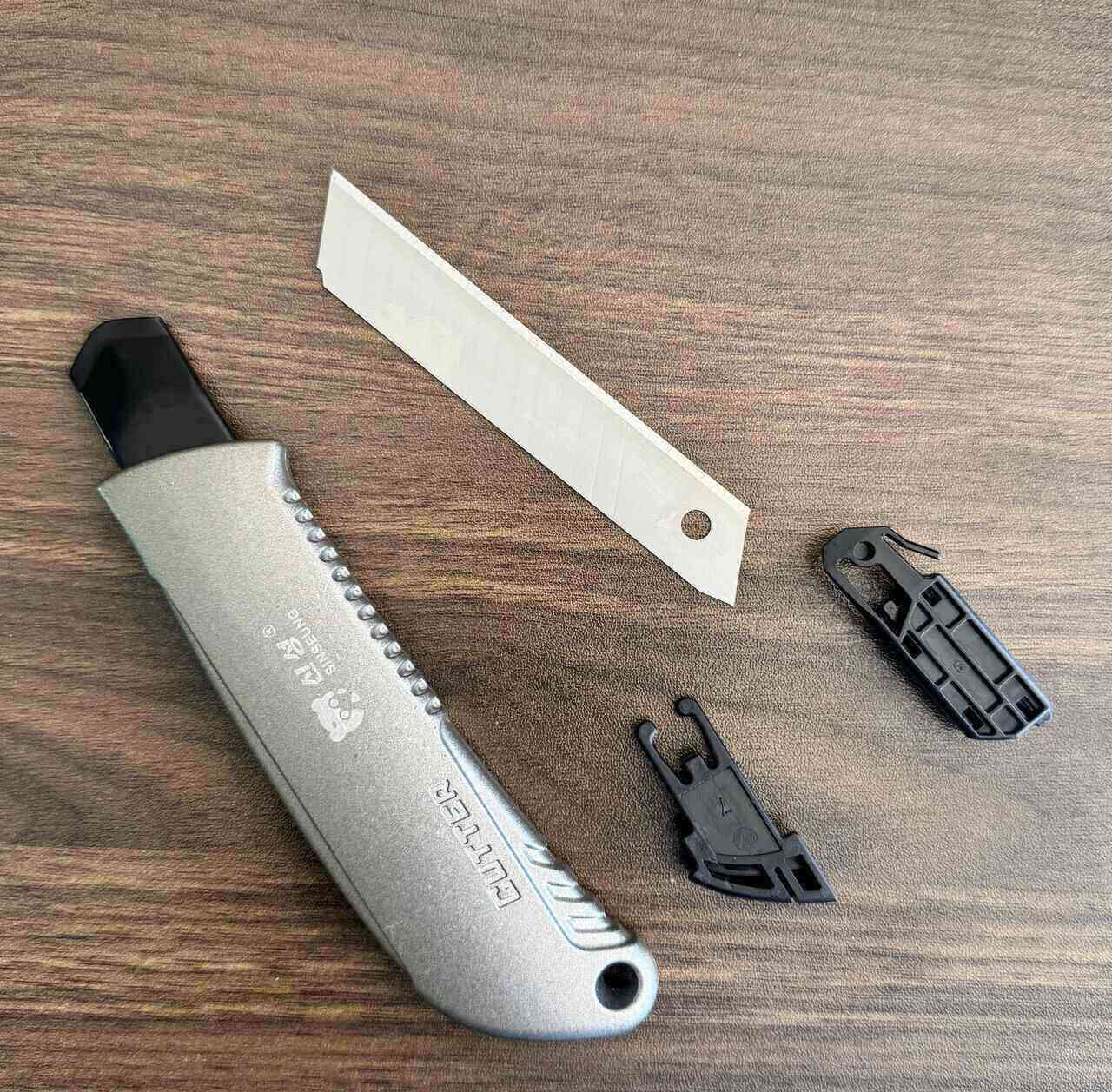
Snap-off utility blades come in several sizes—often 9mm, 18mm, and 25mm. Each one fits a different job:
|
Blade Size |
Typical Thickness |
Common Uses |
Strength |
Flexibility |
|
9mm |
0.38–0.50 mm |
Precision tasks like paper trimming or film cutting |
Low |
High |
|
18mm |
0.50–0.70 mm |
General-purpose cutting (e.g., cardboard, plastic) |
Medium |
Medium |
|
25mm |
0.70–1.00 mm |
Heavy-duty work like cutting thick vinyl or carpets |
High |
Low |
- The 9mm snap blade knifesuits fine jobs such as trimming vinyl wrap or detailed crafting.
- An 18mm utility knife strikes a good balance between grip and power. It helps with jobs that need some push but not super fine aim.
- 25mm snap-off bladesare made for tough tasks. In those, strength matters more than exactness.
When to Choose a 9mm Snap Blade Over Larger Options
Picking the correct size relies on what your job requires:
- Pick a 9mm snap blade knife when you want good control over cuts. These are great for trimming things like window film or craft paper.
- Their light build cuts down on hand tiredness during long work times.
- Still, they do not fit for regular tough use, like slicing thick foam board or rubber sheets.
If your work needs lots of detail or soft materials and you care more about easy handling than raw power, then a slimmer and smaller blade works well.
The Impact of Blade Thickness on Durability and Lifespan
How Thickness Influences Snap Blade Wear and Breakage
Blade thickness also changes how long a blade holds up and how it gets worn:
- Thicker blades stand up to breaking or bending in hard cuts. They are not as likely to snap in the middle of a job. And they often last more time before you need a new one.
- Thinner blades get dull quicker. This happens because they lose edge sharpness and break more easily under strain. But since they break into snap-off parts, you can just snap away a worn bit to get a fresh edge.
- Due to this, often snapping, thinner blades can run out faster in the long run. Yet they give you sharp cuts for a short while.
Tips to Maximize Lifespan Based on Blade Thickness
To make your blade last longer:
- Match blade thickness to the material—do not use a slim blade on hard stuff like vinyl flooring.
- Avoid excessive pressure—let the blade’s sharp edge do most of the job. This cuts down on the strain on the parts.
- Store properly—knives that get bent or dropped can hurt the blade parts inside.
Choosing the Right Blade Thickness for Your Needs
Factors to Consider When Selecting a Snap Blade Knife
When you choose your snap-off knife blade:
- Material type: Cutting easy things like paper? Pick thin blades. Harder things? Go for thicker ones.
- Precision vs. strength: For soft crafts or film jobs, thin blades help more. For everyday tasks like opening boxes, mid-level thicknesses are fine.
- Cost-efficiency: Thinner blades might need changing more often from snapping. But they usually cost less each one.
Matching Blade Size and Thickness With Task Requirements
Here is a basic guide:
|
Task Type |
Recommended Size |
Recommended Thickness |
|
Paper trimming |
9mm |
~0.38 mm |
|
Crafting / film installation |
9mm |
~0.40 mm |
|
General home use |
18mm |
~0.50 mm |
|
Construction / warehouse work |
25mm |
~0.70–1.00 mm |
If your task needs great detail but also some power—for example, putting up architectural film—try a thicker kind of 9mm snap blade. Do this before switching to an 18mm utility knife.
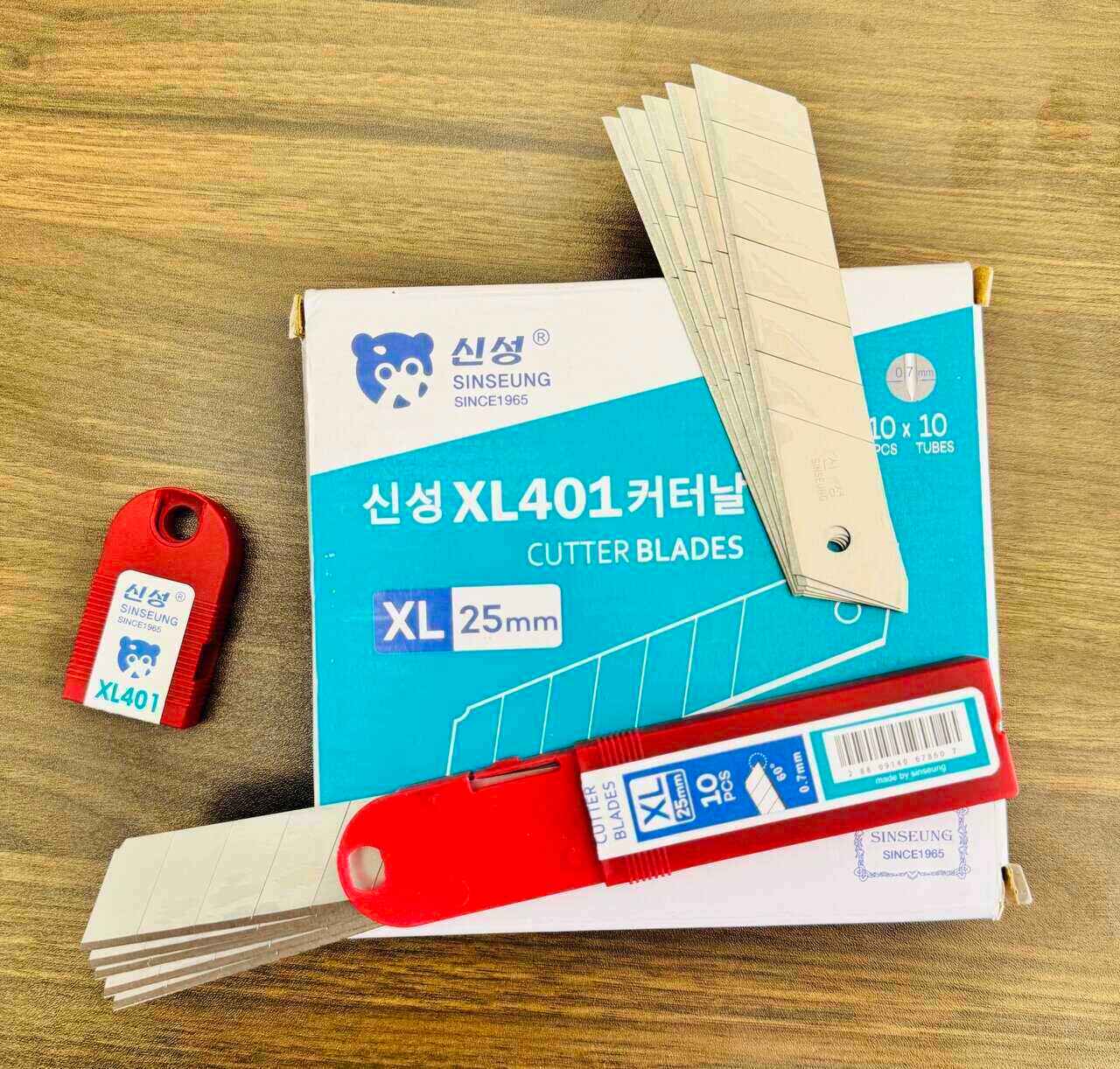
Sinseung’s main models include S103, S301, and S303 in the 9mm group, L203 in the 18mm part, and XL401 in the 25mm line.
Sinseung picks top materials and uses smart making methods. This way, our blades hit the best marks in cut speed, lasting power, and overall work. Sinseung does great at checking quality. We use fine steel and mix machine work with hand skills.
As a skilled maker, we always work hard to give top-quality blade items. We do this to fit what customers need in many ways.
FAQs
Can I use a 9mm snap blade knife to cut cardboard?
Only if it’s thin cardboard and you use a thicker version (around 0.50mm) of the blade; otherwise, opt for an 18mm utility knife.
How often should I snap off segments in a snap-off blade?
It depends on usage frequency and material hardness. Snap off whenever you feel resistance or notice uneven cuts.
Does thicker mean sharper?
No. Sharpness is determined by grinding quality and edge angle—not just thickness. Thicker blades are stronger but not necessarily sharper.
Which blade is best for film installation?
A 9mm snap blade knife, ideally with a thin profile (~0.40mm), provides clean cuts without damaging delicate surfaces.
What makes Sinseung’s blades durable?
Sinseung uses high-quality materials and advanced heat treatment/grinding technologies developed over its 60-year history.
-
 SK2 vs SK5 Utility Blades for Different JobsCompare SK2 and SK5 utility blade grades by sharpness, toughness, edge life, and job fit for wholesale blade selection.2026/10/07
 -
Are Box Cutter Blades Universal?Explain box cutter blade compatibility by width, holder channel, lock design, refill format, and model matching for trade buyers.2026/10/01
-
How to Safely Snap Off a Utility Knife BladeLearn how to snap off a box cutter blade with controlled extension, safe break direction, secure containment, and practical S103 workstation checks.2026/09/24