
Types of Box Cutter Blades for Everyday and Industrial Tasks
2026-01-02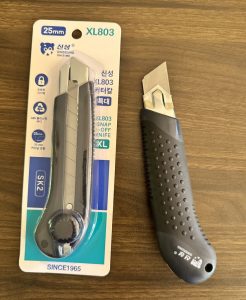
Overview of Box Cutter Blades and Their Uses
Box cutter blades appear in many shapes and styles. Each one fits certain cutting jobs. Knowing the types of box cutter blades helps you pick the best tool for your work. This applies whether you handle building tasks, car care, box packing, or yard work.
Standard Utility Blades for Everyday Cutting
Standard utility blades rank as the most common choice among all types of box cutter blades. These flat-edge blades suit simple daily tasks. For example, they open boxes, cut plastic sheets, or slice paper. People use them in offices, storage areas, and houses.
Due to their wide use and flexibility, standard utility blades come with most box cutters. Swapping them out proves easy, too. If you wonder how to change a blade on a box cutter, many designs have a sliding part or screw top. These give fast entry to the blade area.
Hook Blades for Roofing and Carpet Work
Hook blades curve at the tip. They look like a tiny hook. This shape lets users slice through items such as roof tiles, rugs, floor coverings, and heavy plastic sheets. Importantly, they avoid harm to layers below.
Workers in building and floor laying prefer these blades a lot. They offer exact cuts. Plus, they lower the risk of unwanted deep slices into the base parts.
Serrated Blades for Tough and Fibrous Materials
Serrated blades have small notches along the sides. They resemble a knife for bread. These work great for slicing stringy or rough items. Think of ropes, glass fiber padding, animal hides, and certain plastics.
Scoring Blades for Glass and Laminates
Scoring blades serve as sharp-pointed tools. They create light lines or marks on items like glass, layered sheets, or floor tiles. After that, you can break them apart. These blades often appear in window film setups and furniture making.
They demand high accuracy. So, Sinseung employs modern gear and a skilled group. This team adjusts quickly to market shifts. Thus, every scoring blade keeps even depth and keenness during use.
Rounded-Tip Safety Blades for Controlled Cutting
Safety comes first in many work areas. Rounded-tip safety blades have a dull end. This setup stops surprise stabs. Yet, they still deliver good cutting force. You find these in places with tight safety rules. Examples include schools, medical centers, and packing spots.
They also help with tasks like trimming plastic wrap or opening packages. This prevents damage to items inside.
Snap-Off Blades for Extended Use and Precision
Snap-off blades divide into parts. Users can break away worn sections to show a new edge right away. They shine in exact jobs. Such as art layouts, wall covering setup, or car film wrapping.
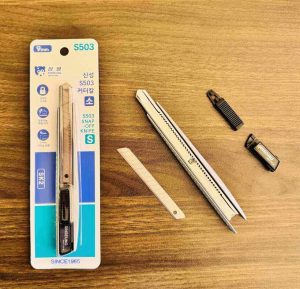
Core product model: Snap off blades: S103 9mm snap off blades, S301 9mm snap off blades, S303 9mm snap off blades; L203 18mm snap off blades; XL401 25mm snap off blades. These choices fit various cutting needs. From light tasks to strong cuts. Sinseung gets blade-making tools from Germany. Then, their engineering team makes custom tweaks. This leads to steady quality in all snap-off types.
If you lack sure steps on how to change a blade on a box cutter in a snap-off style, just grab pliers or the knife’s back end. Break the worn part along the marked line.
Specialty Coated Blades for High-Durability Tasks
For heavy factory jobs that need extra toughness, specialty-coated blades matter a lot. These handle rough items or spots with much rubbing. They often get a layer of titanium nitride or similar treatments. This boosts strength and long life.
We pick fine materials and use fresh making steps. So, our blades hit peak marks in cutting speed, lasting power, and work quality. Such results prove vital for thick factory films or sturdy package parts.
A real example from Sinseung shows this well. A maker of rubber goods in Japan once used big OLFA blades. After testing our made-to-order samples, they switched. Now, they order from us often.
Choosing a High-Quality Box Cutter with the Right Blade Type
When picking a high-quality box cutter, think about both the handle part and the blade. Seek traits like comfy holds, simple swap systems, lock features for safety, and fit with various blade kinds.
Sinseung leads as the top cutter blade maker from South Korea. They started in 1965. Their many years of know-how and focus on new ideas let them provide a wide choice of strong blades. These suit different fields. Sinseung sells items like cutter blades, utility knives, hardware scissors, and garden tools. Cutter blades form their main product line.
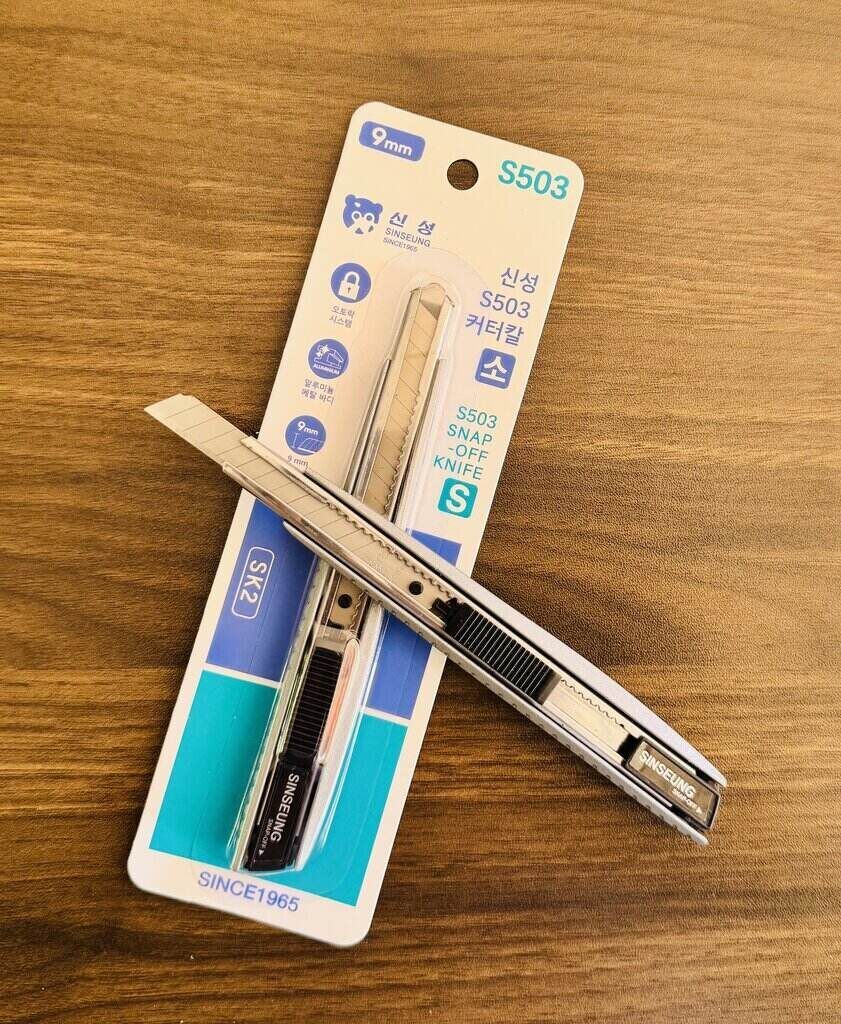
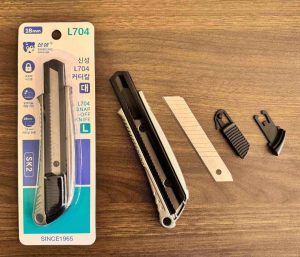
Sinseung offers models like utility knives: S503 9mm utility cutter knife, S506 9mm utility cutter knife; L704 18mm utility cutter knife, L708 18mm utility cutter knife; XL803 25mm utility cutter knife. All aim for strength and ease.
On top of that, Sinseung supports buyers strongly. Before sales, we help those new to buying and shipping from abroad. After sales, we aid in growing markets. This extra care boosts value past just the item’s strength.
Thus, no matter if you cut card boxes each day or handle careful film jobs, select the proper blade kind. Pair it with a reliable box cutter. This brings safe and quick outcomes.
FAQ
What are the most common types of box cutter blades?
The most common types of box cutter blades include standard utility blades, scoring blades, snap-off blades, and specialty coated blades. Each type is suited for specific tasks such as opening boxes, cutting through tough materials, or ensuring safety in tight workspaces.
How do I change the blade on a box cutter?
Changing a box cutter blade typically involves either sliding or unscrewing the cutter to access the blade area. For snap-off blades, you can break off a worn section using pliers or the back end of the knife to expose a fresh edge.
Why are snap-off blades useful for precision cutting?
Snap-off blades are segmented, allowing users to break off worn sections and instantly reveal a sharp new edge. This makes them ideal for tasks requiring precision, such as art layouts, wall covering setup, or car film wrapping.
-
 How to Maintain and Extend the Life of Your Box CutterLearn how to maintain your box cutter for peak performance. This guide covers blade cleaning tips and why investing in high-quality tools saves money.2026/02/26
 -
 Master the Edge: Top Tips for Safely Breaking Off and Replacing Your Box Cutter BladeMaster utility knife safety with our guide on blade types, snapping techniques, and replacement tips. Learn how to maintain your edge for peak industrial performance.2026/02/19
 -
 Top-Rated Box Cutters for Home Organization: The Ultimate GuideDiscover the best box cutters for home organization. This guide covers top-rated brands, precision cutting tips, and essential safety features for your DIY projects.2026/02/12